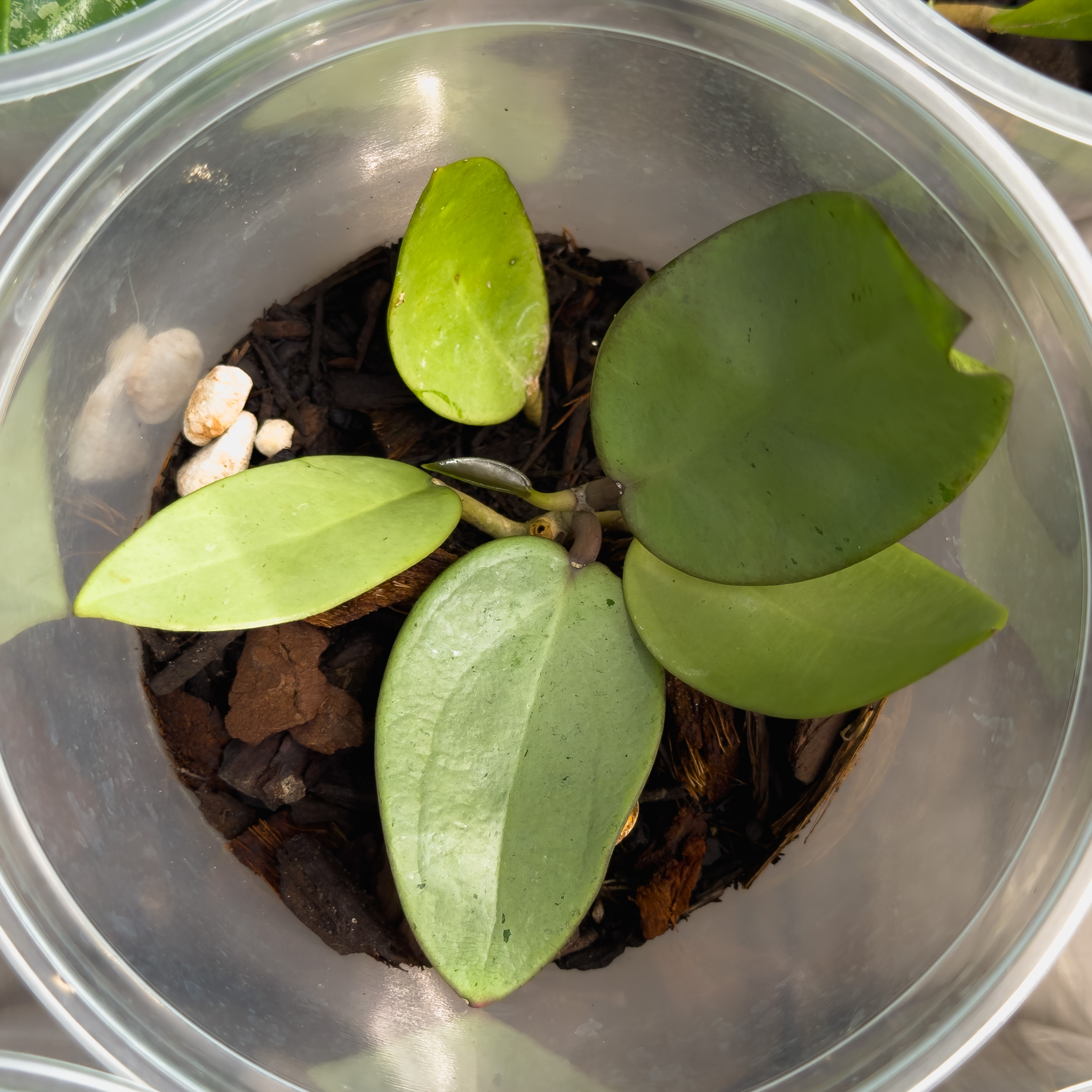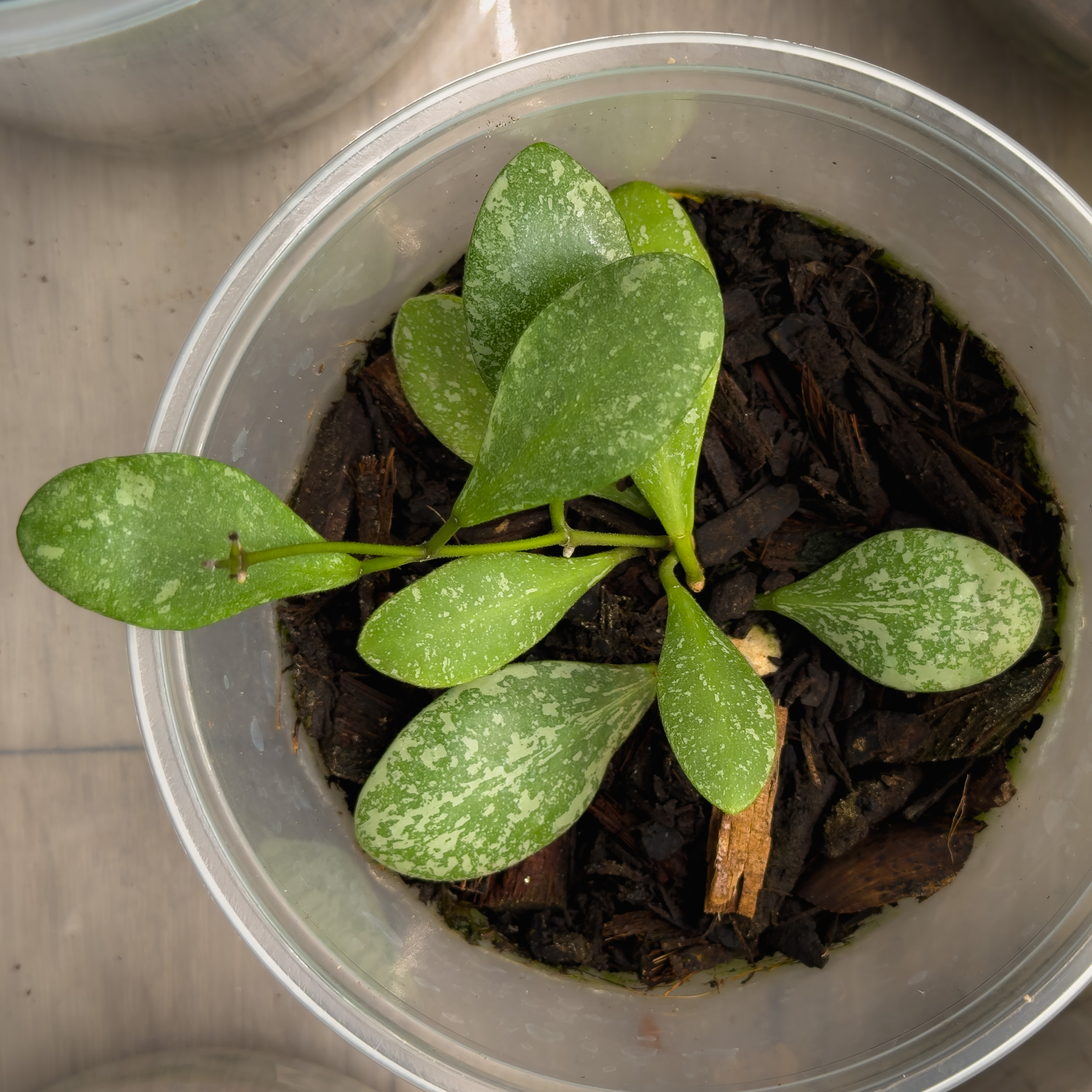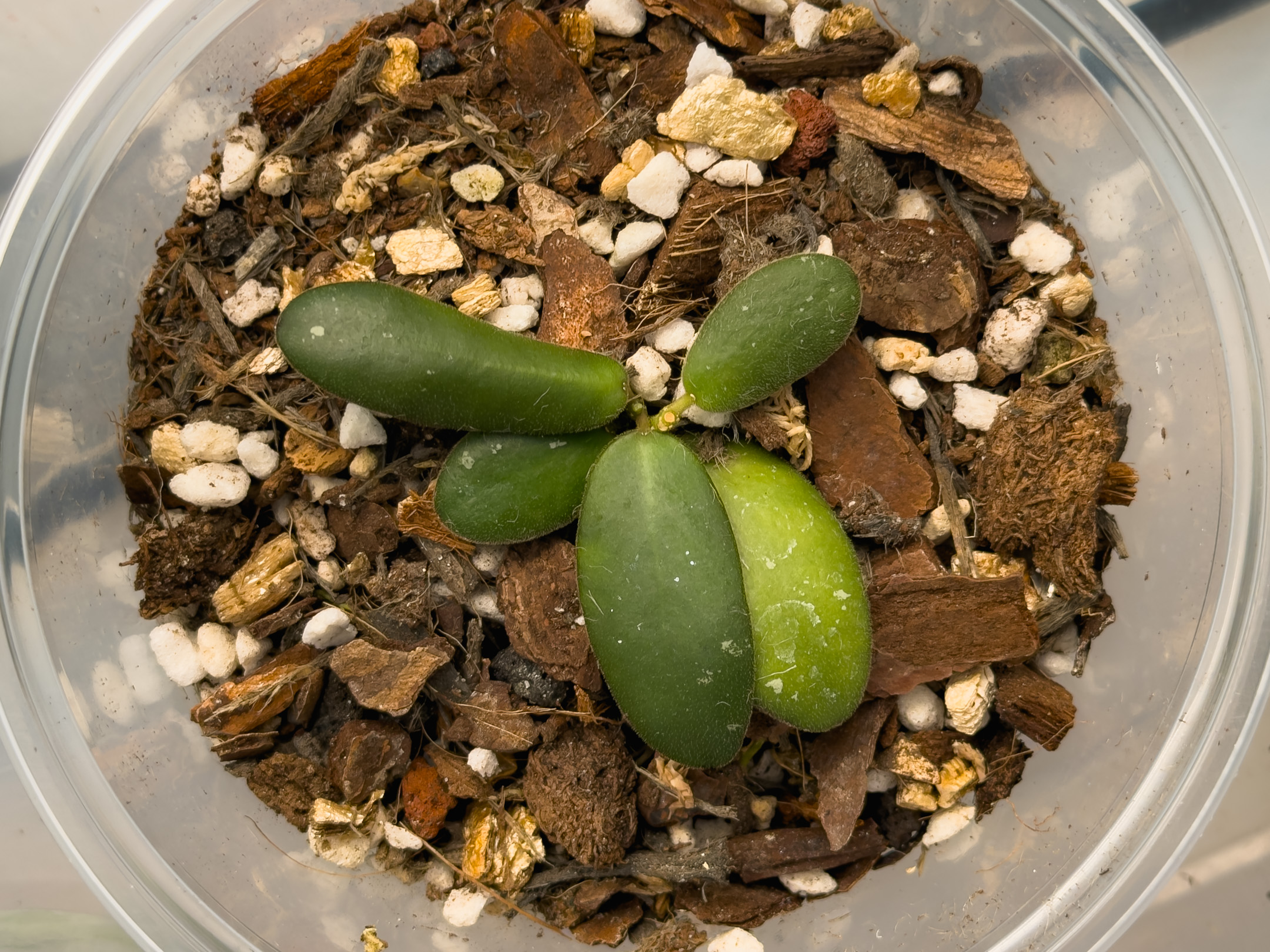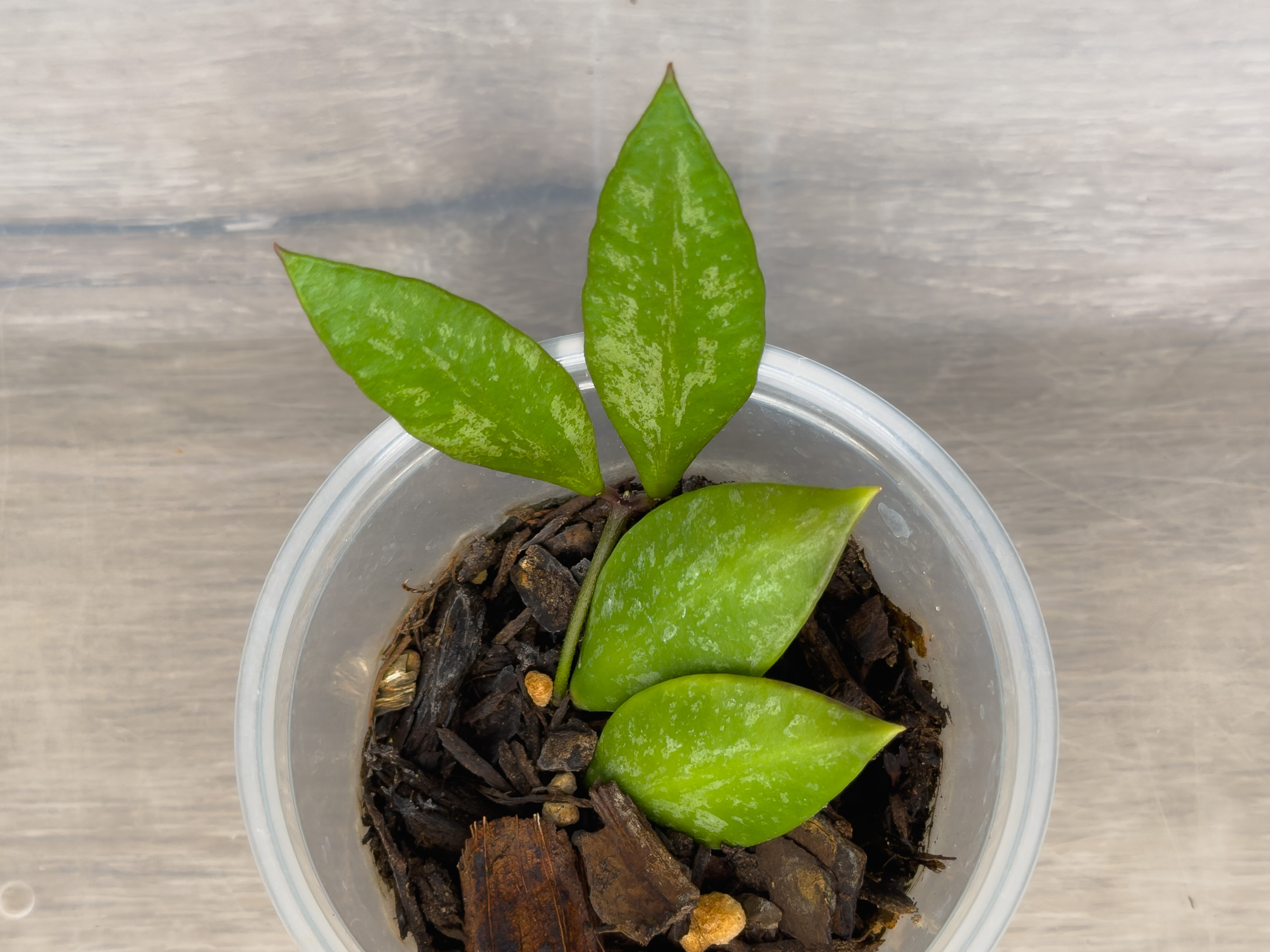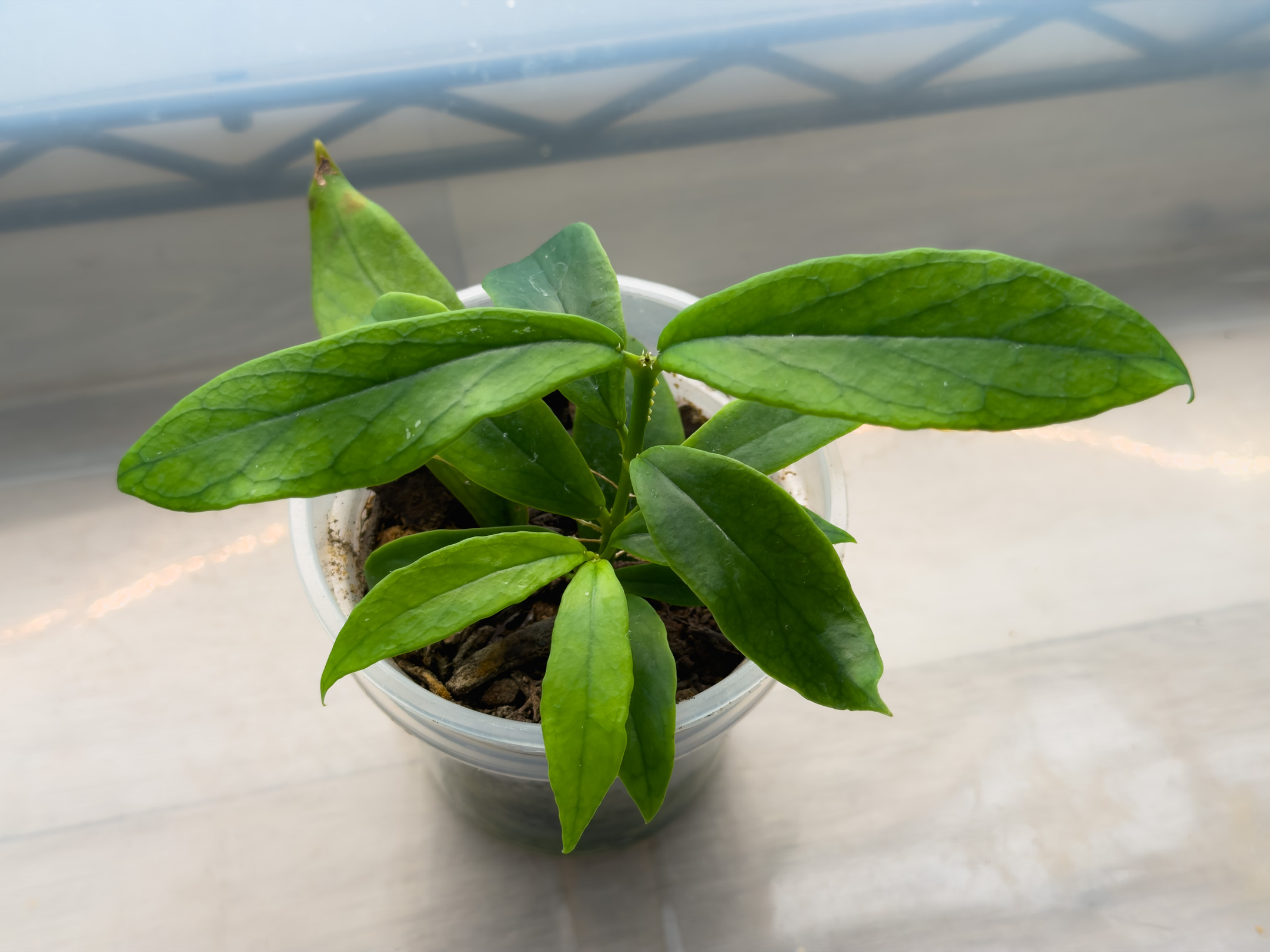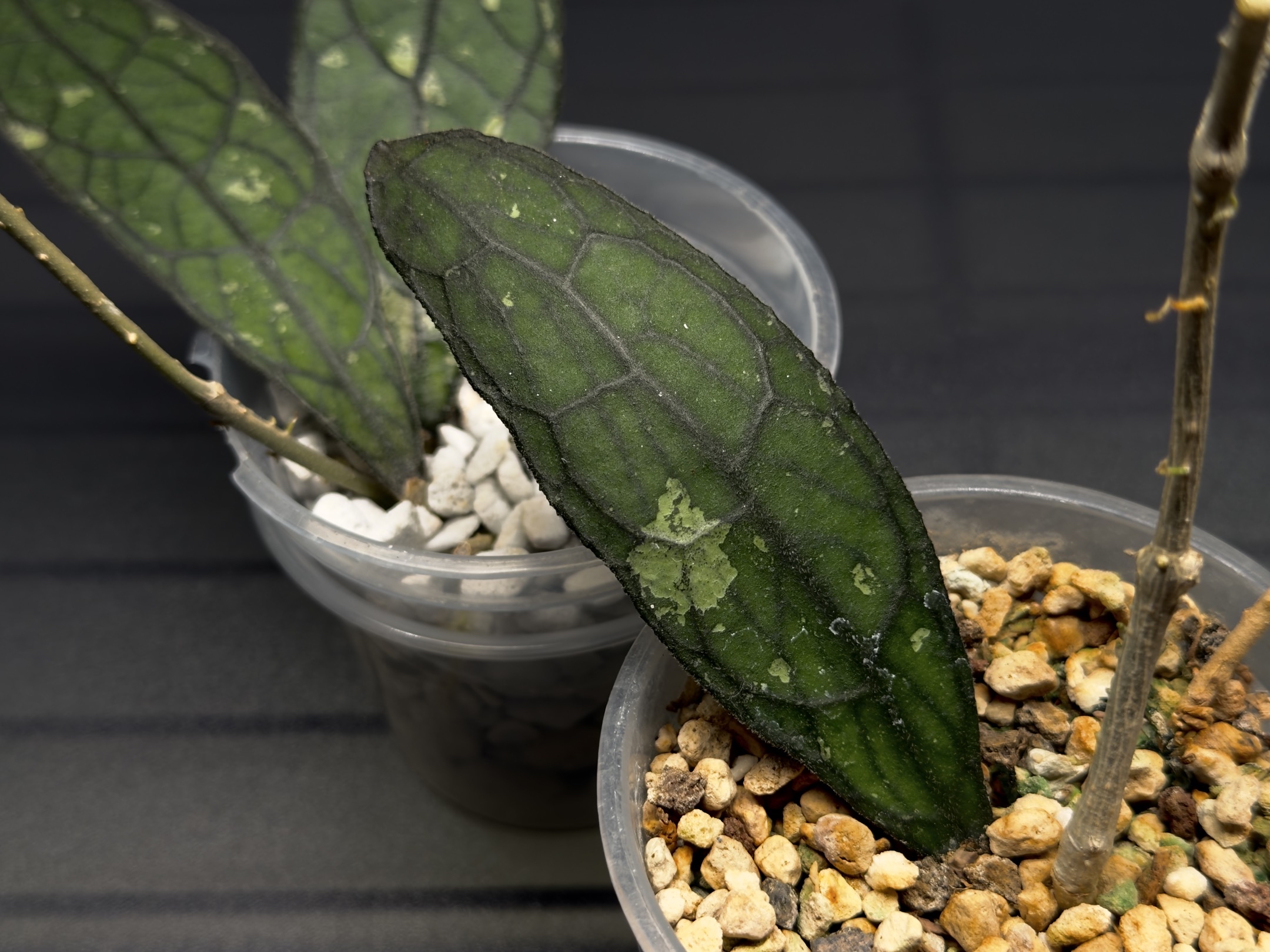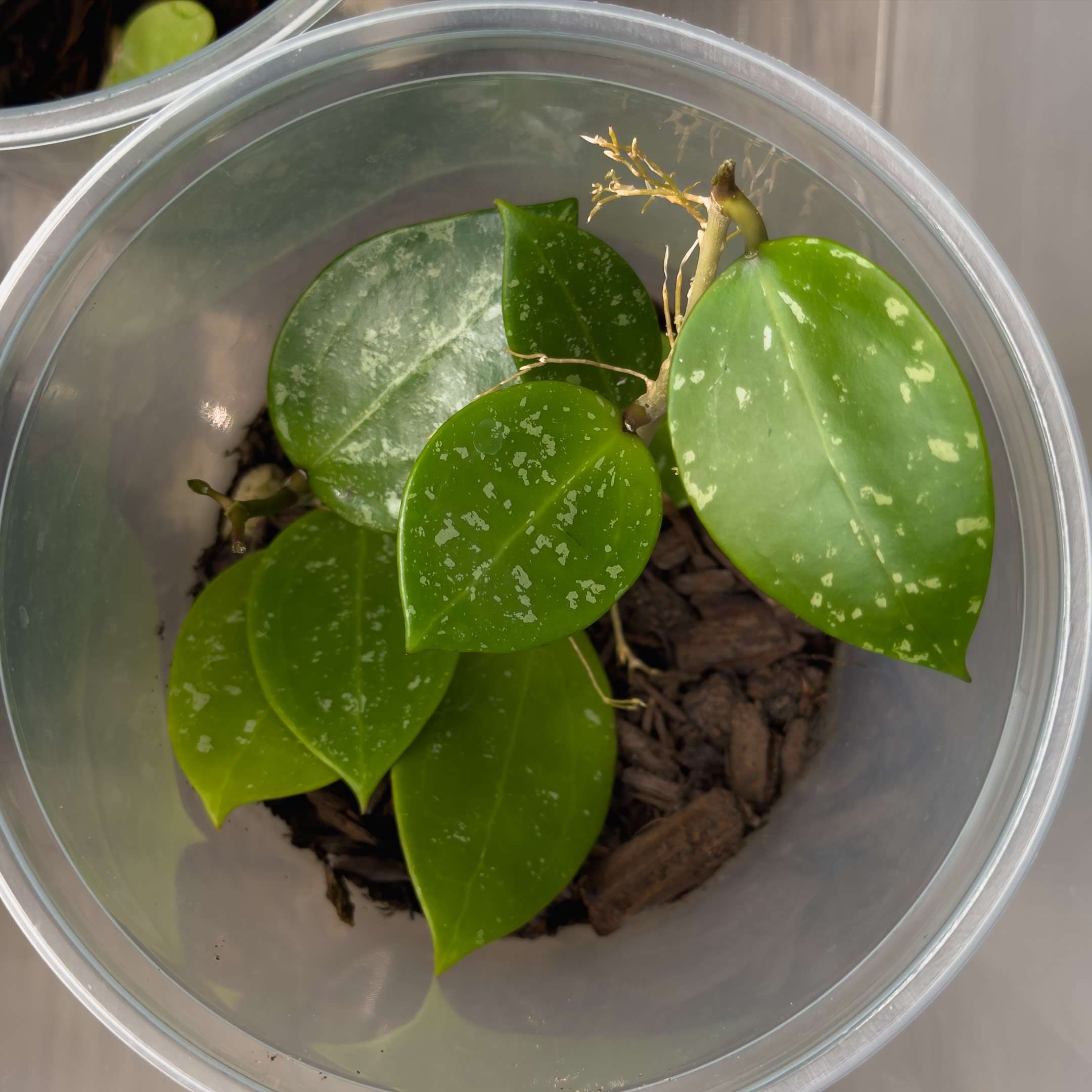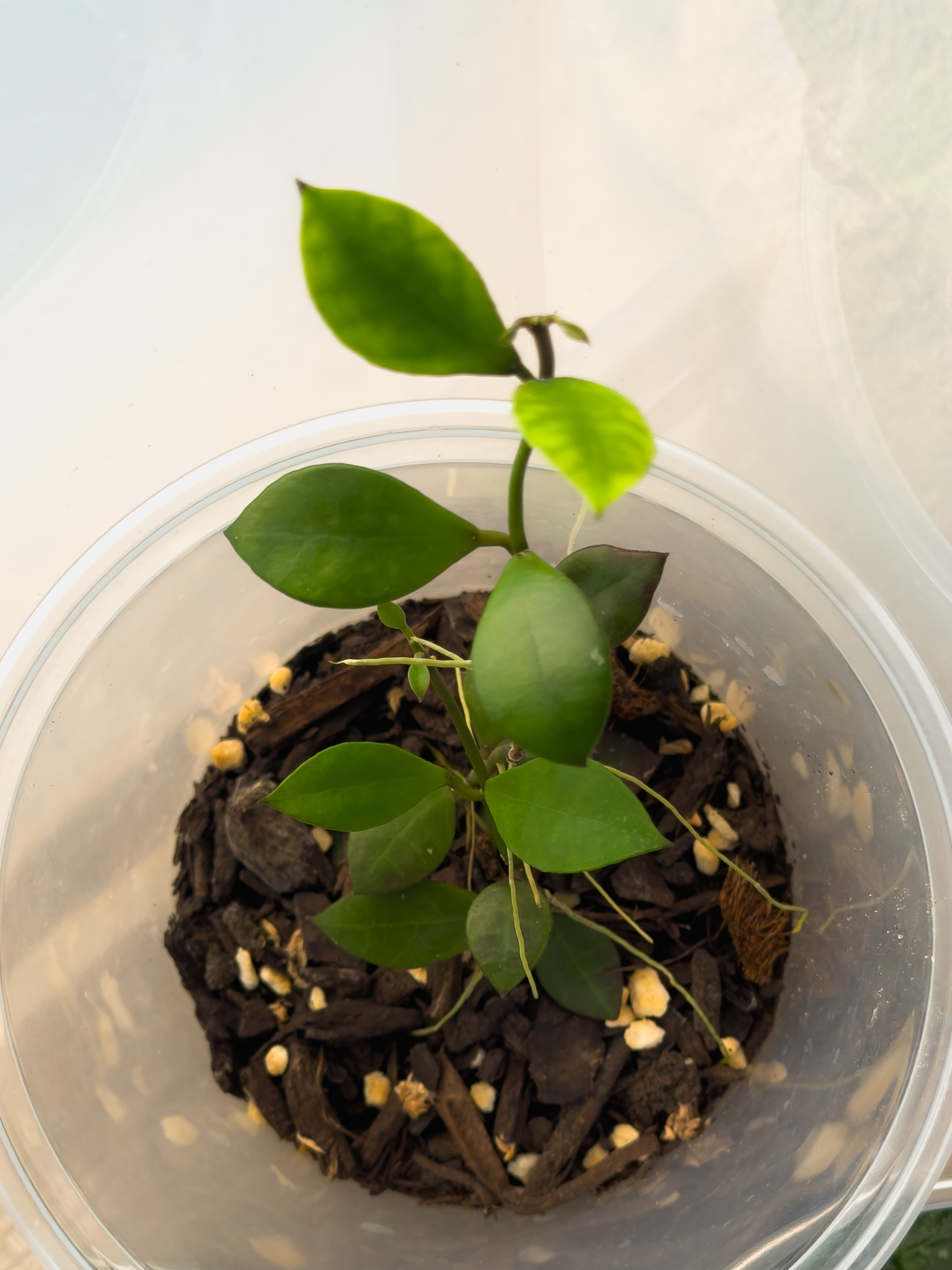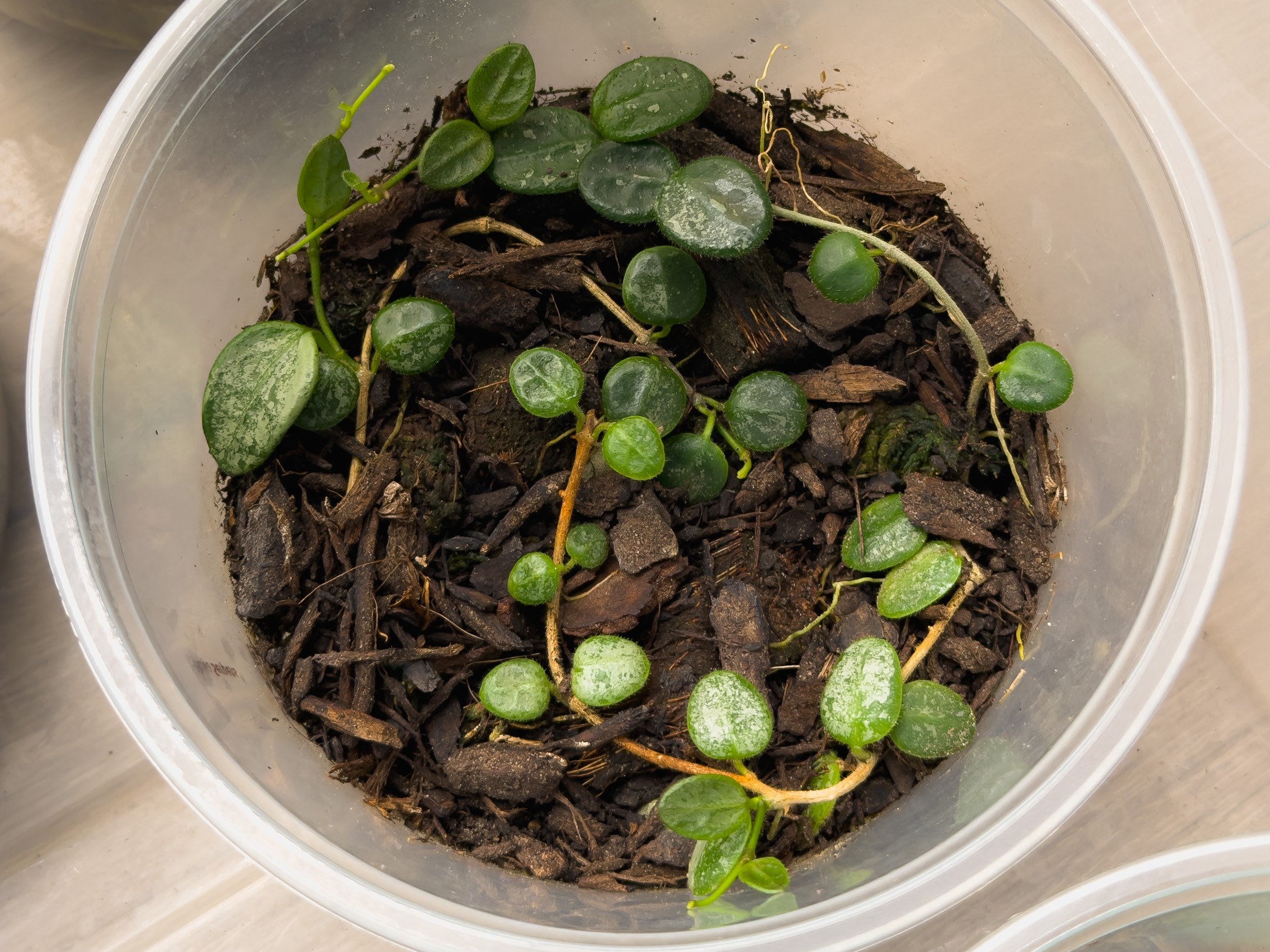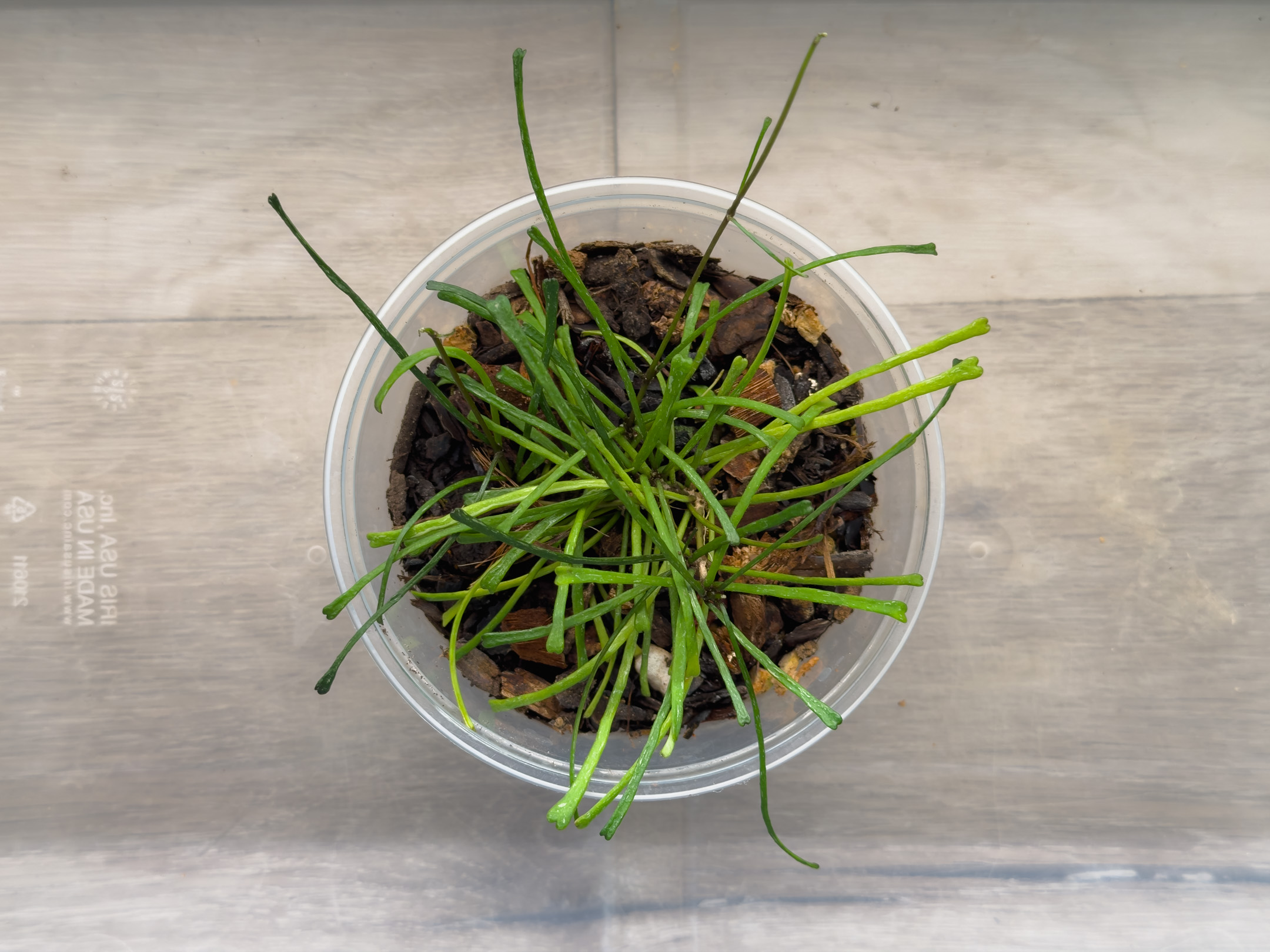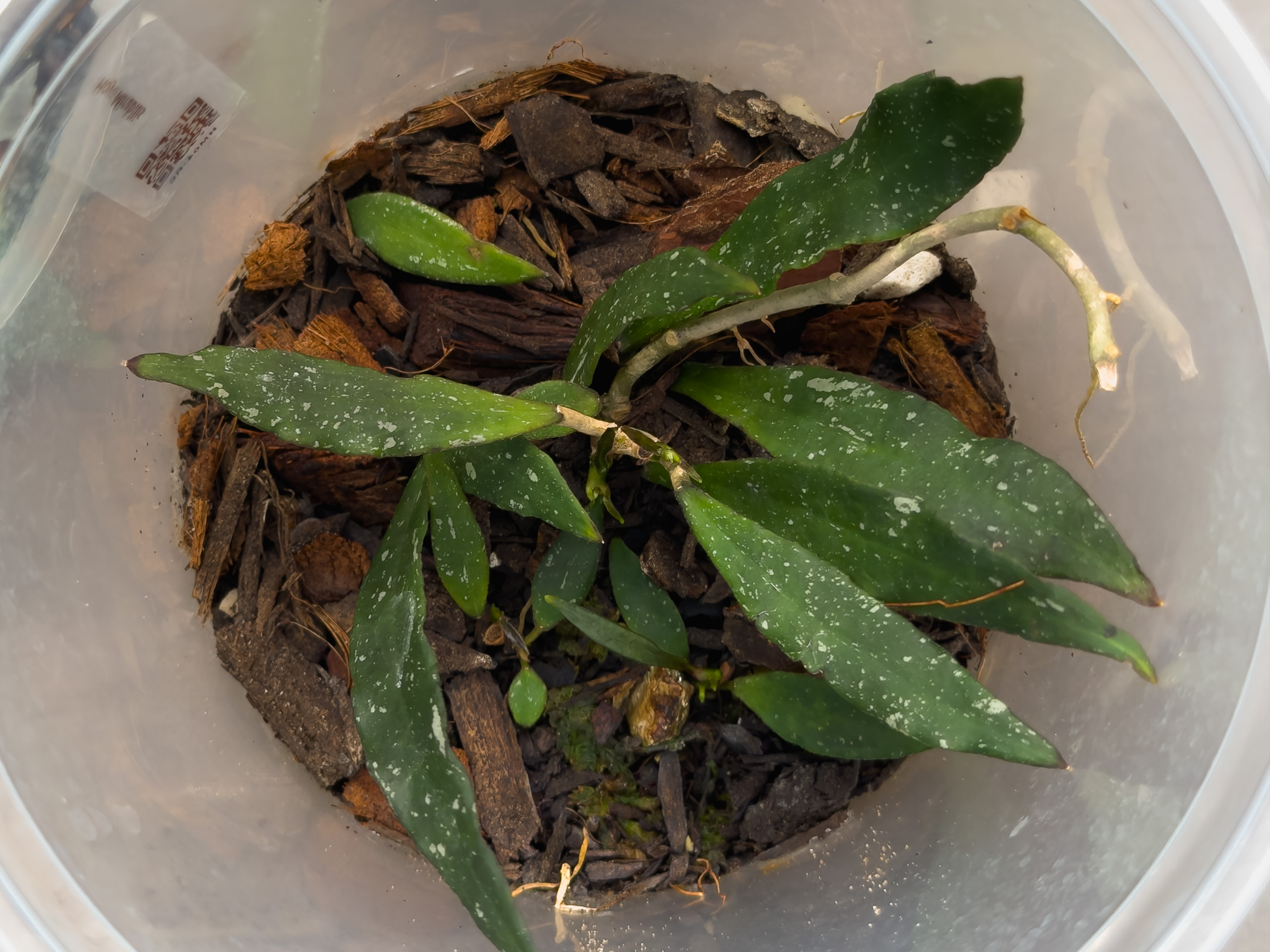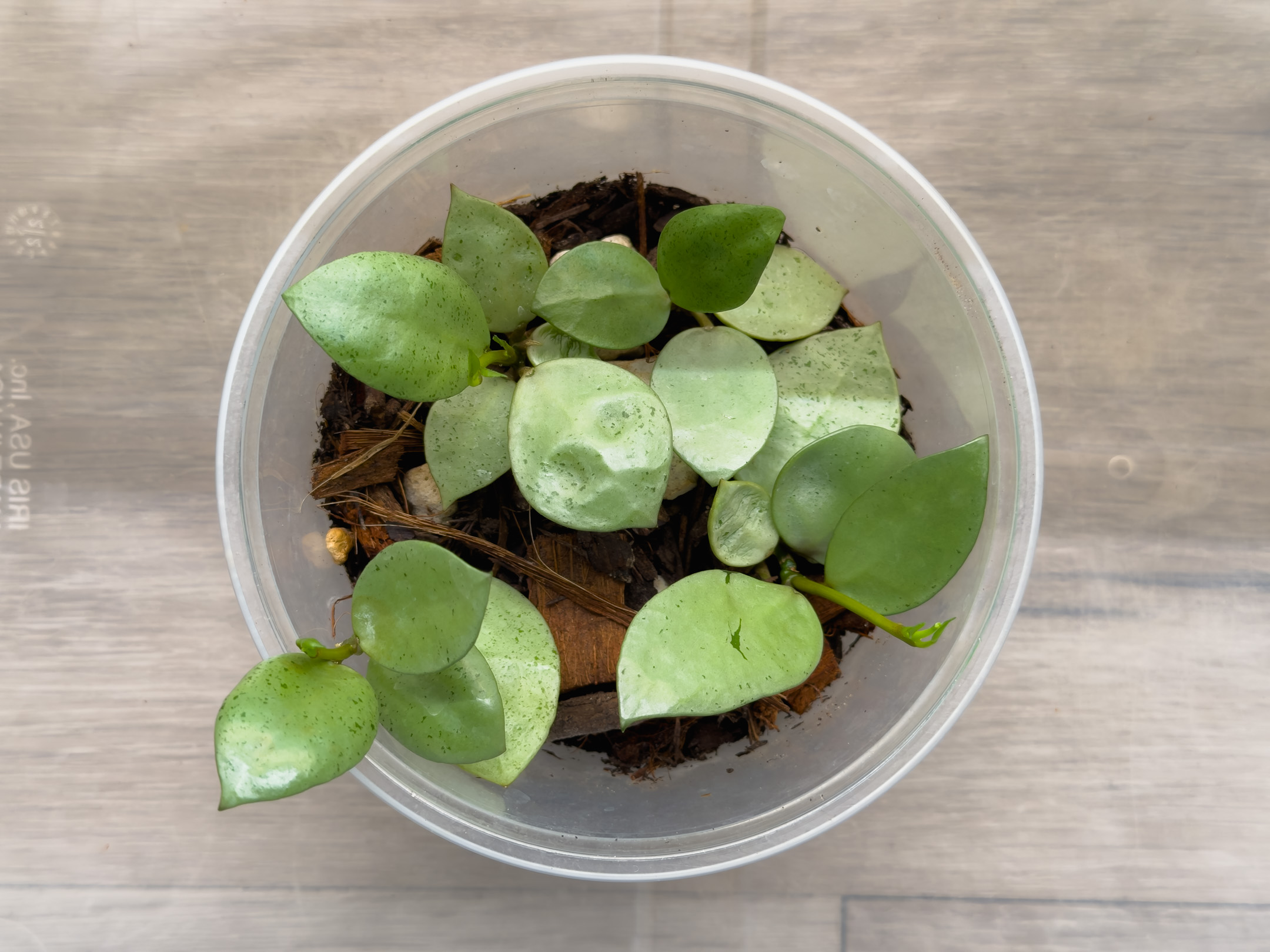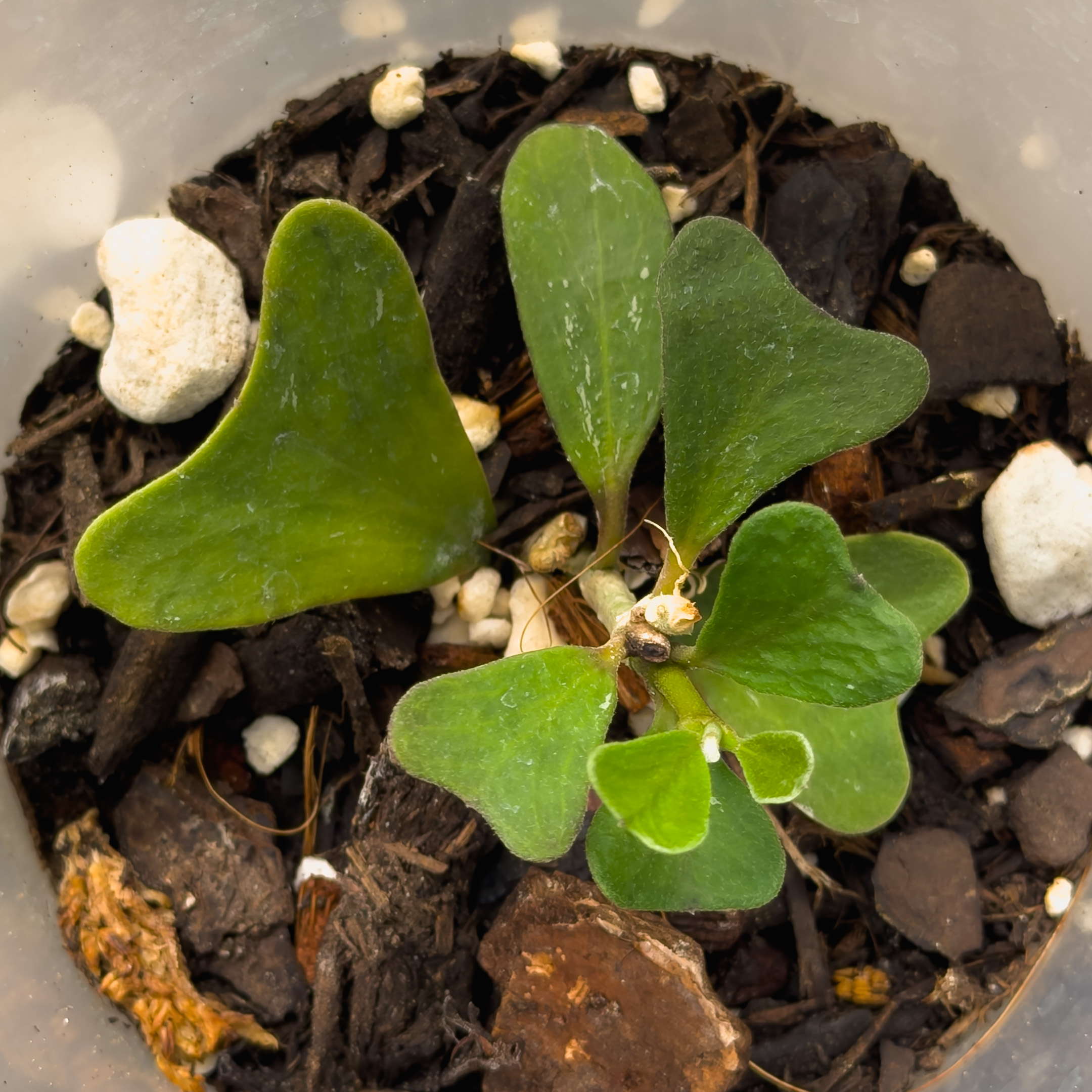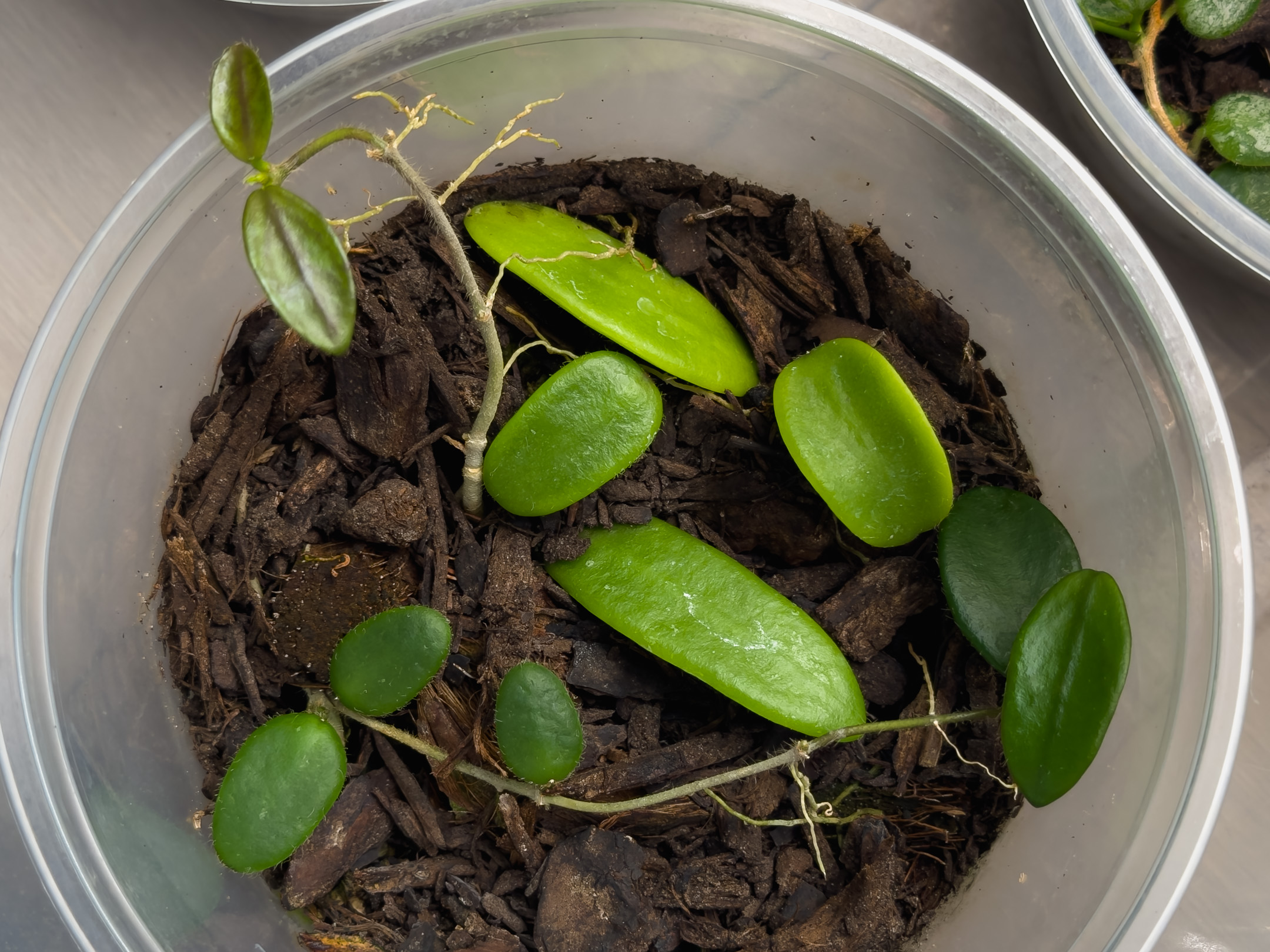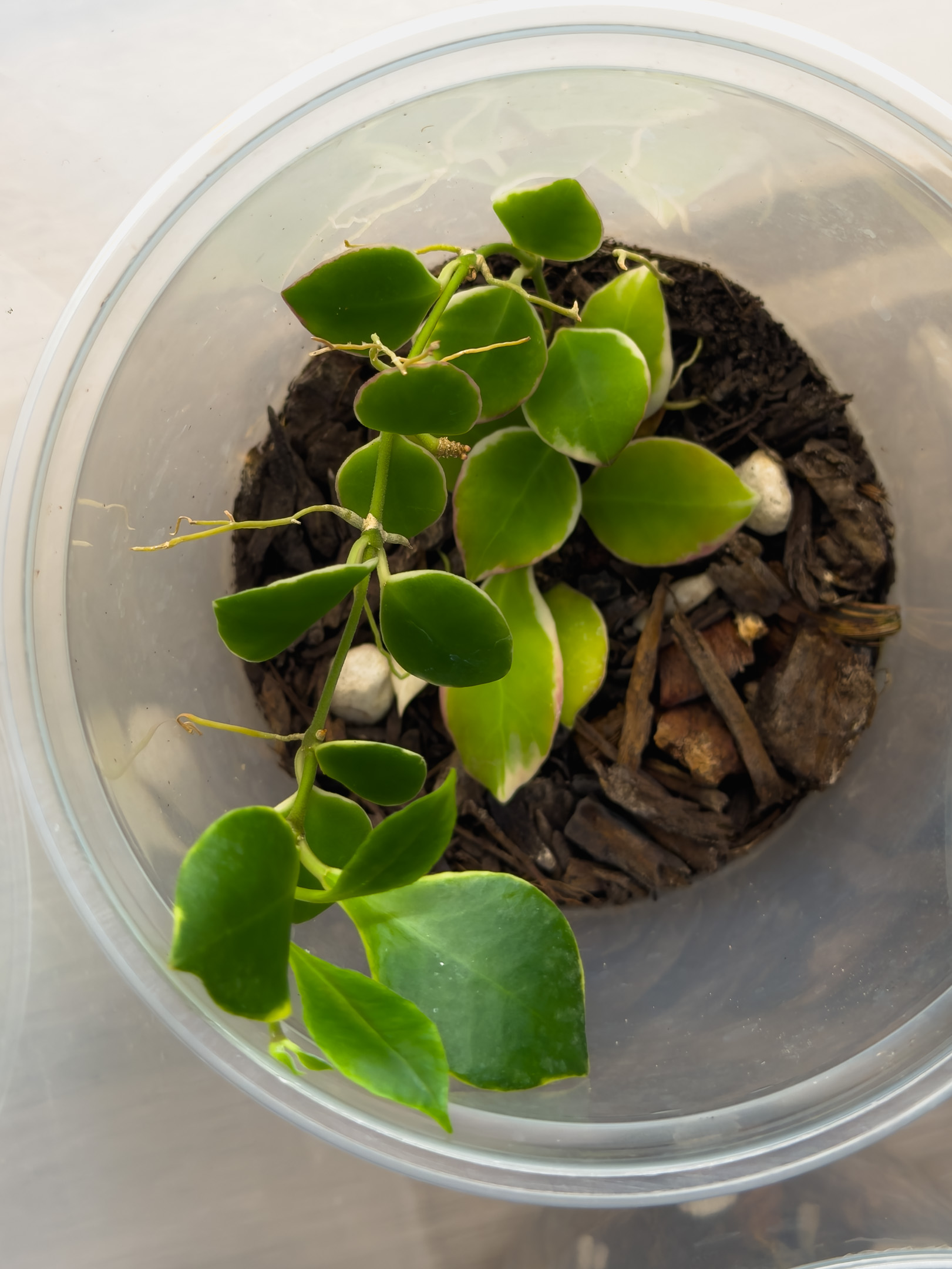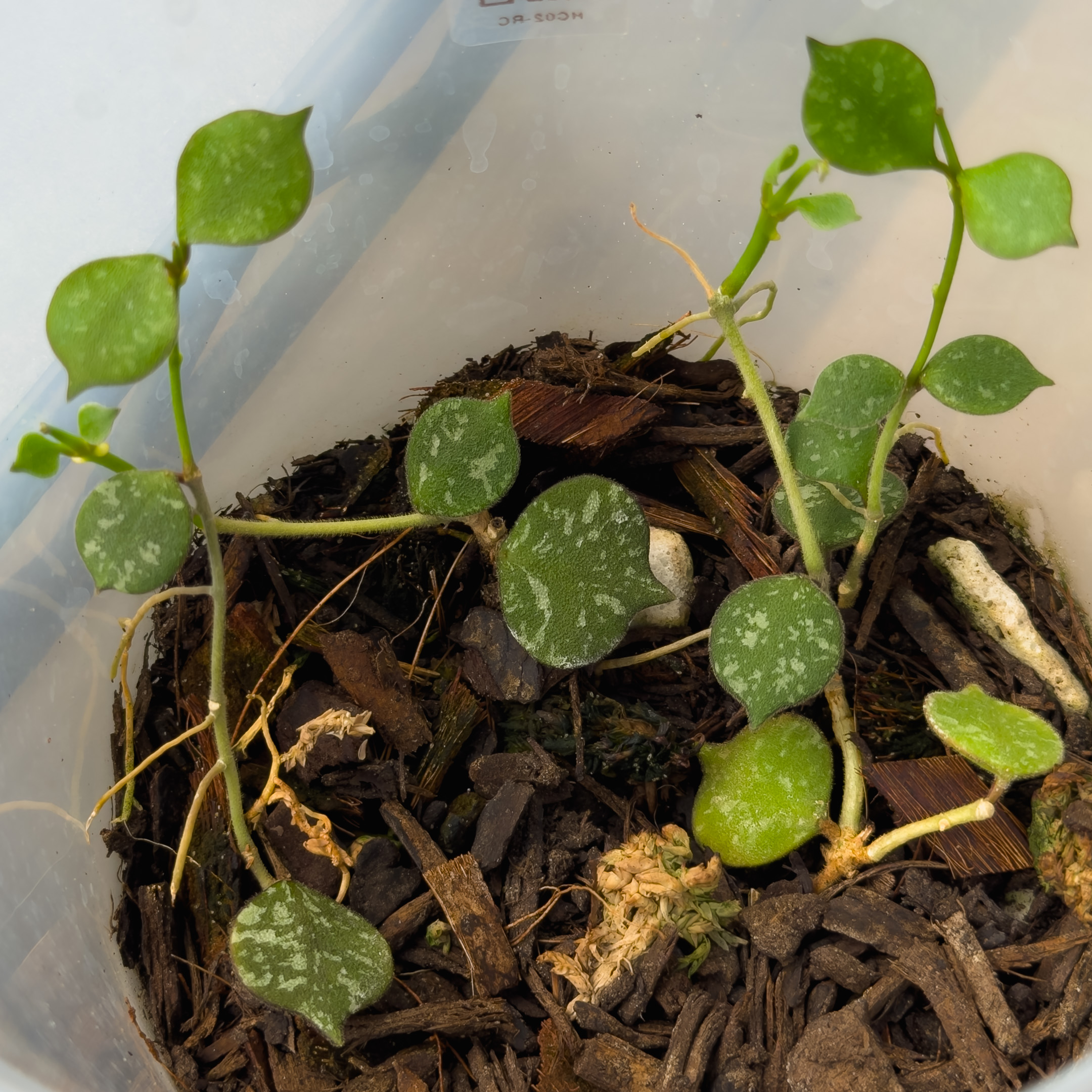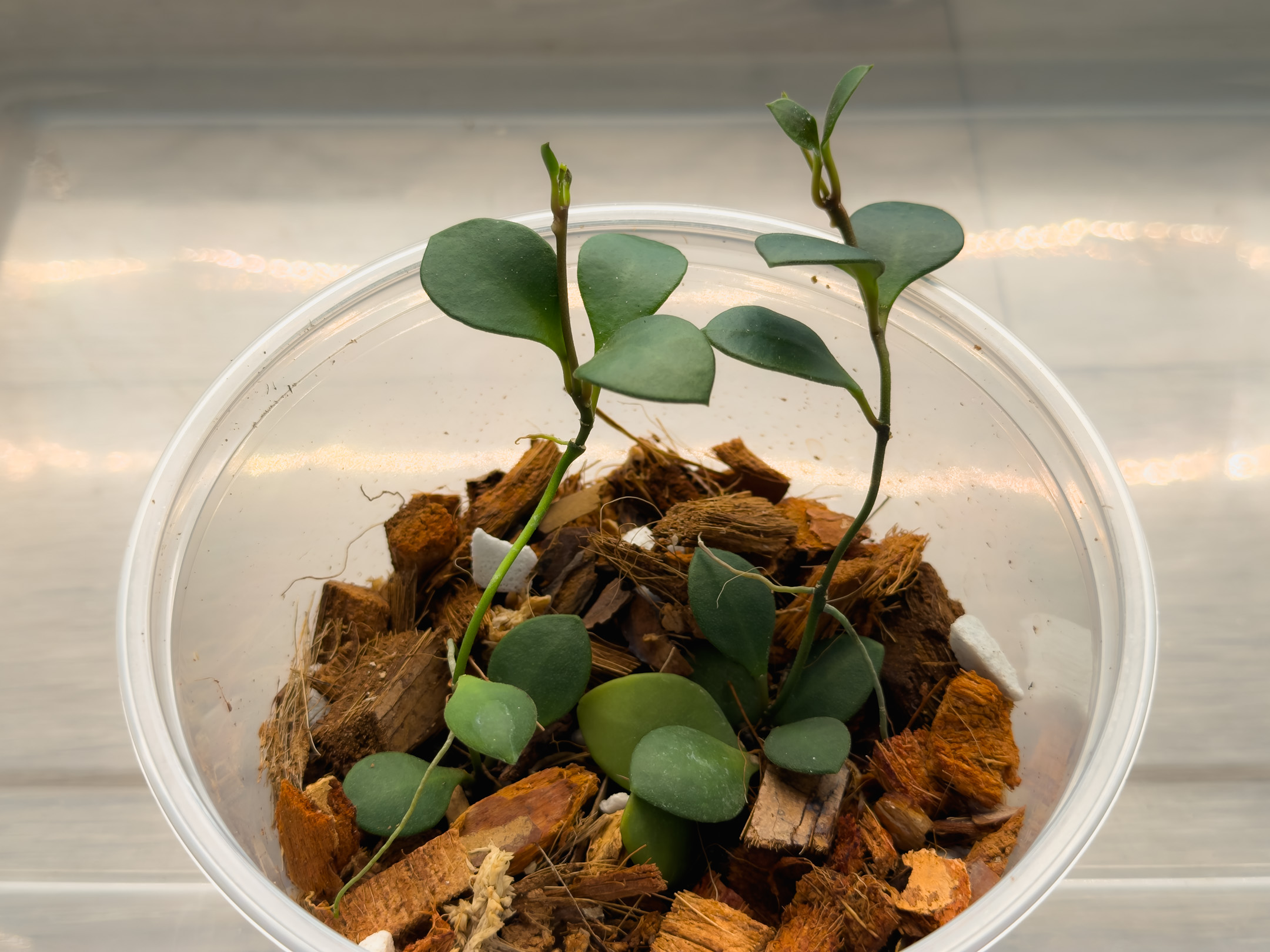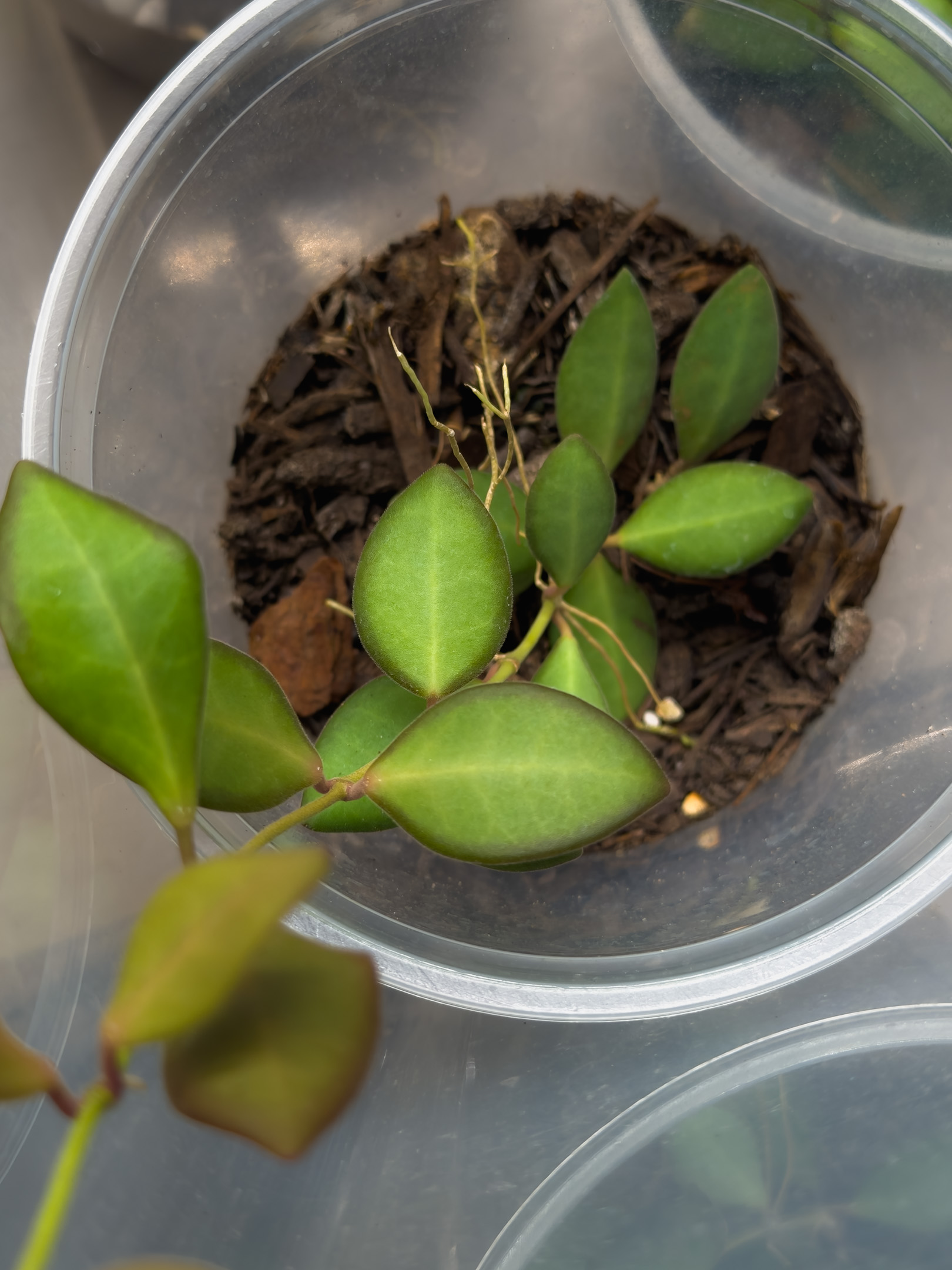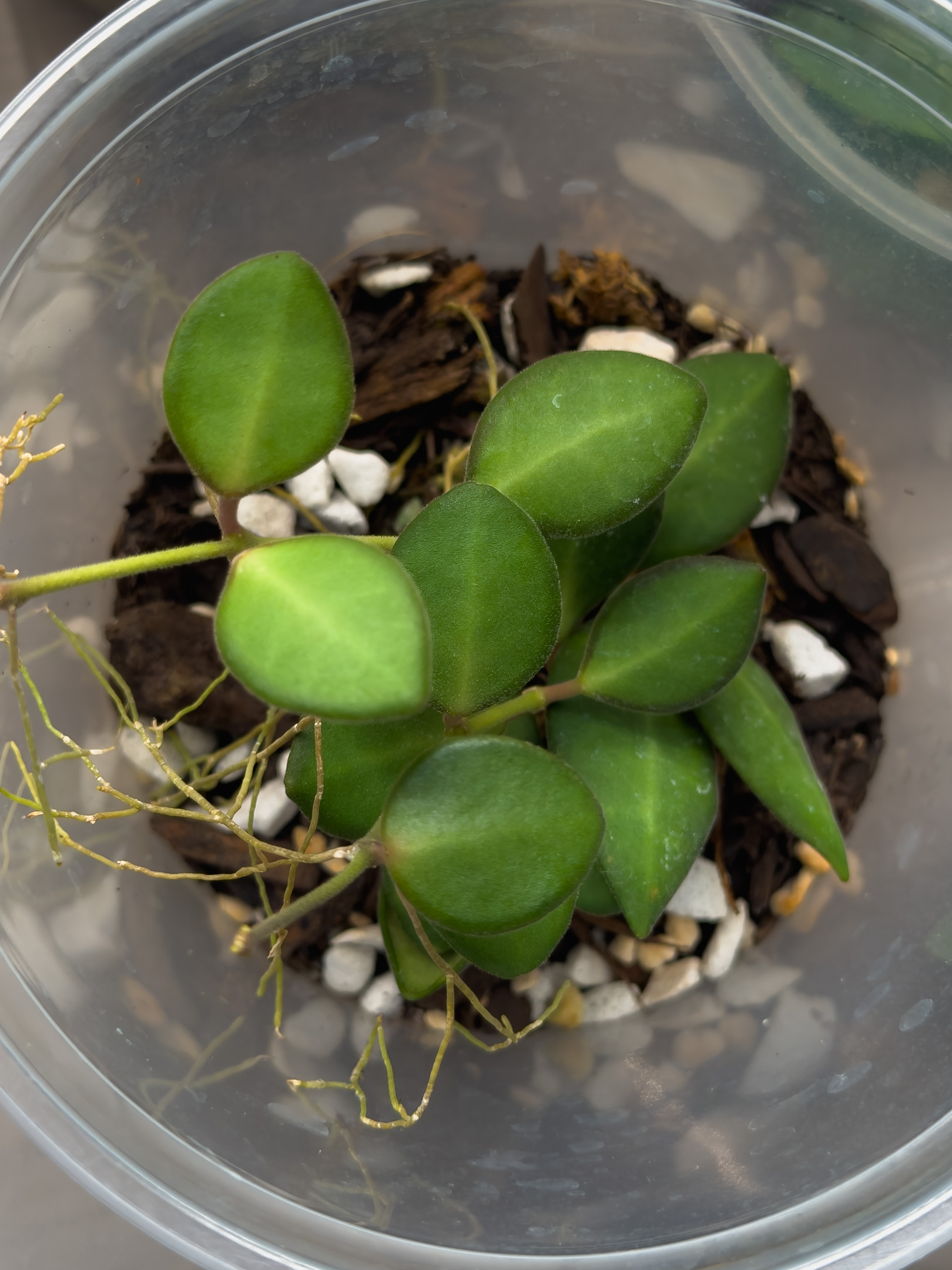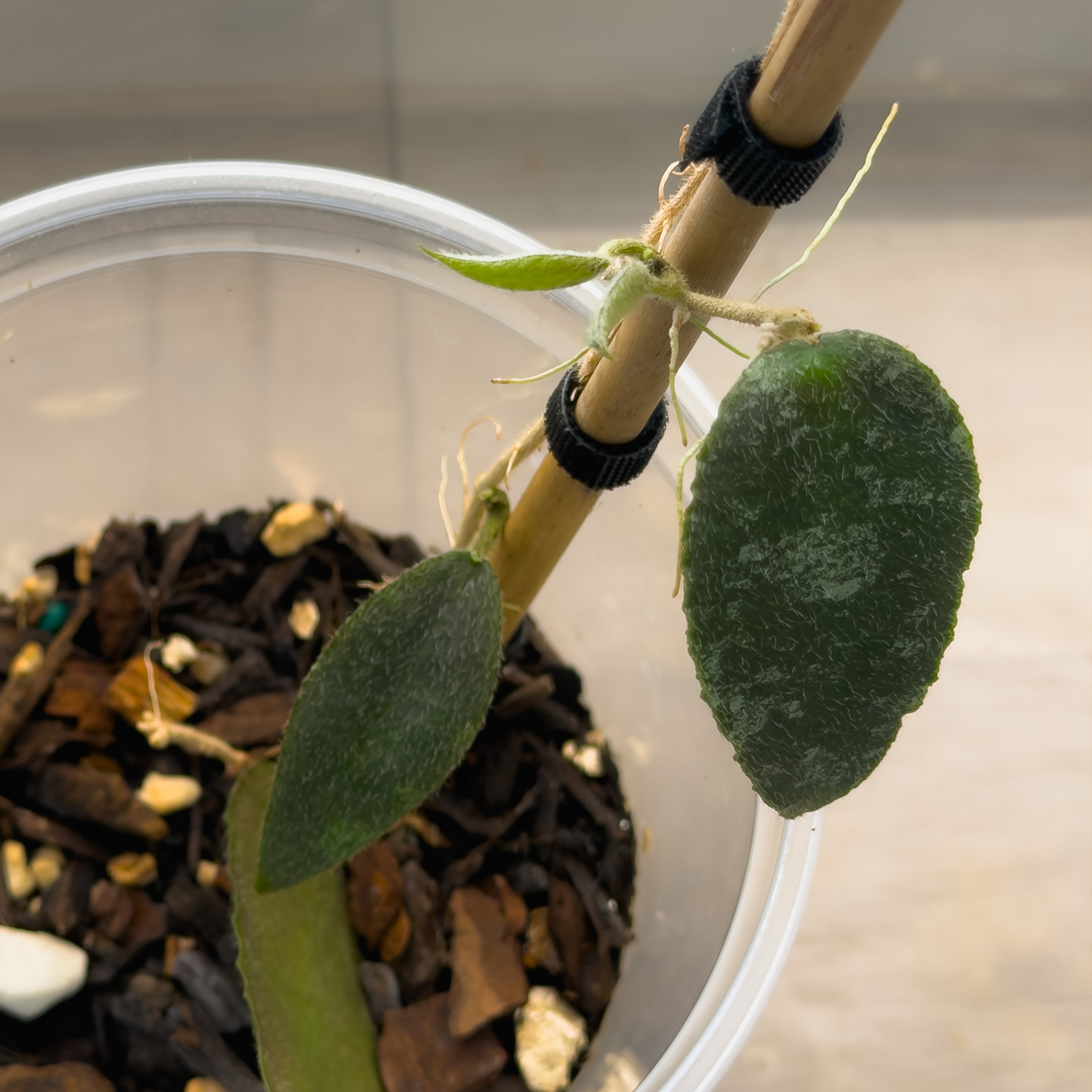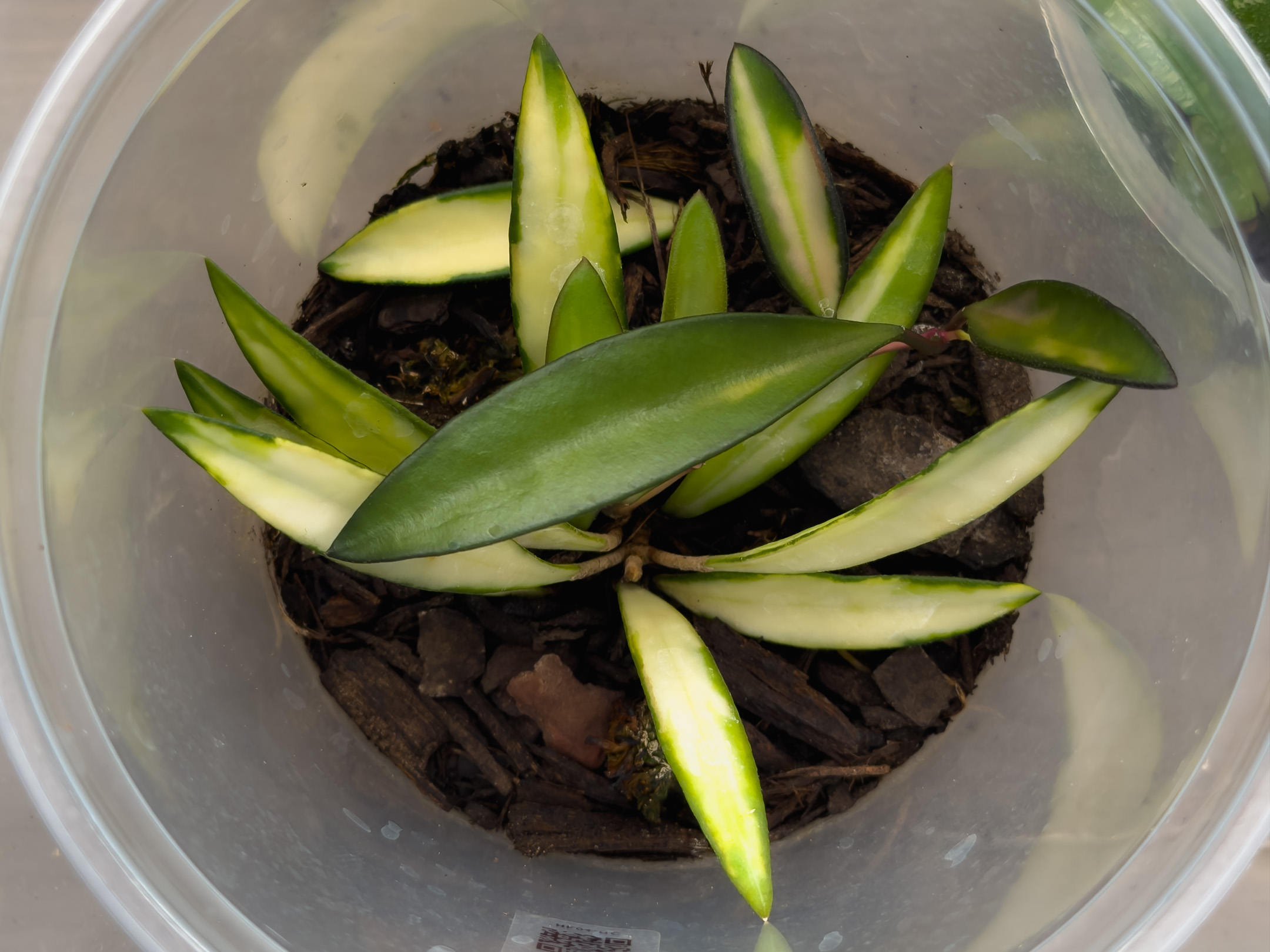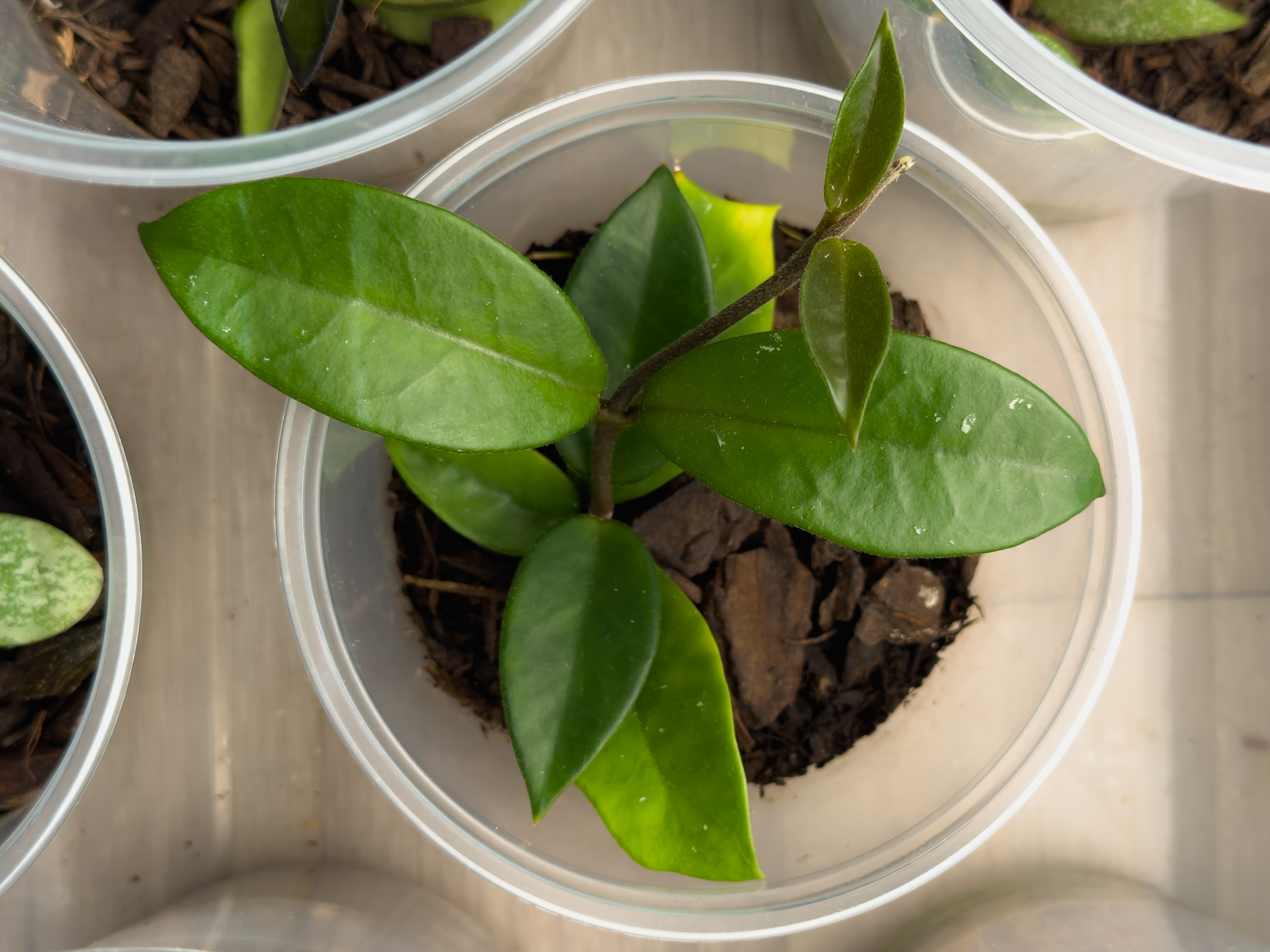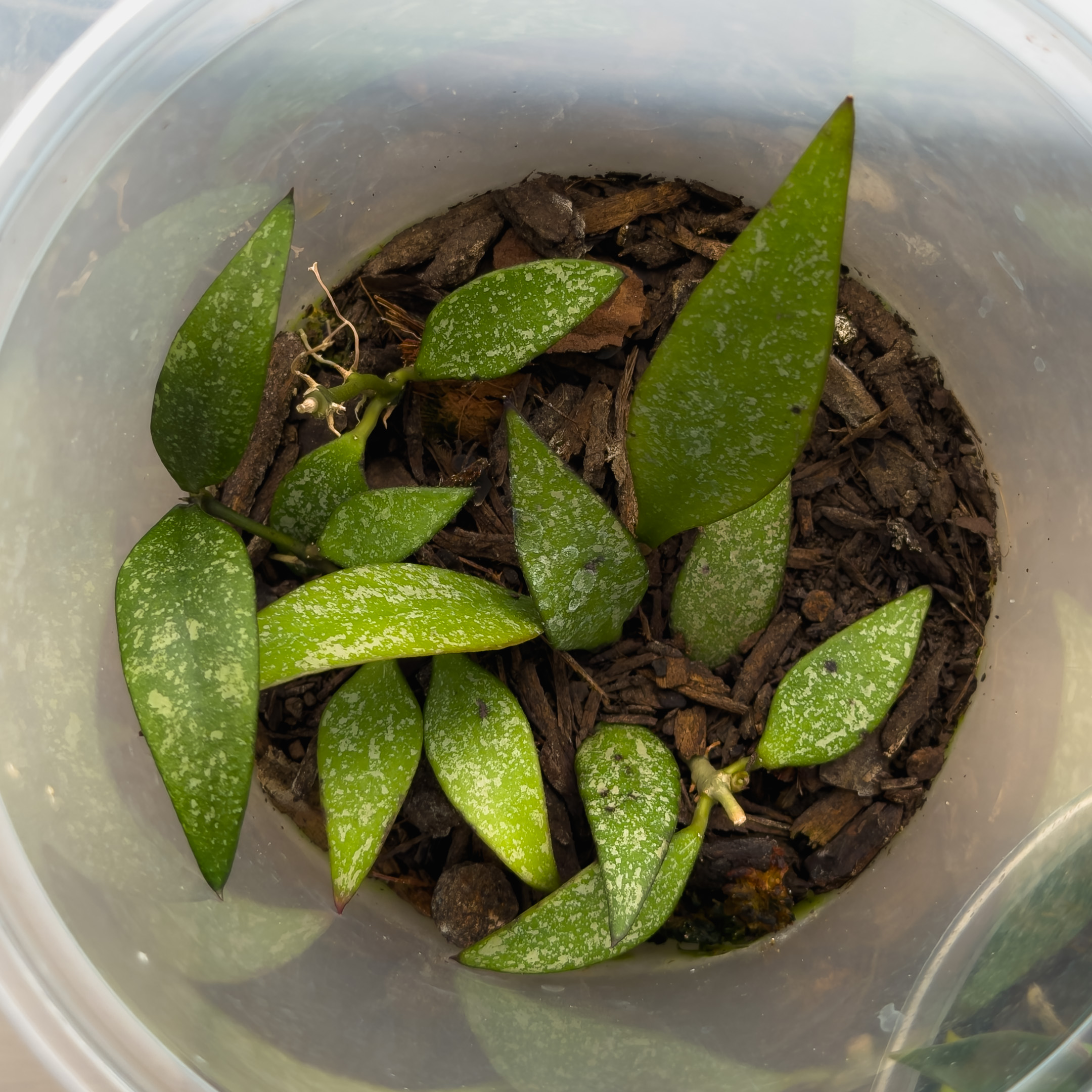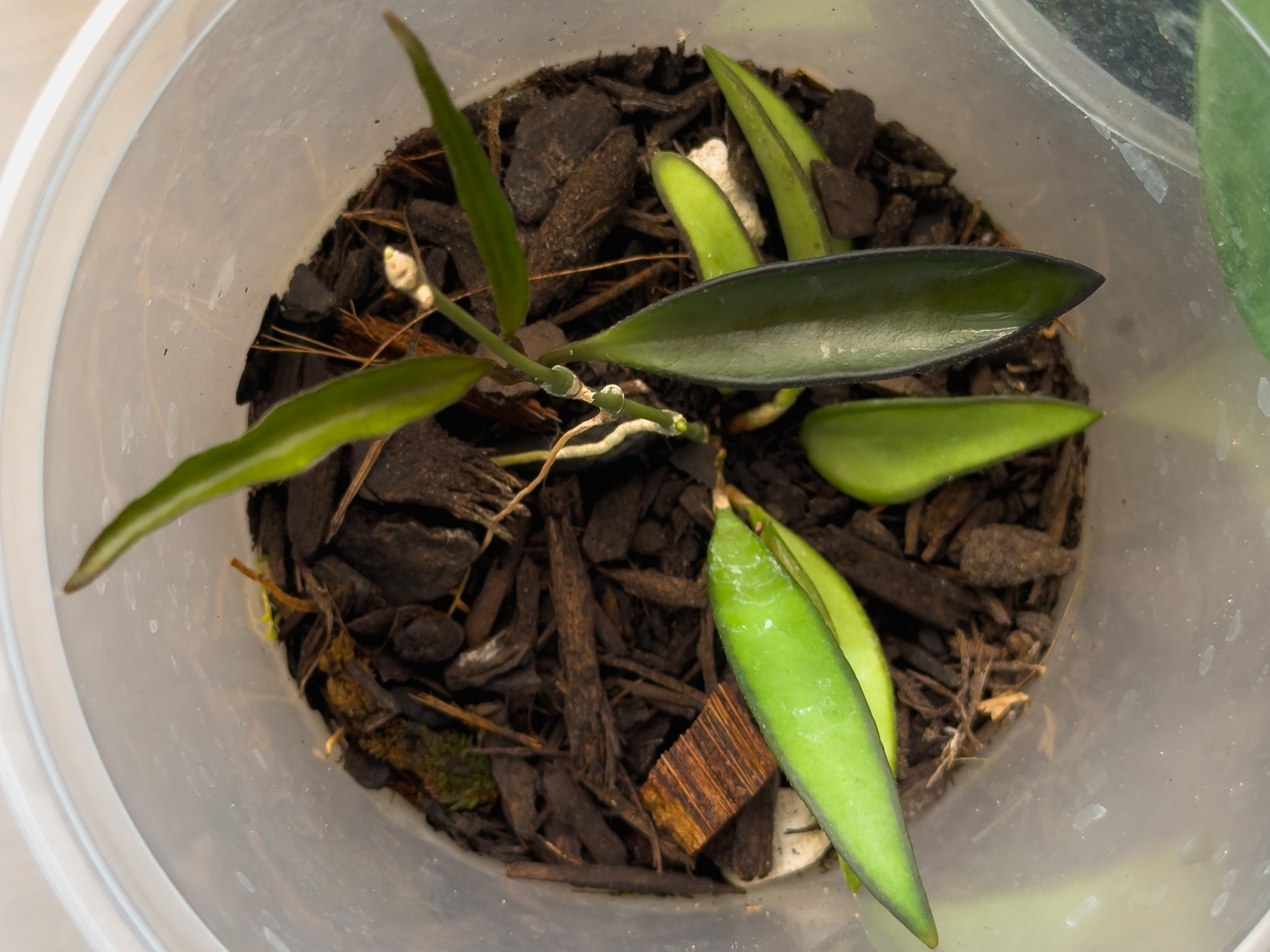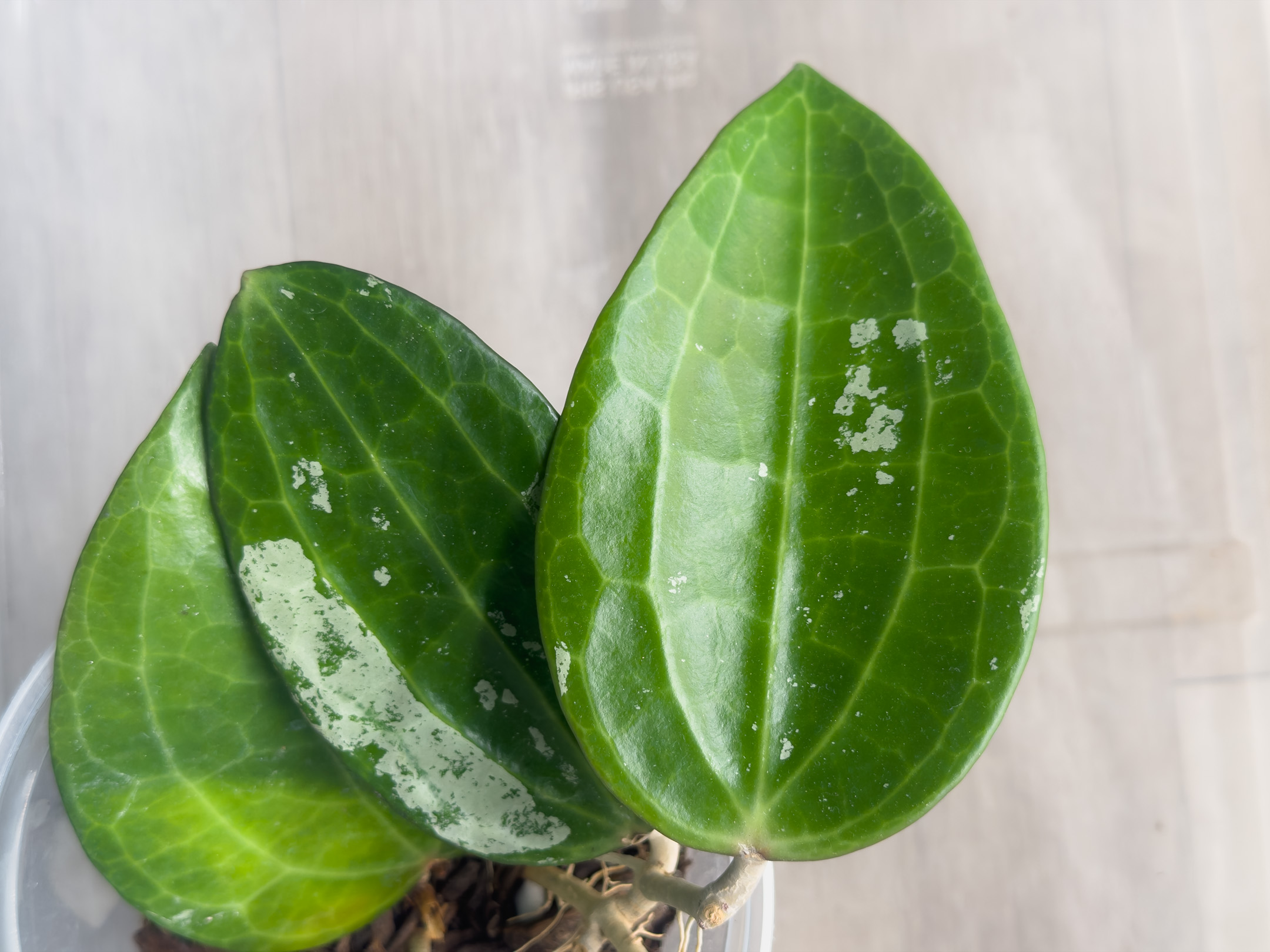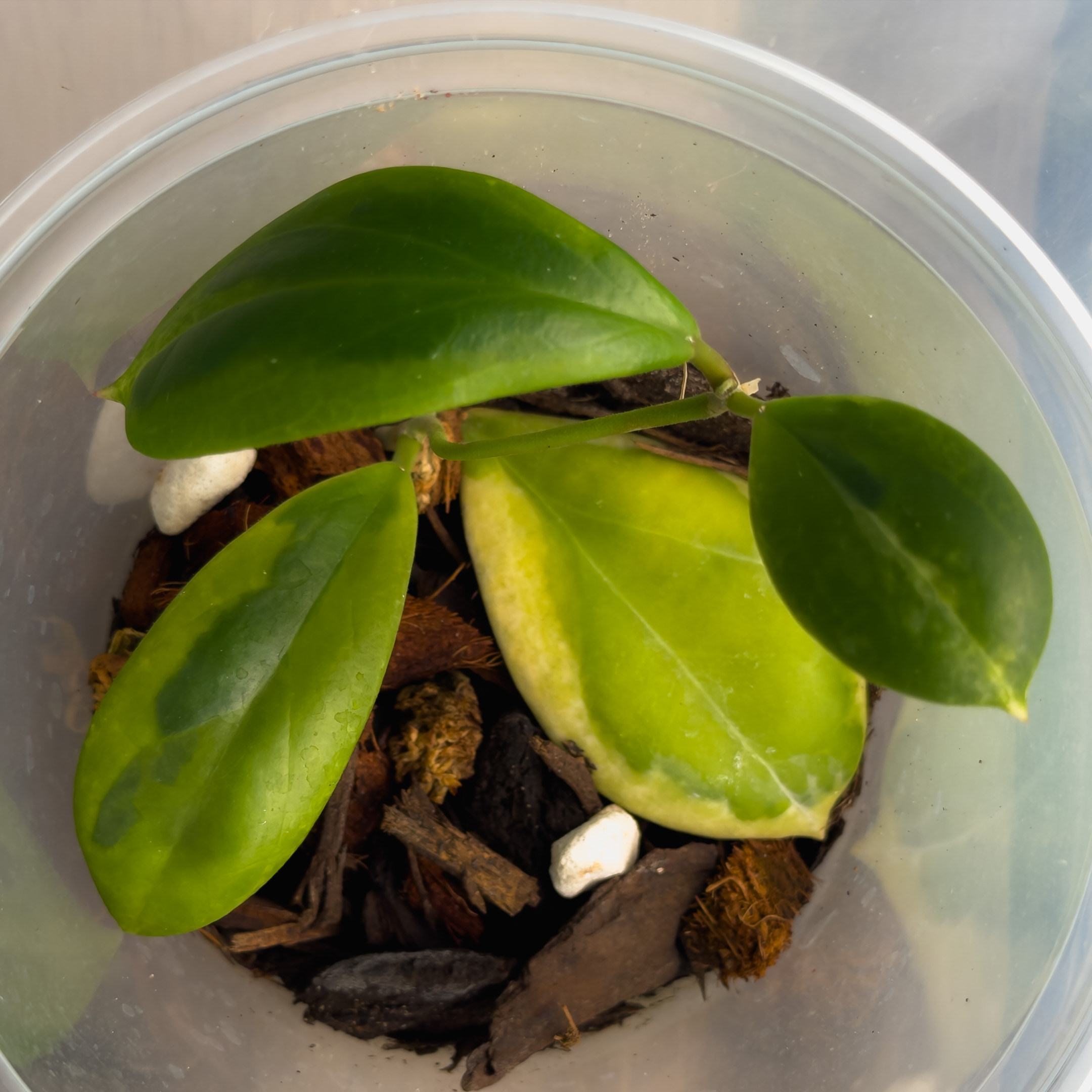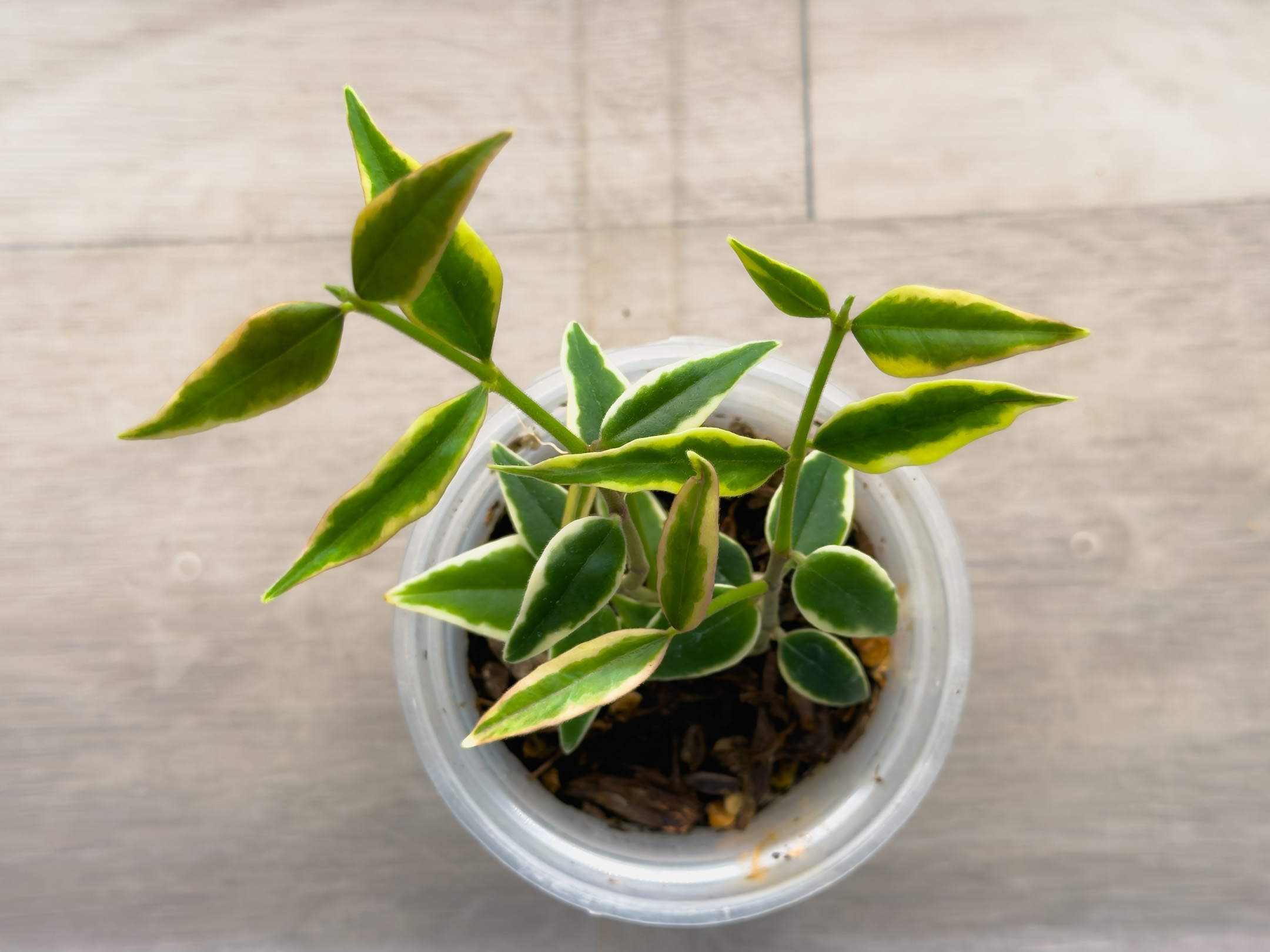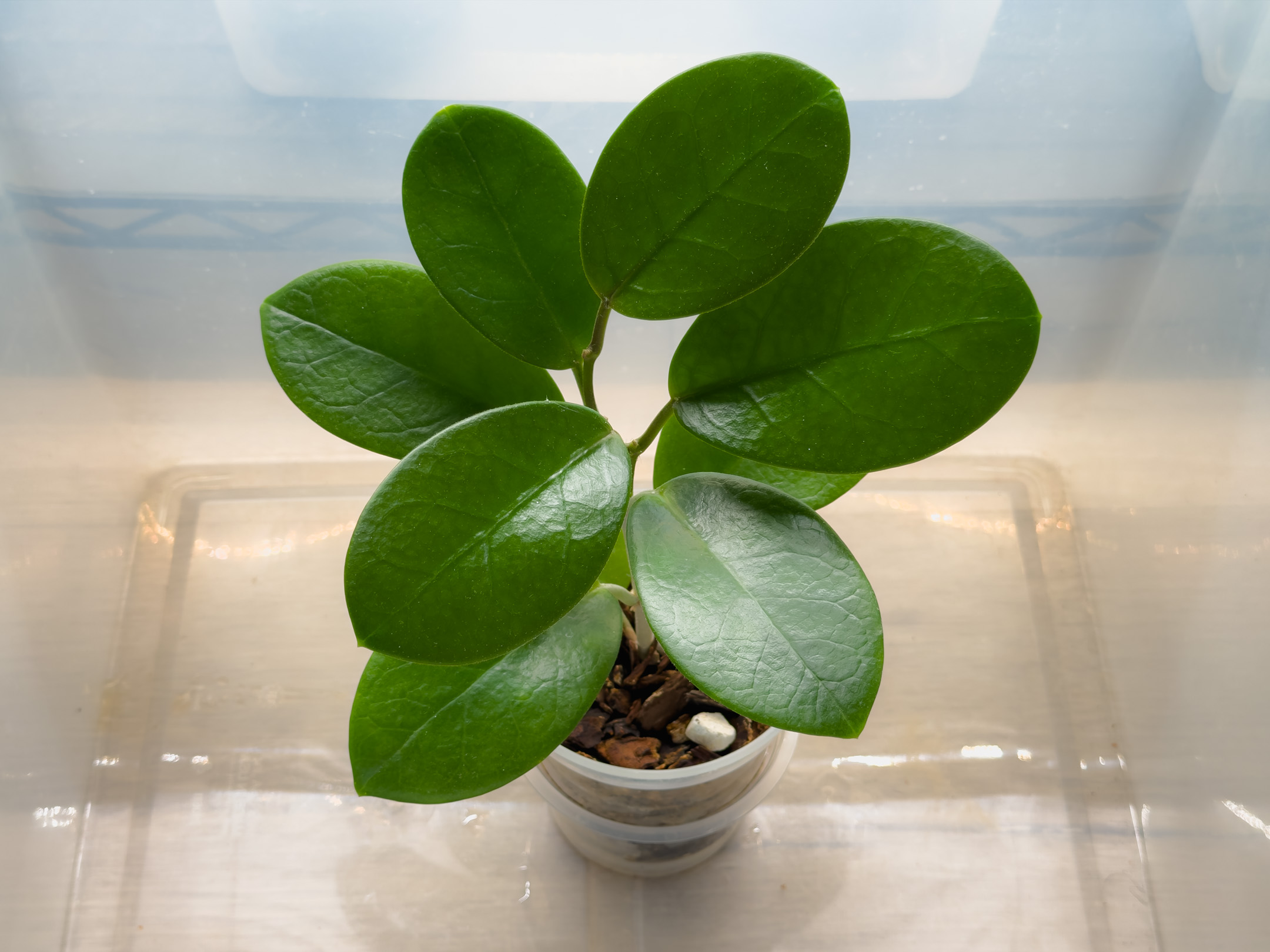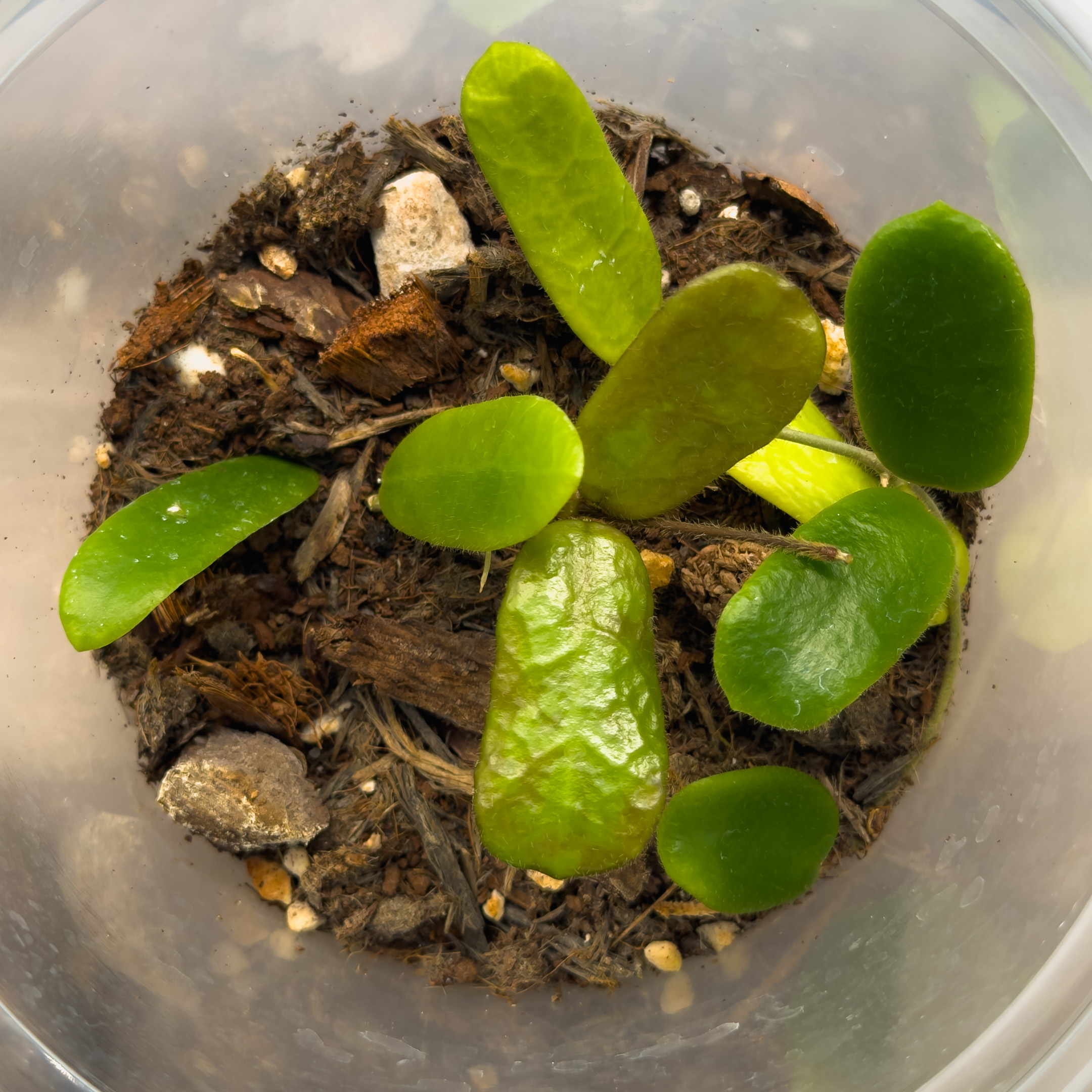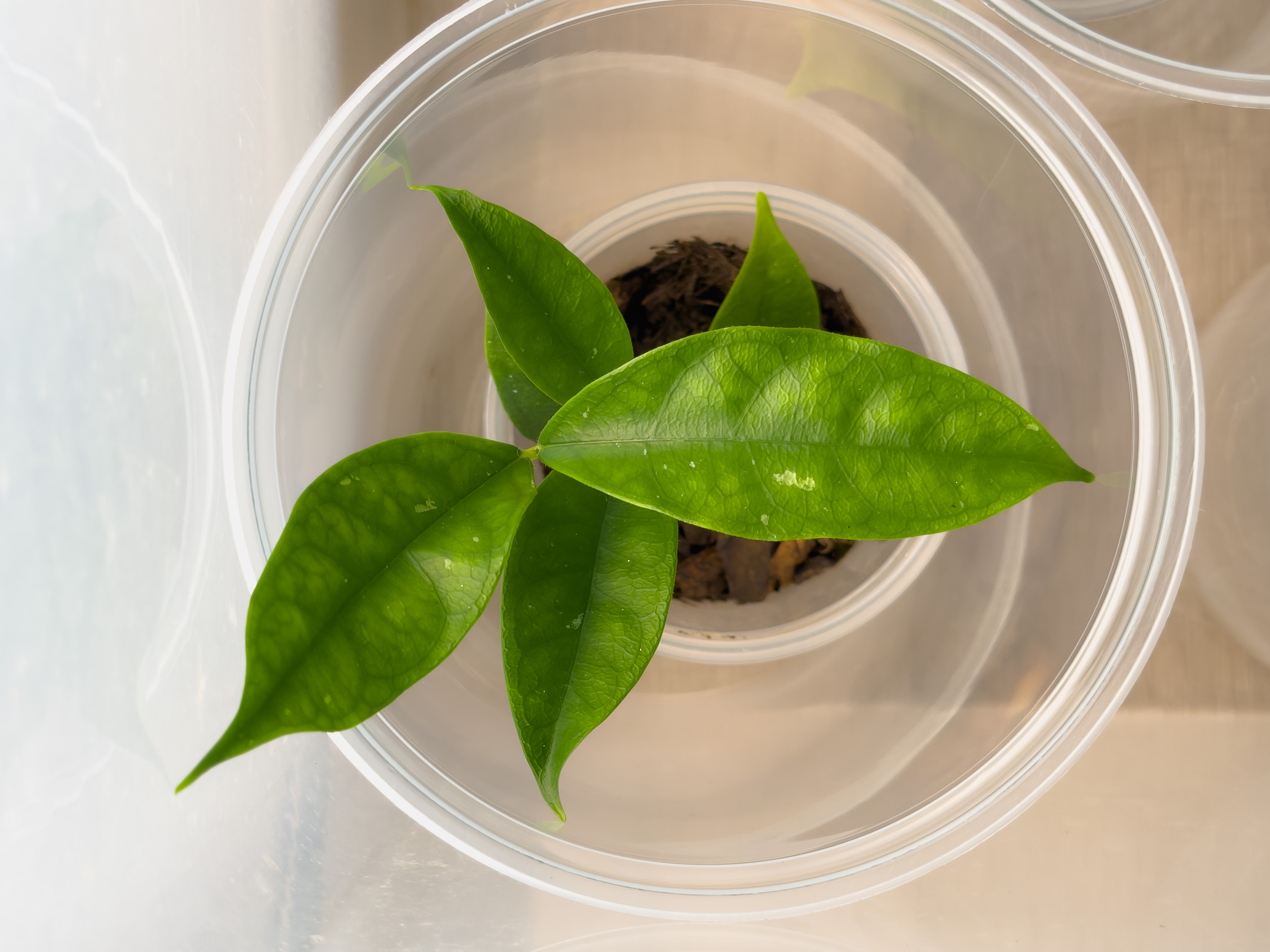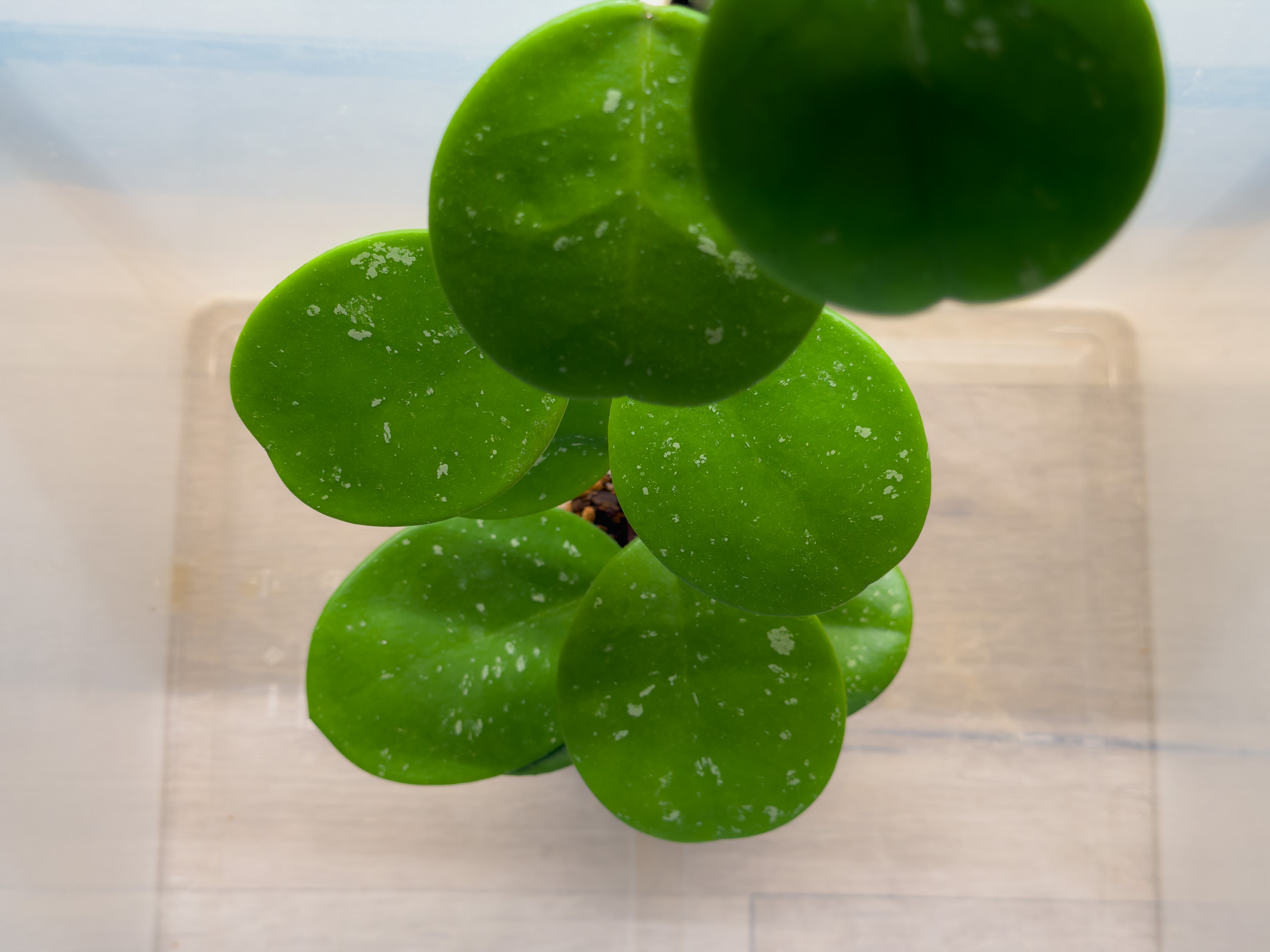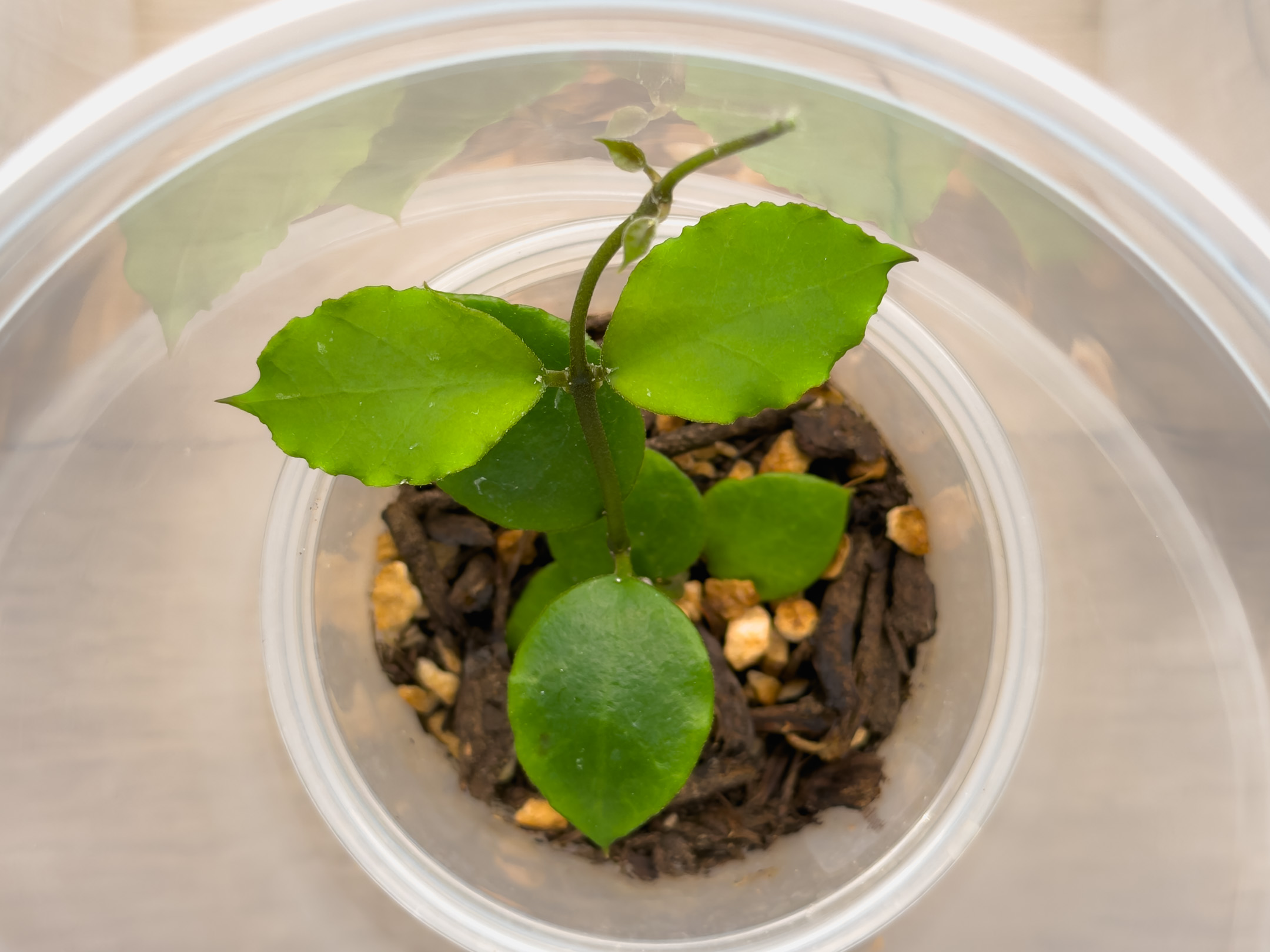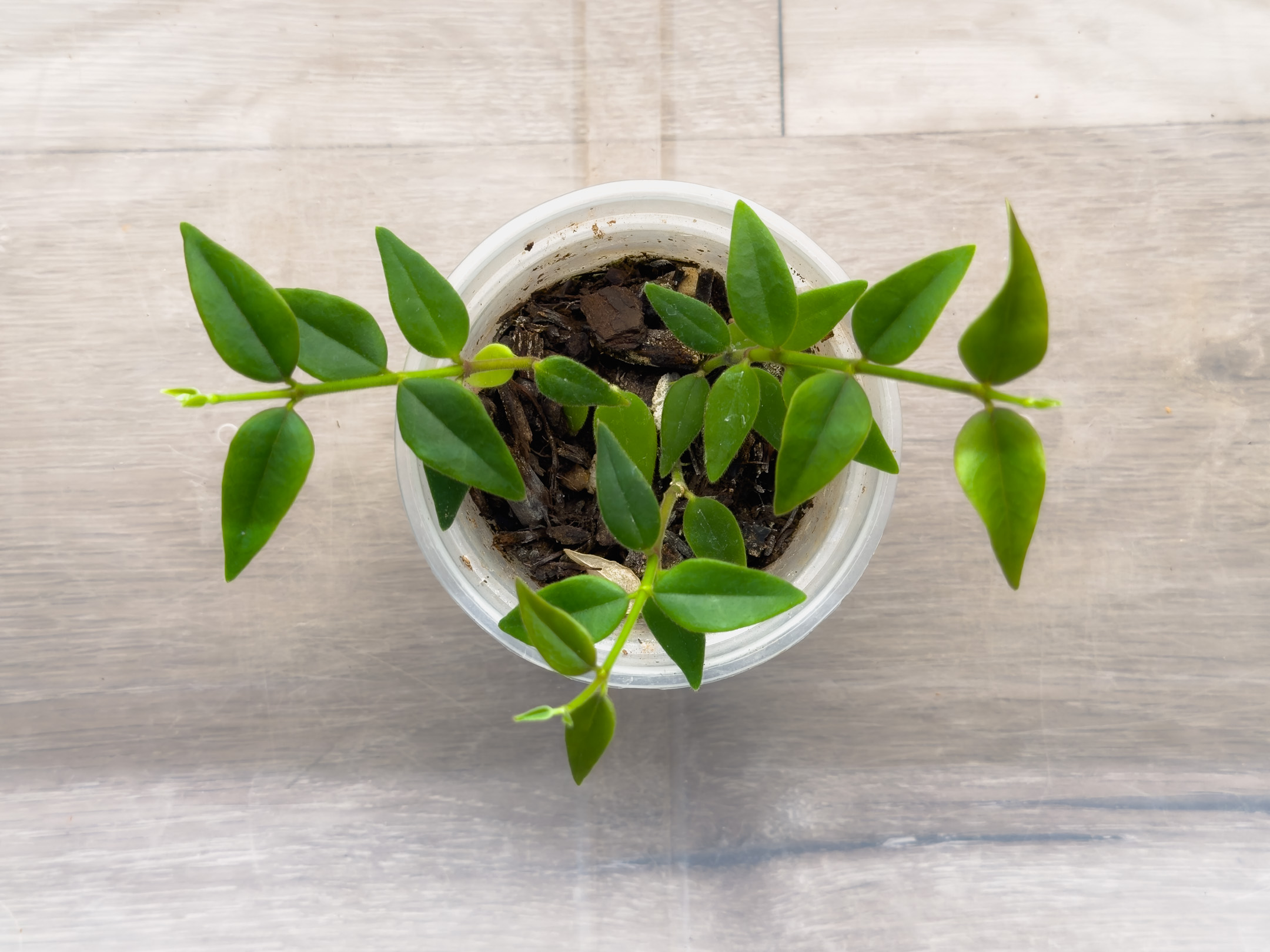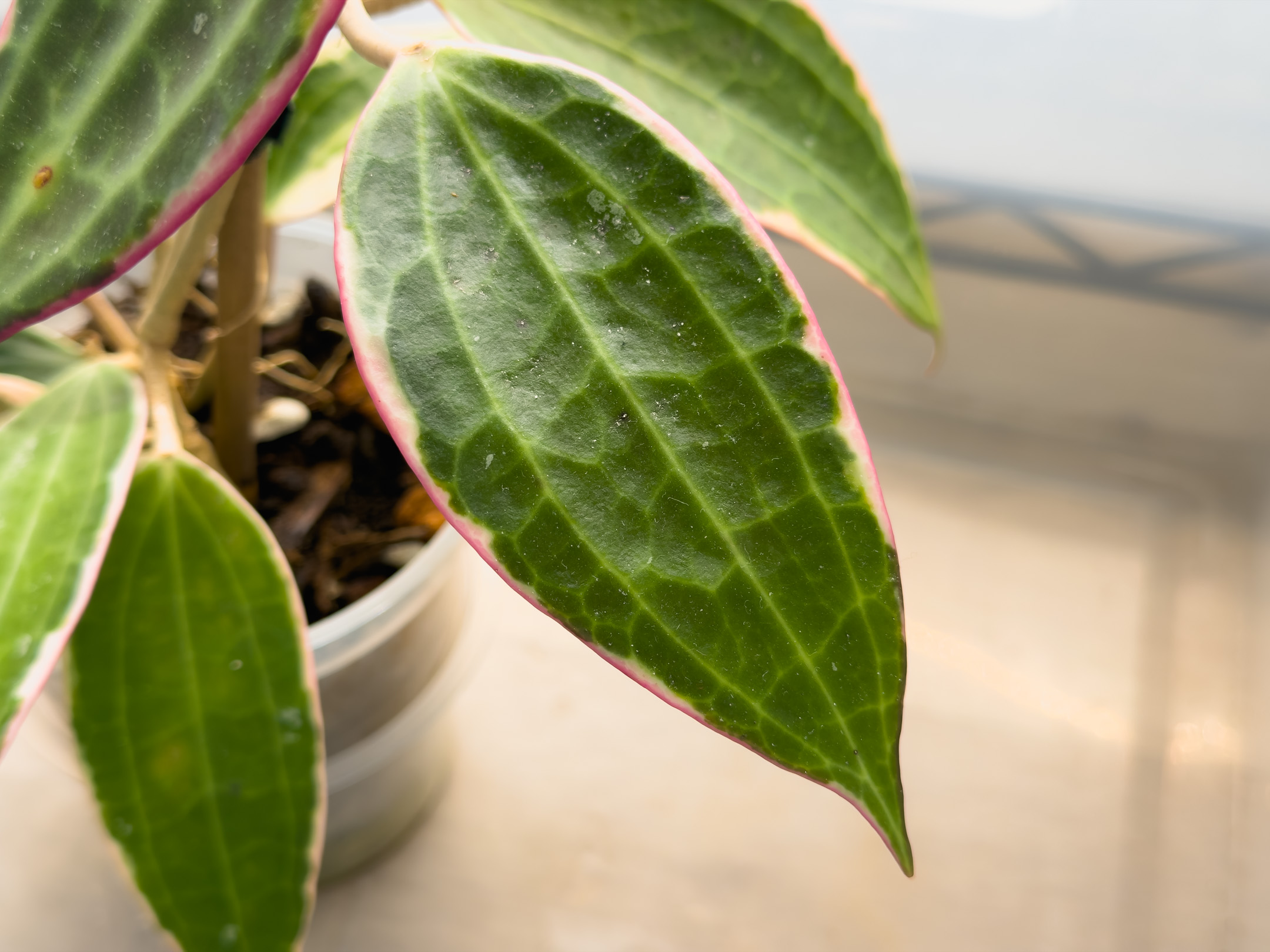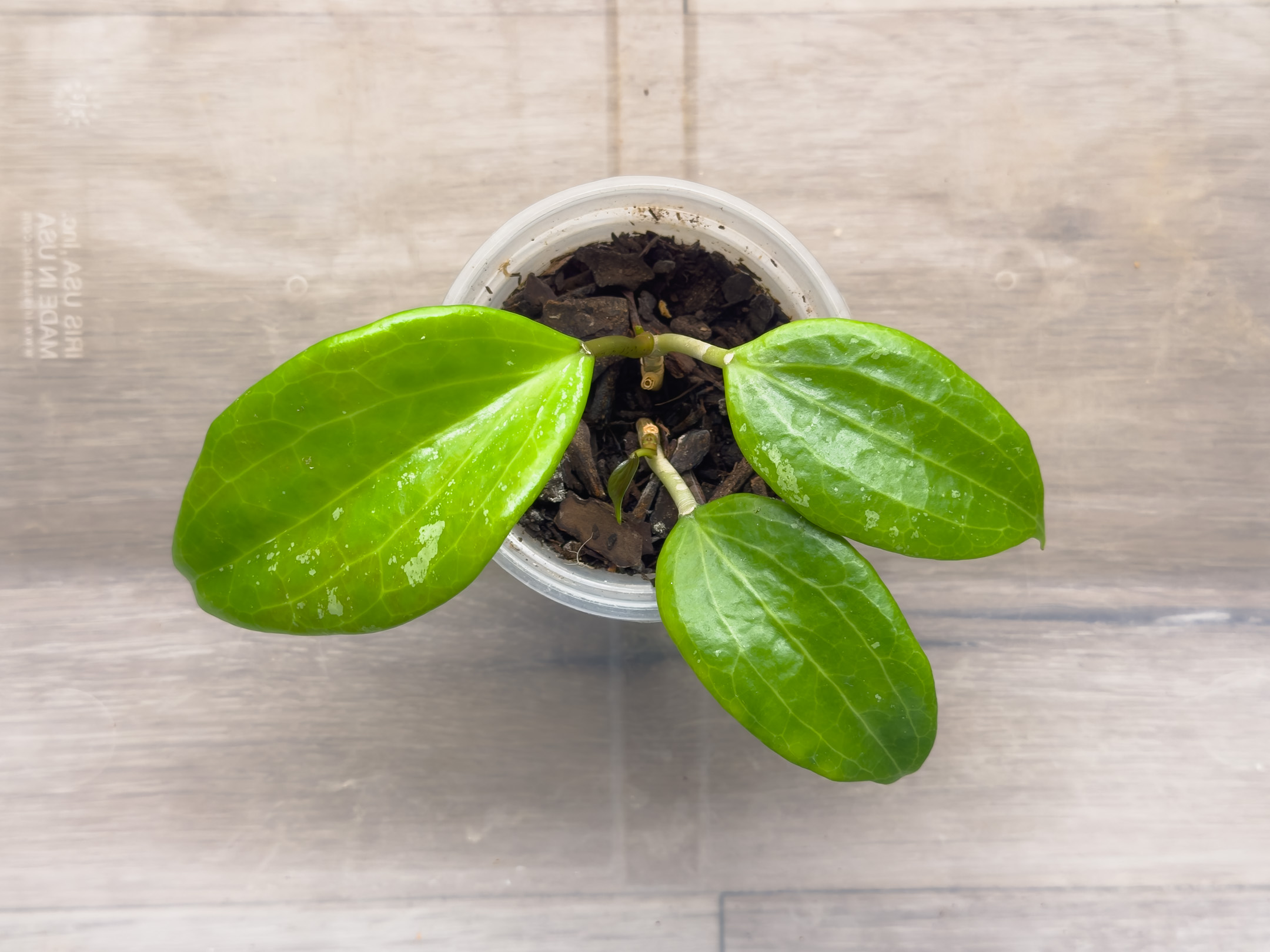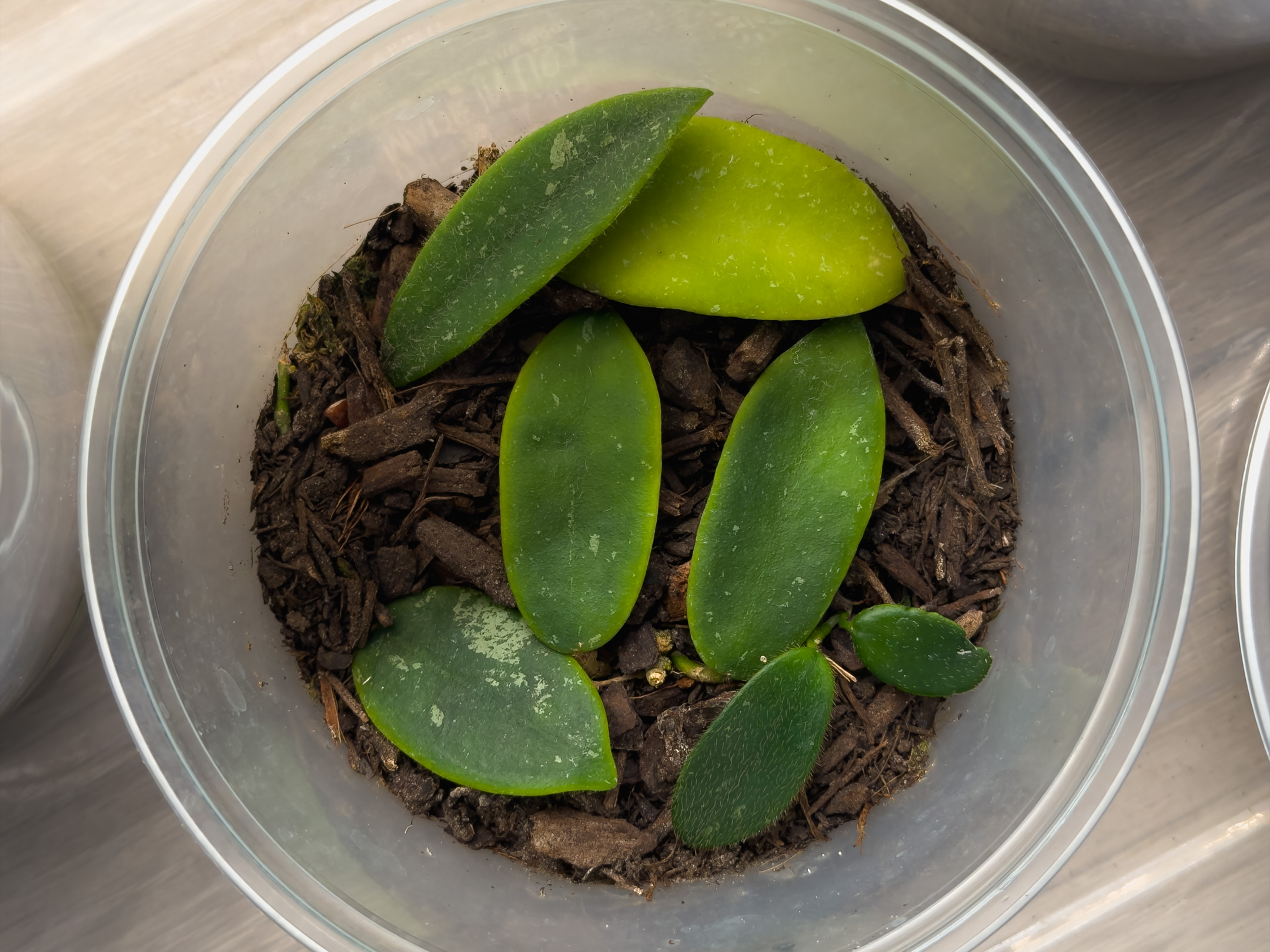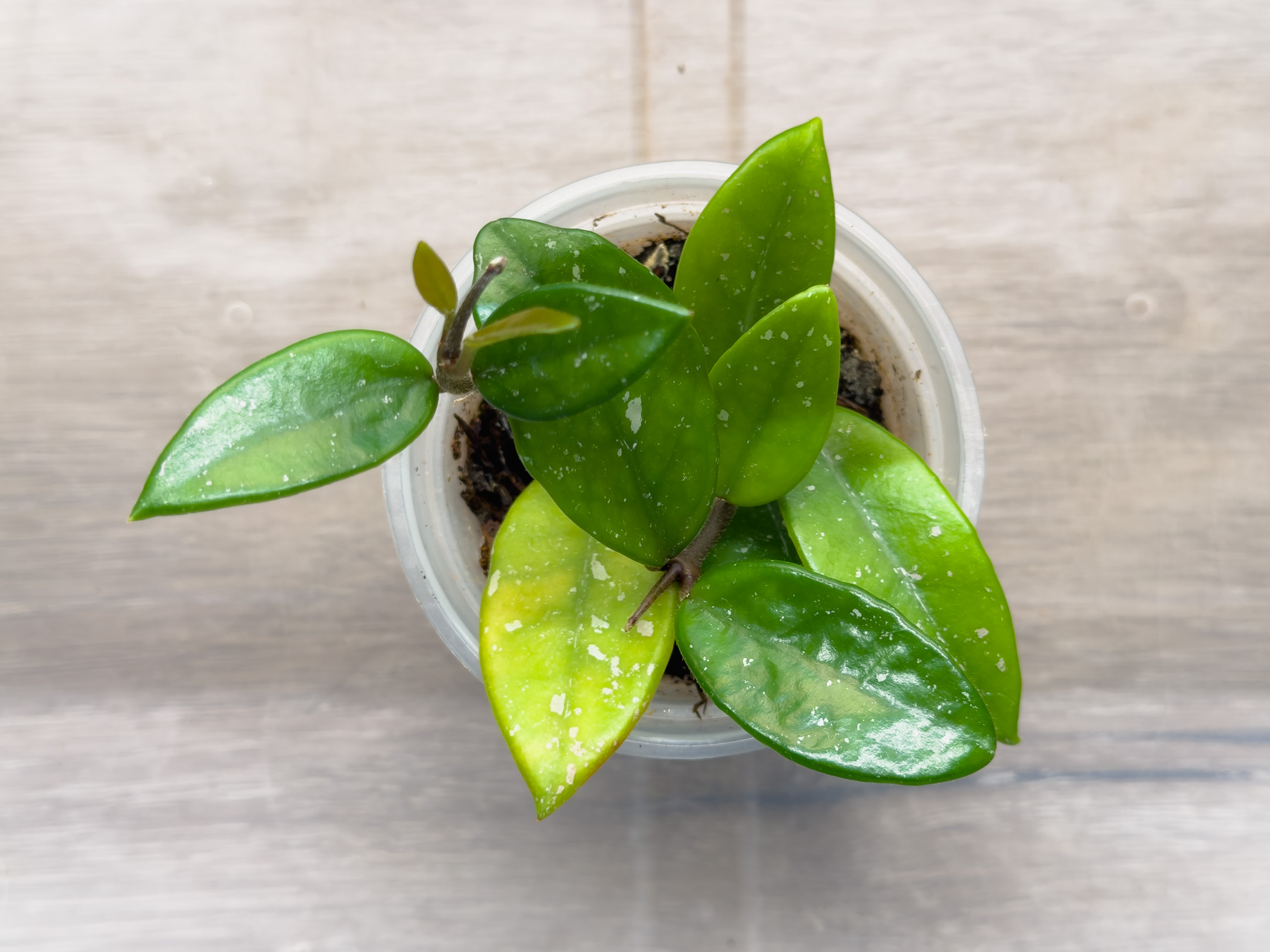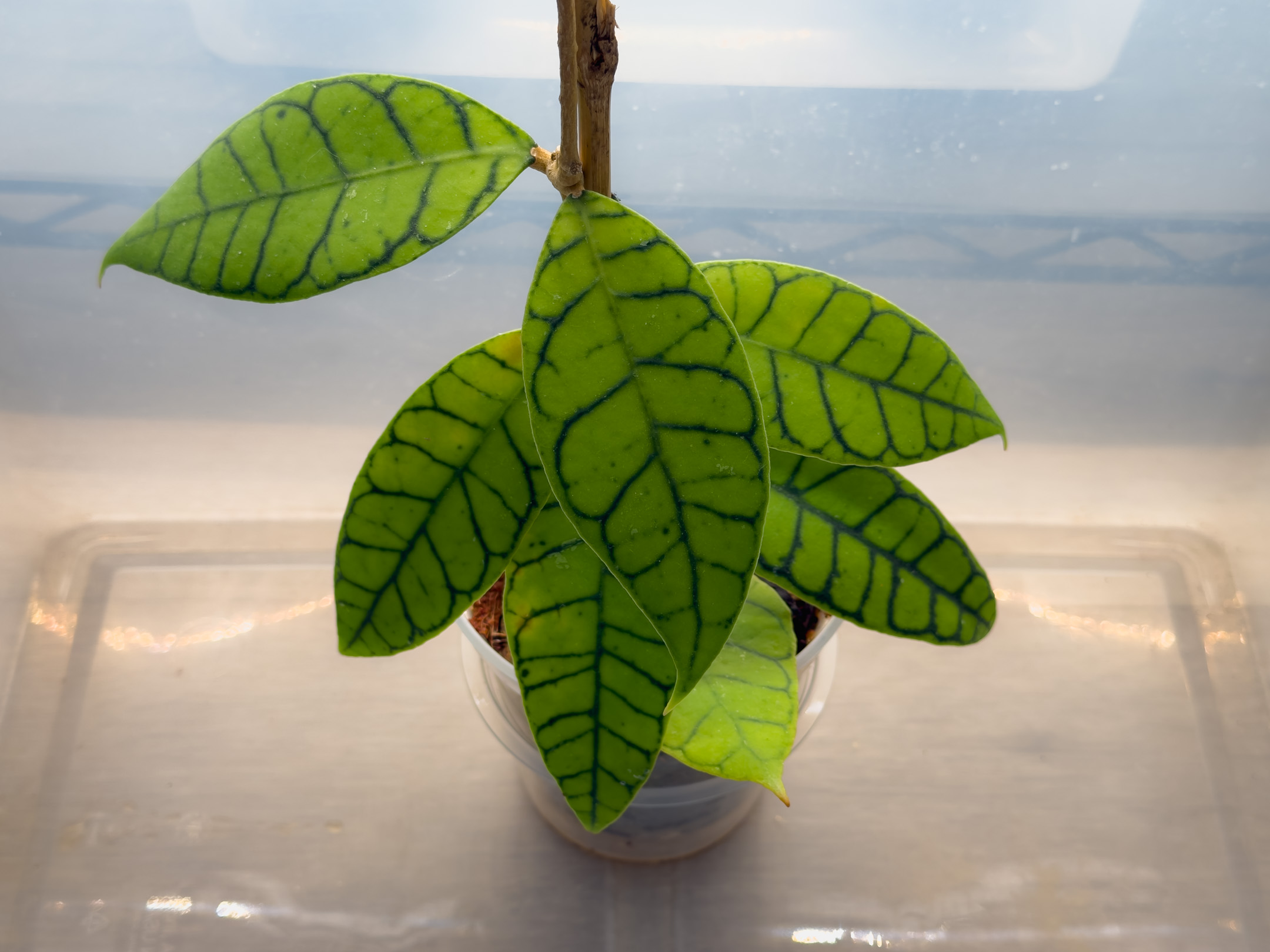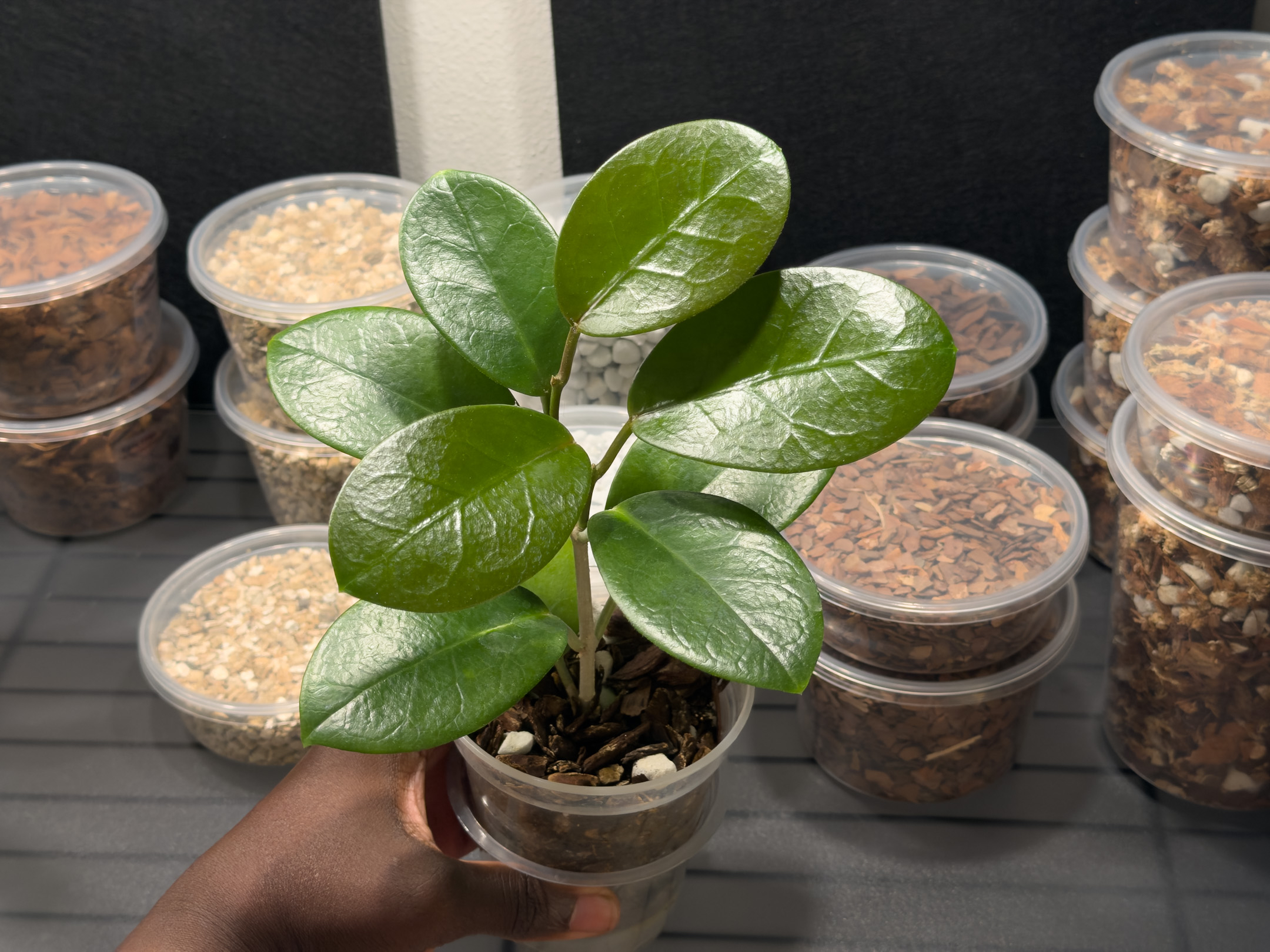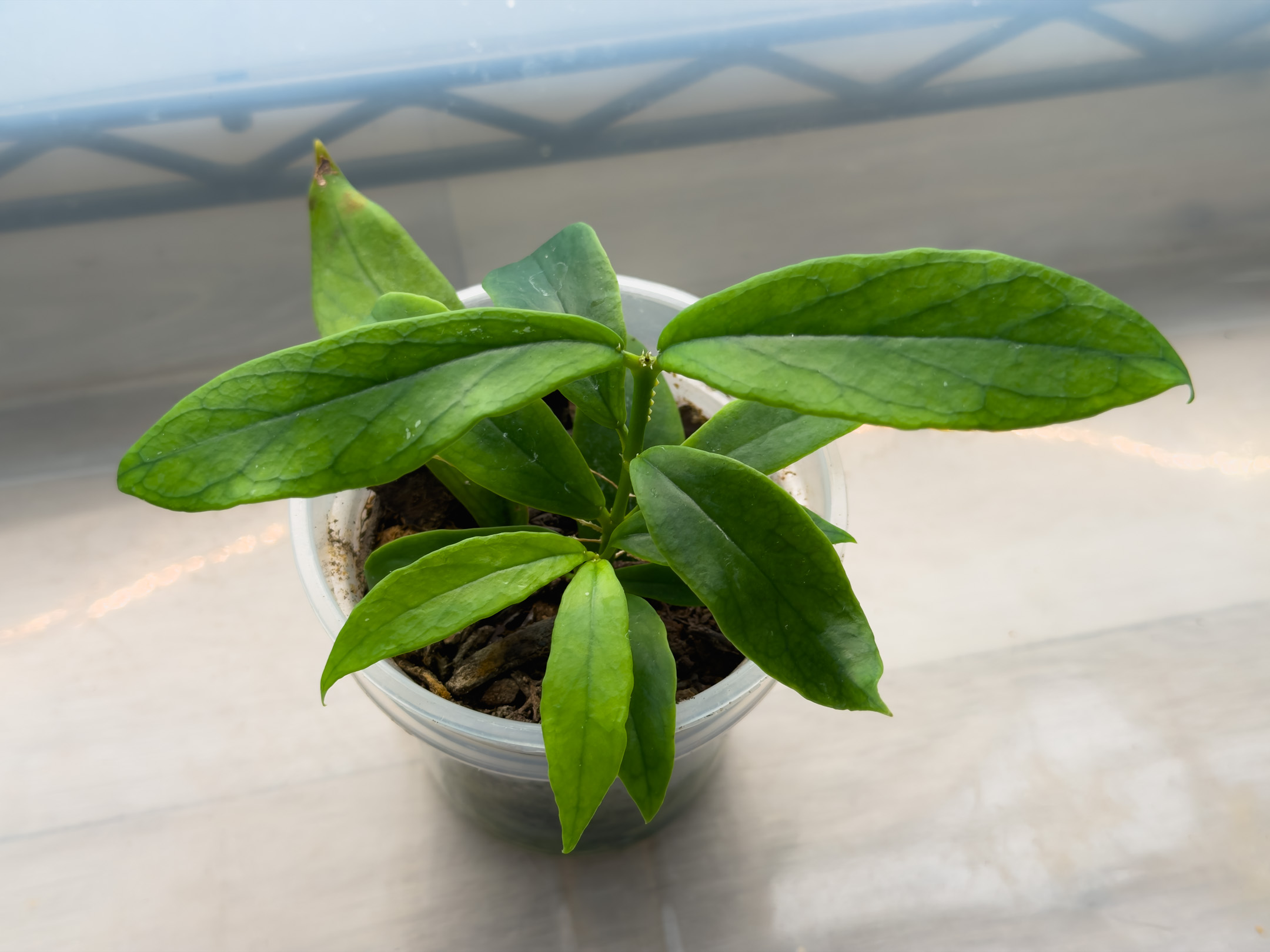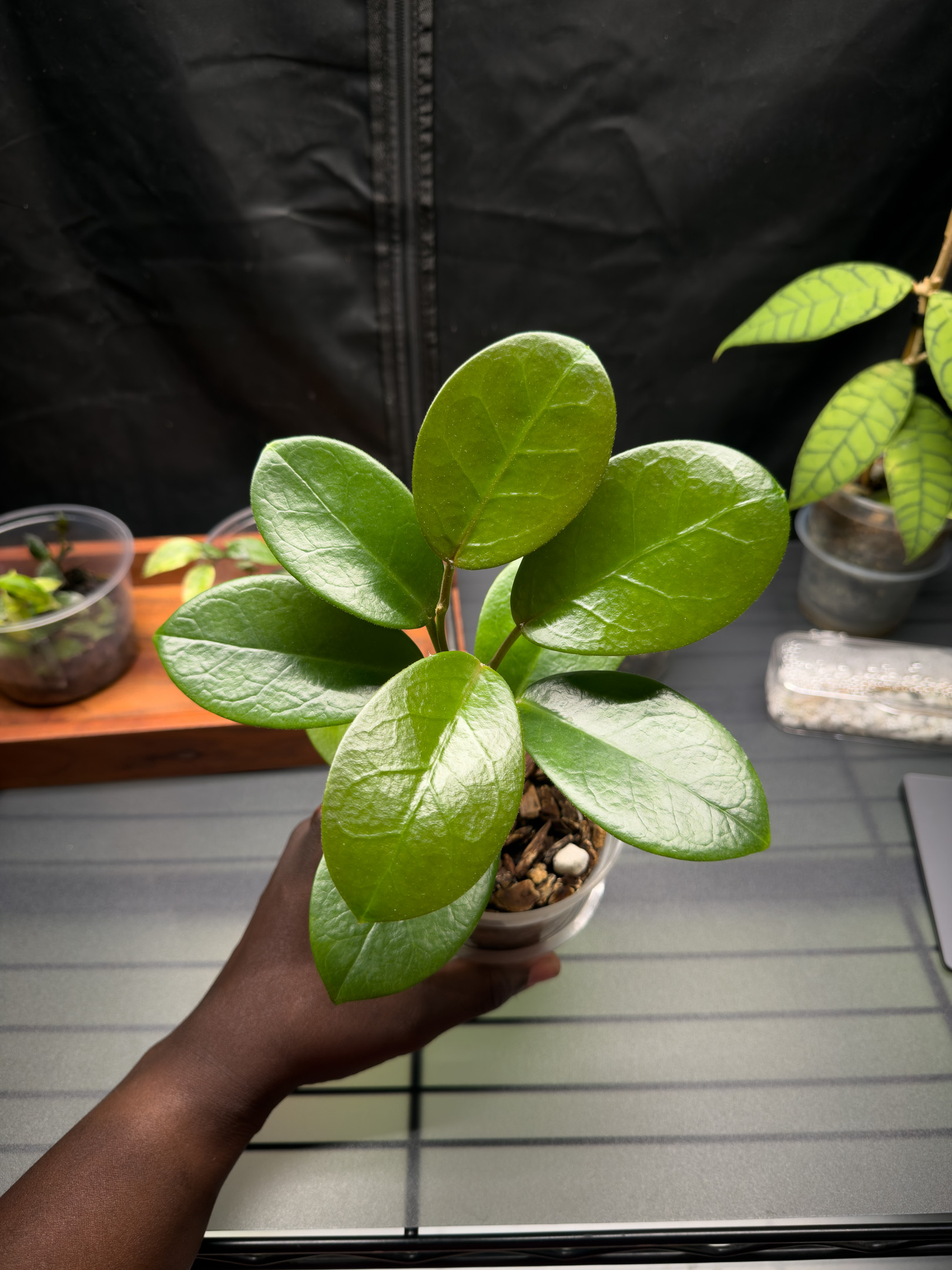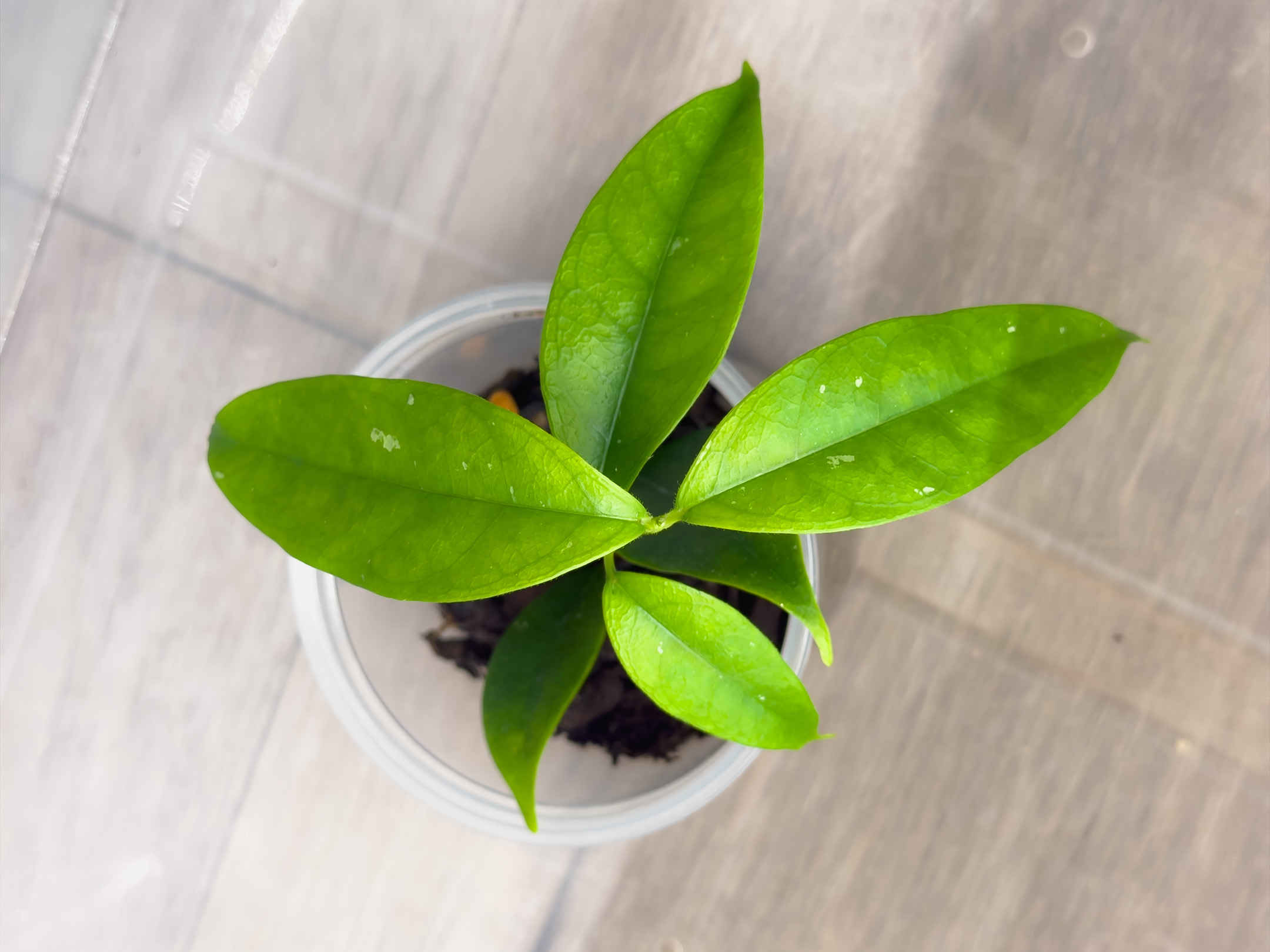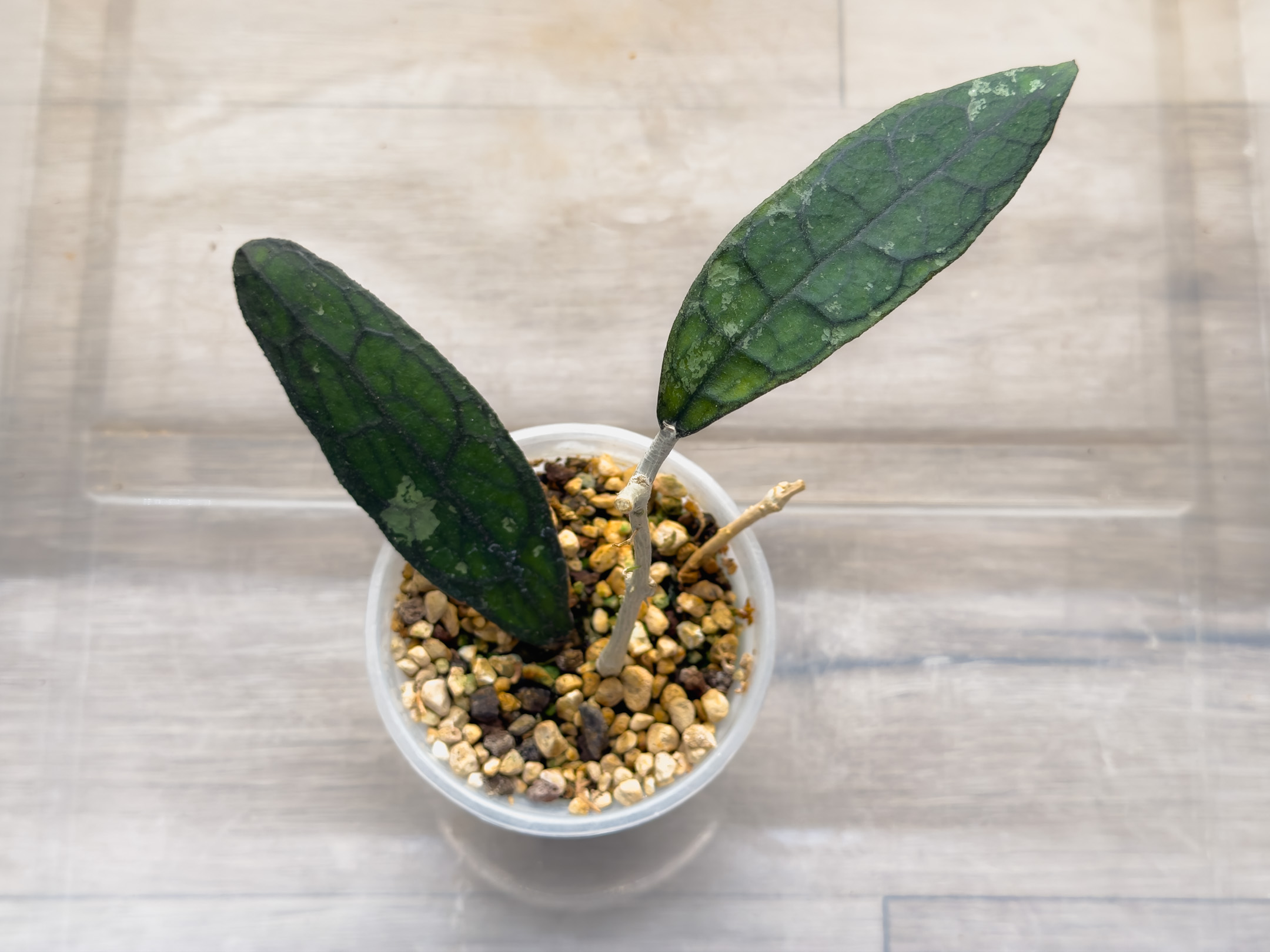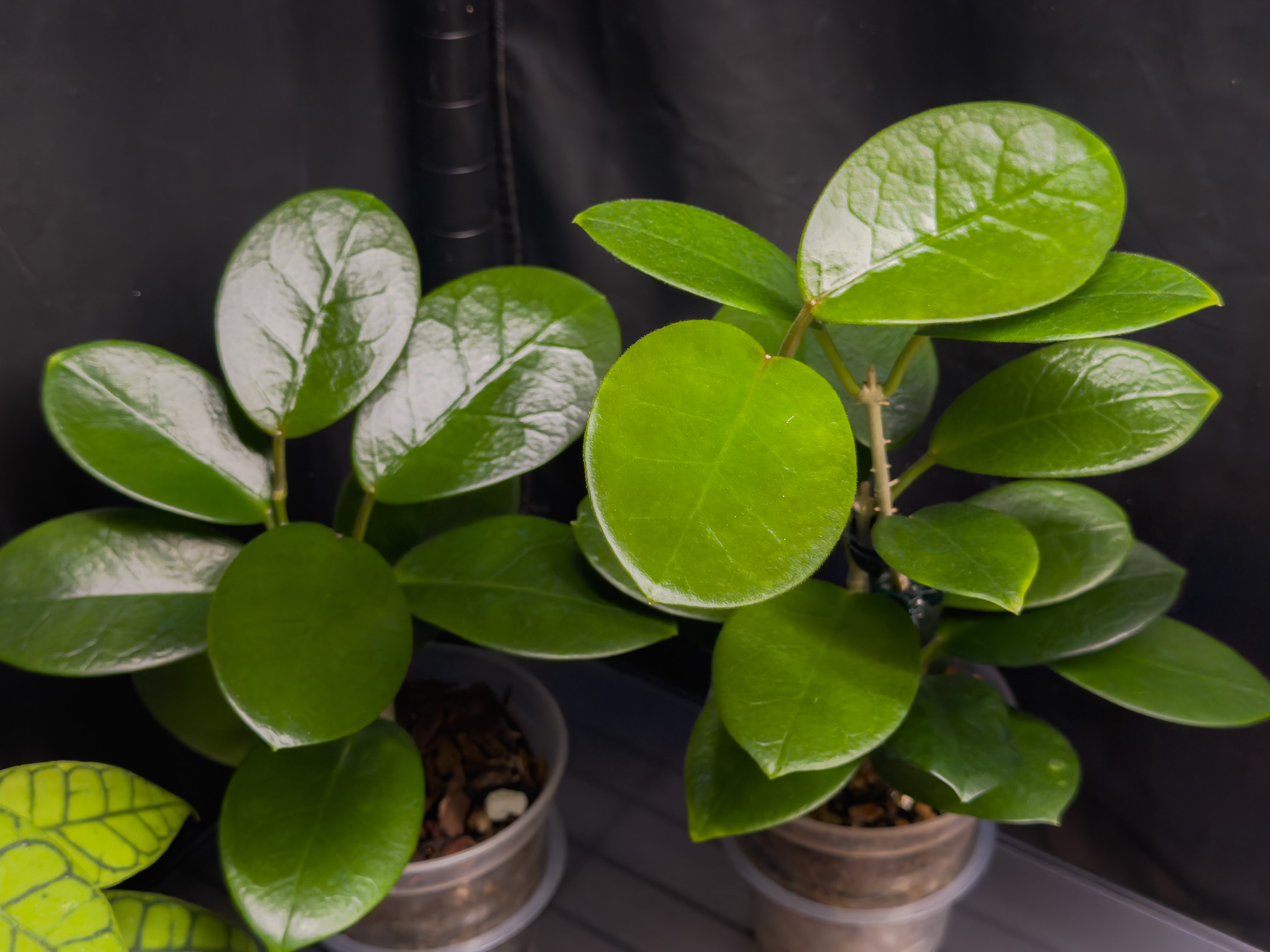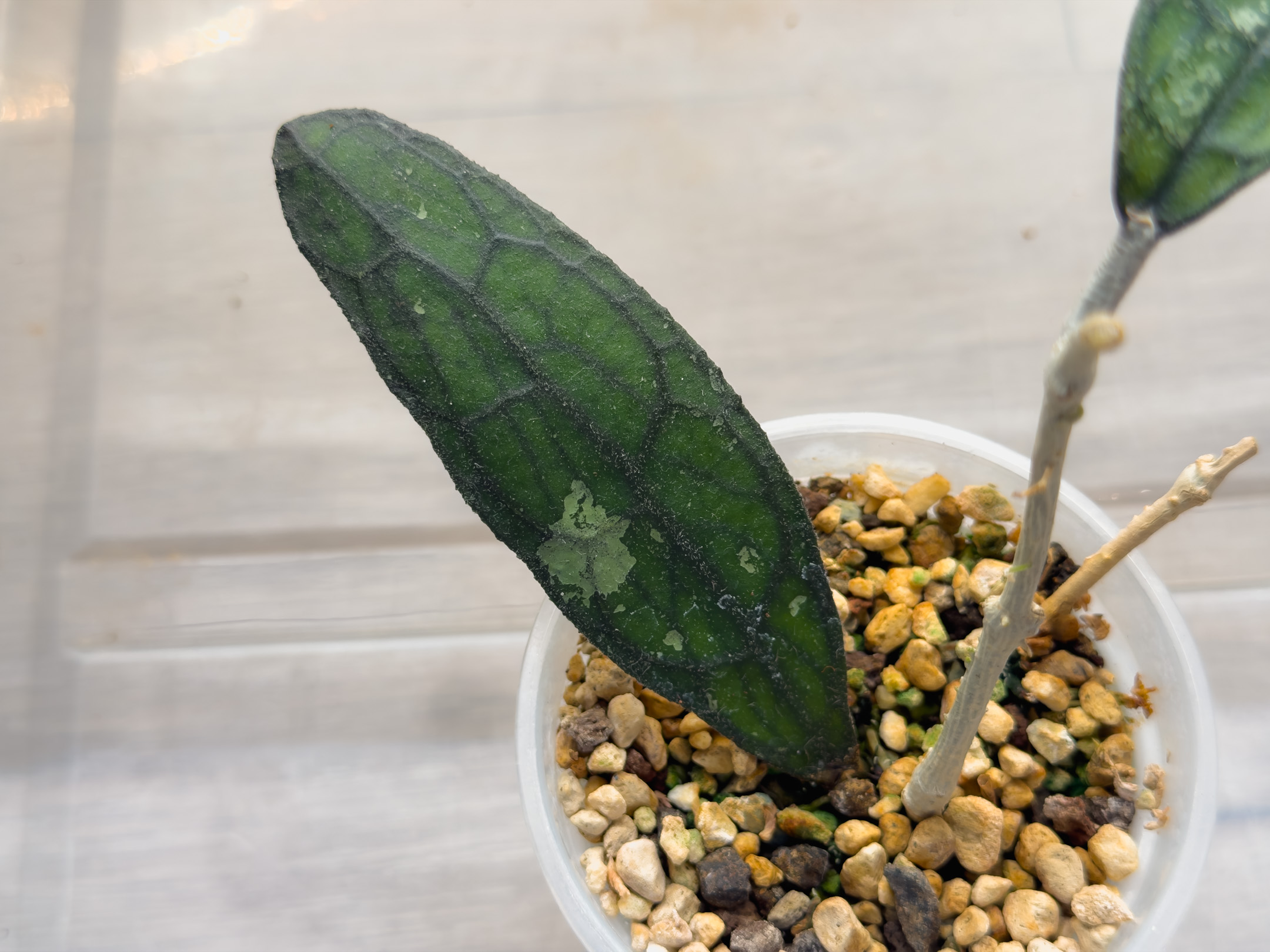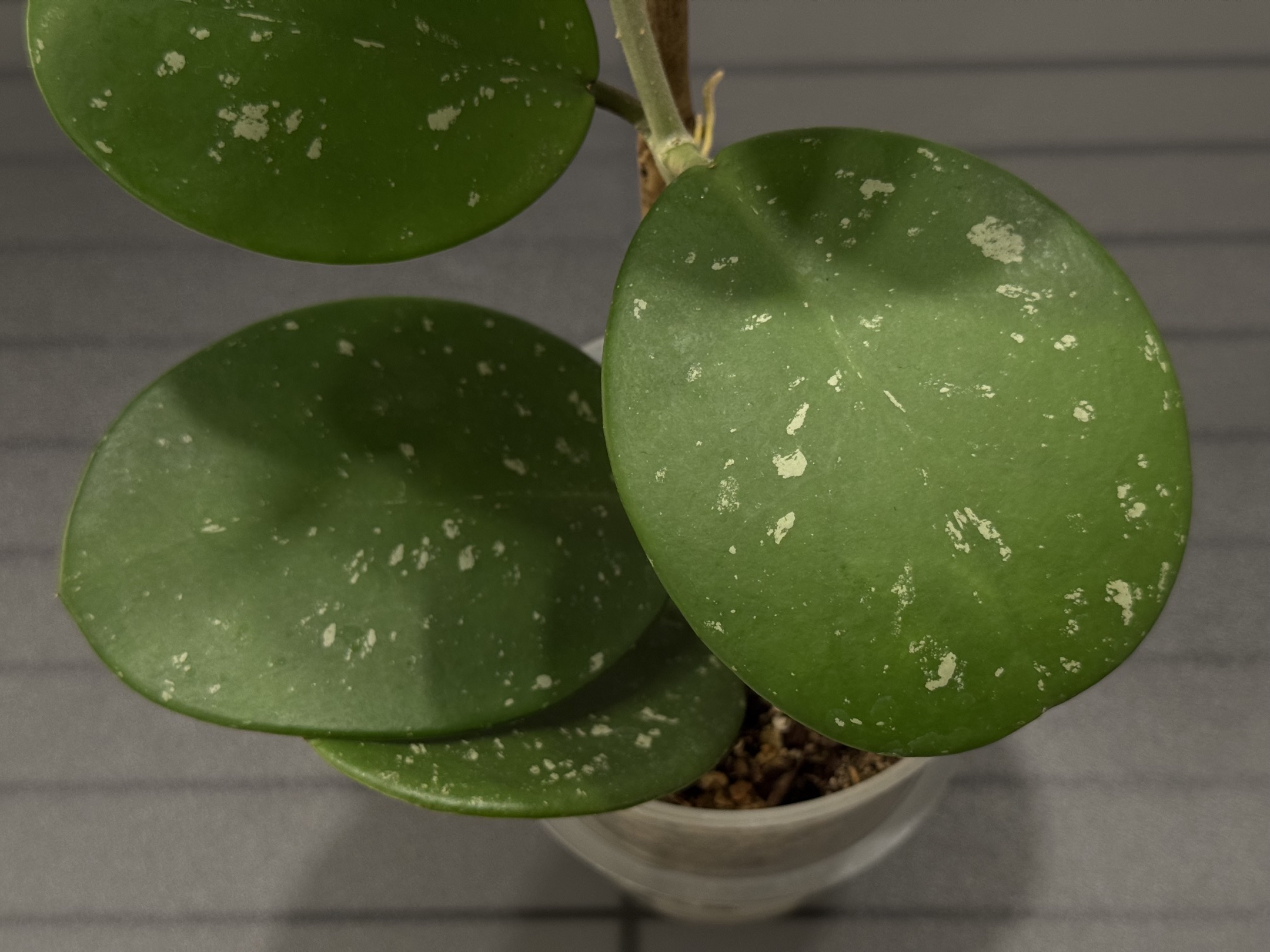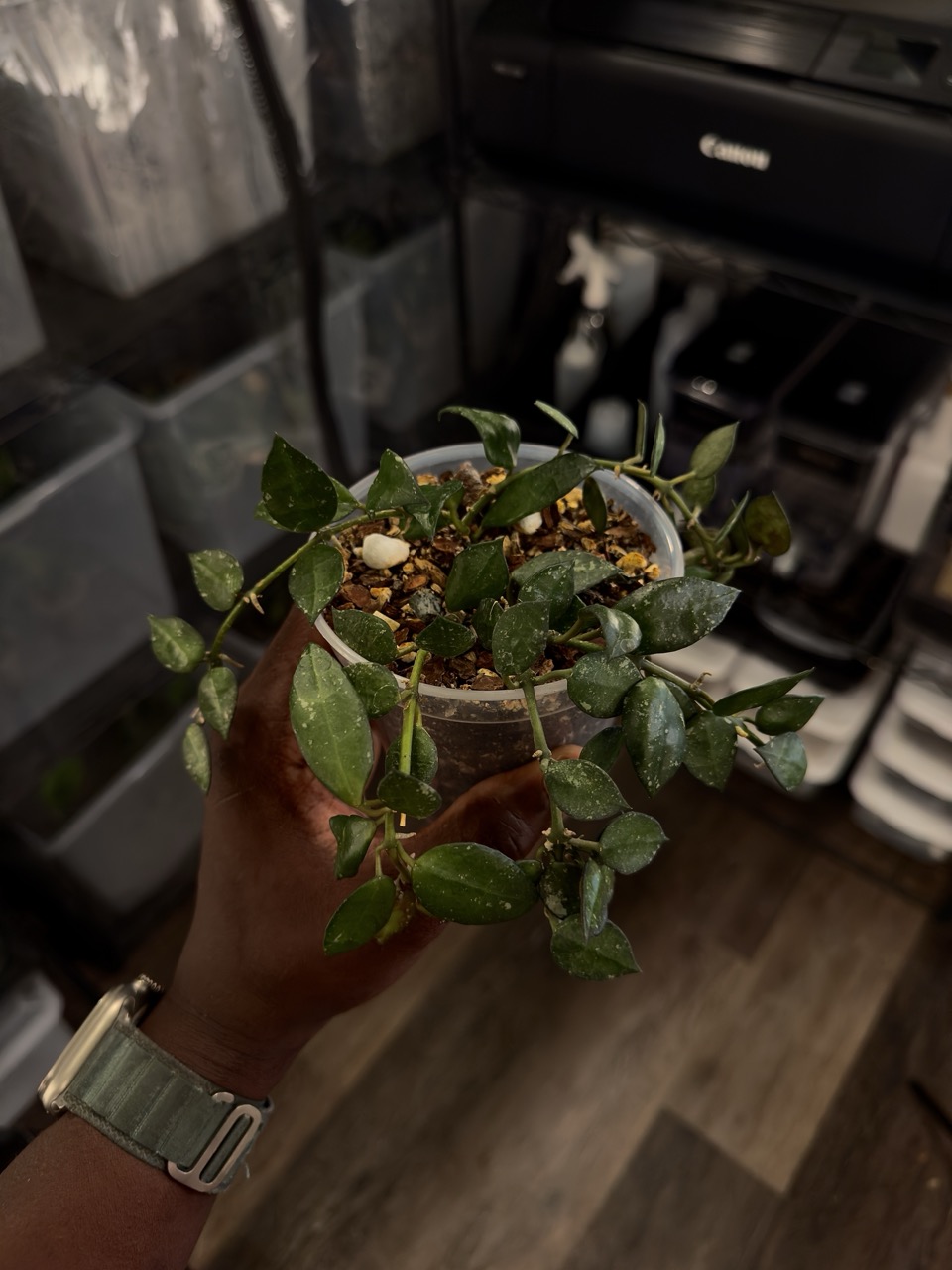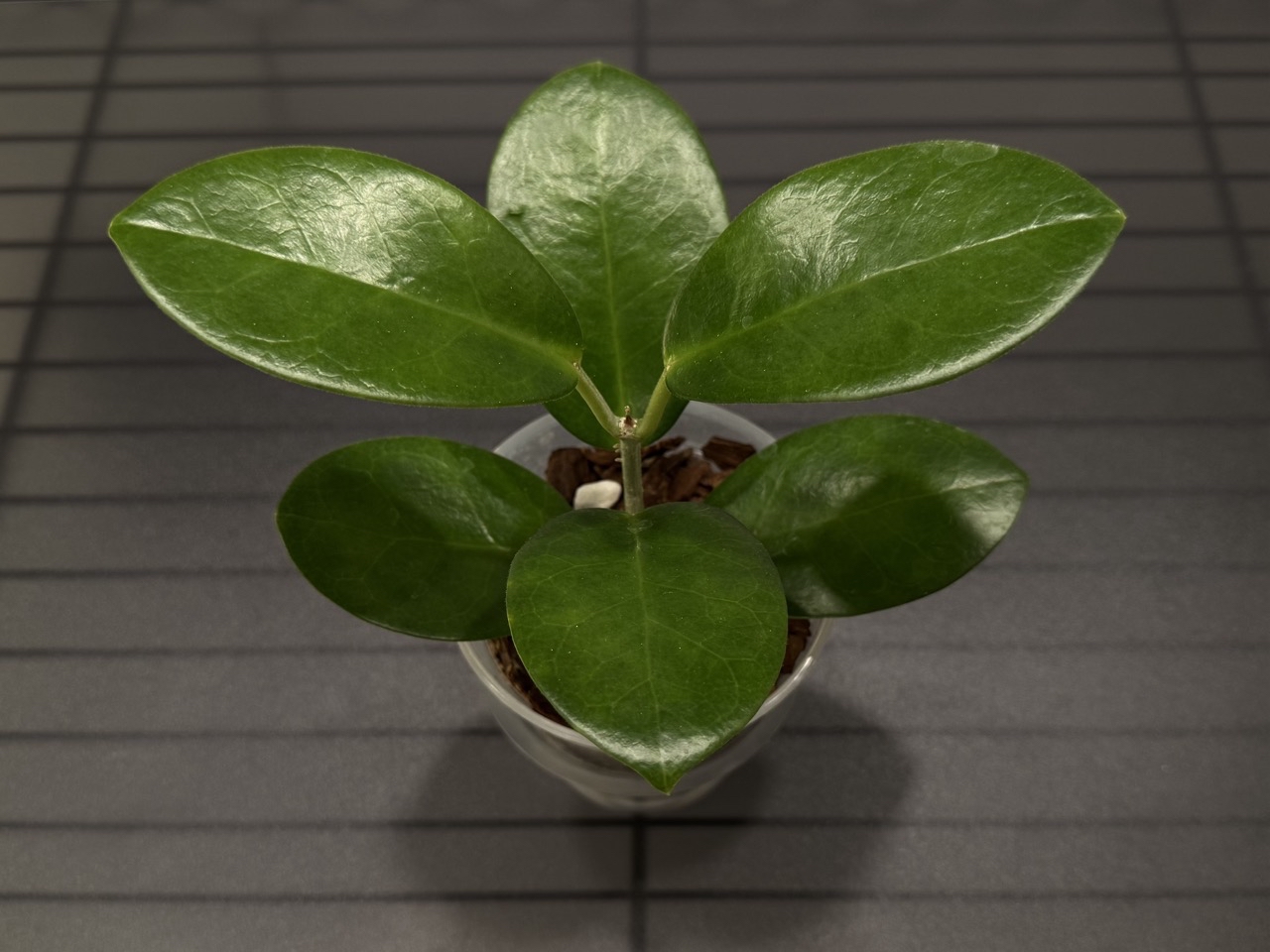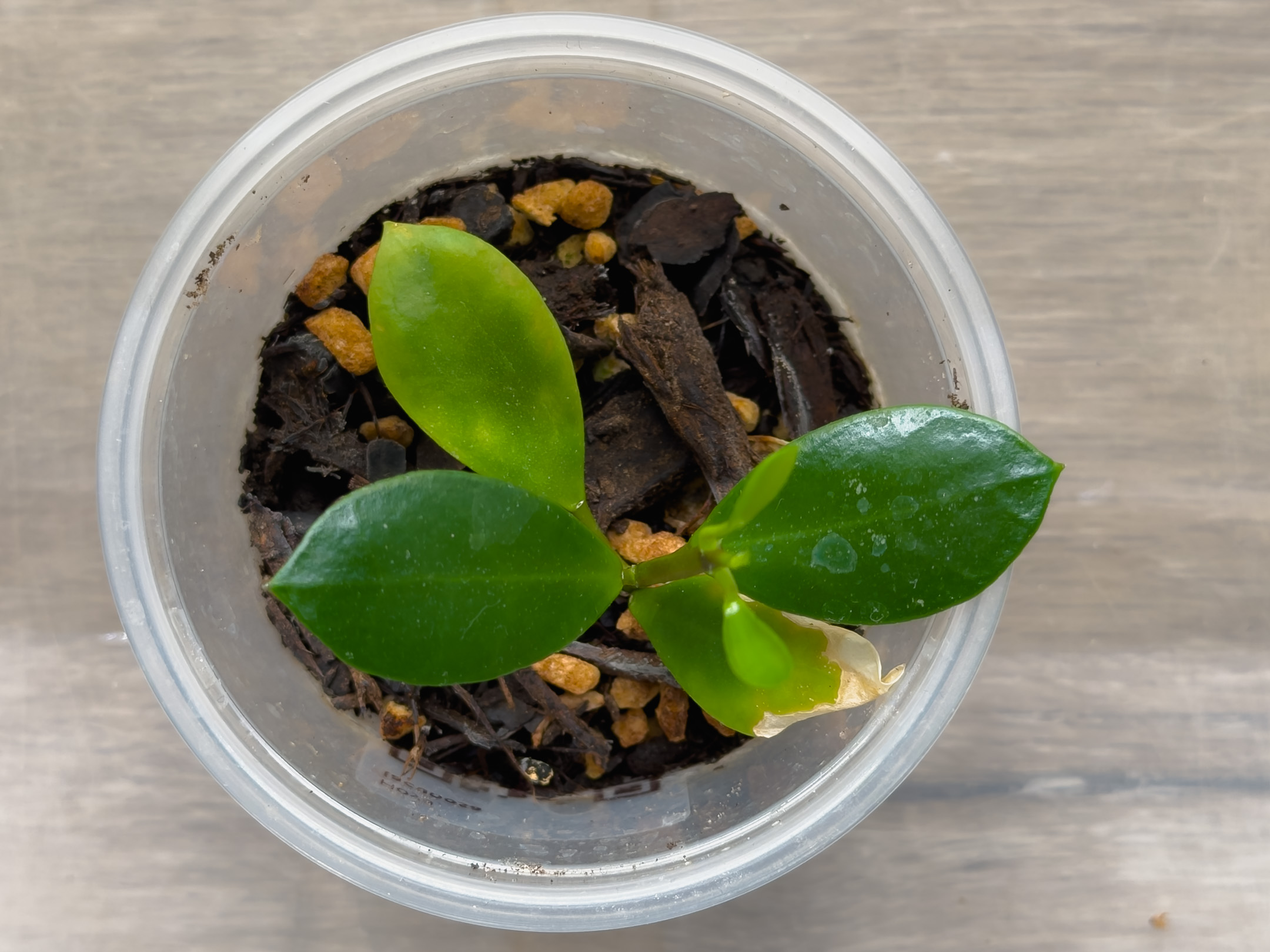





Hoya lacunosa is a widely appreciated species known for its small leaves, trailing habit, and adaptable growth behavior. Its compact scale and consistent performance make it a versatile choice for both new and experienced collectors.
Growth is steady and predictable, responding well to bright, indirect light and breathable substrates. Lacunosa adapts well to glass-based systems, where its fine root structure and restrained growth can be easily managed and observed.

WATER / ROOT ZONE
The thicker, water-storing foliage gives this plant more drought buffer than a thin-leaved Hoya. Let the airy root zone dry meaningfully before re-watering, and avoid a persistently wet core. Keep the vessel proportional to the active roots so the substrate can re-aerate predictably after watering.
LIGHT
Bright filtered light is appropriate; increase intensity gradually rather than using abrupt direct sun.
GROWTH / STRUCTURE
Let the stems trail or cascade naturally and avoid repeatedly repositioning established growth.
Hoyas are epiphytic and semi-epiphytic tropical plants valued for their sculptural foliage, slow intentional growth, and long-lived root systems. In nature, most Hoyas grow attached to trees or rocky surfaces, with roots exposed to air, moisture cycles, and organic debris rather than compact soil. Successful care is about root oxygen, controlled moisture, and stable light, not constant saturation.
Bright, indirect light is ideal.
Hoyas tolerate a wide range of light levels but perform best with strong ambient light filtered through distance or diffusion. Direct sun can be tolerated by some cultivars if introduced gradually, but harsh midday exposure may stress foliage.
Goal: Clear leaf shadows, not harsh silhouettes.
Allow partial drying between waterings.
Hoyas prefer a wet–dry rhythm rather than constant moisture. Water thoroughly, then allow the upper portion of the substrate to dry before re-watering. Roots require access to oxygen, and prolonged saturation leads to decline.
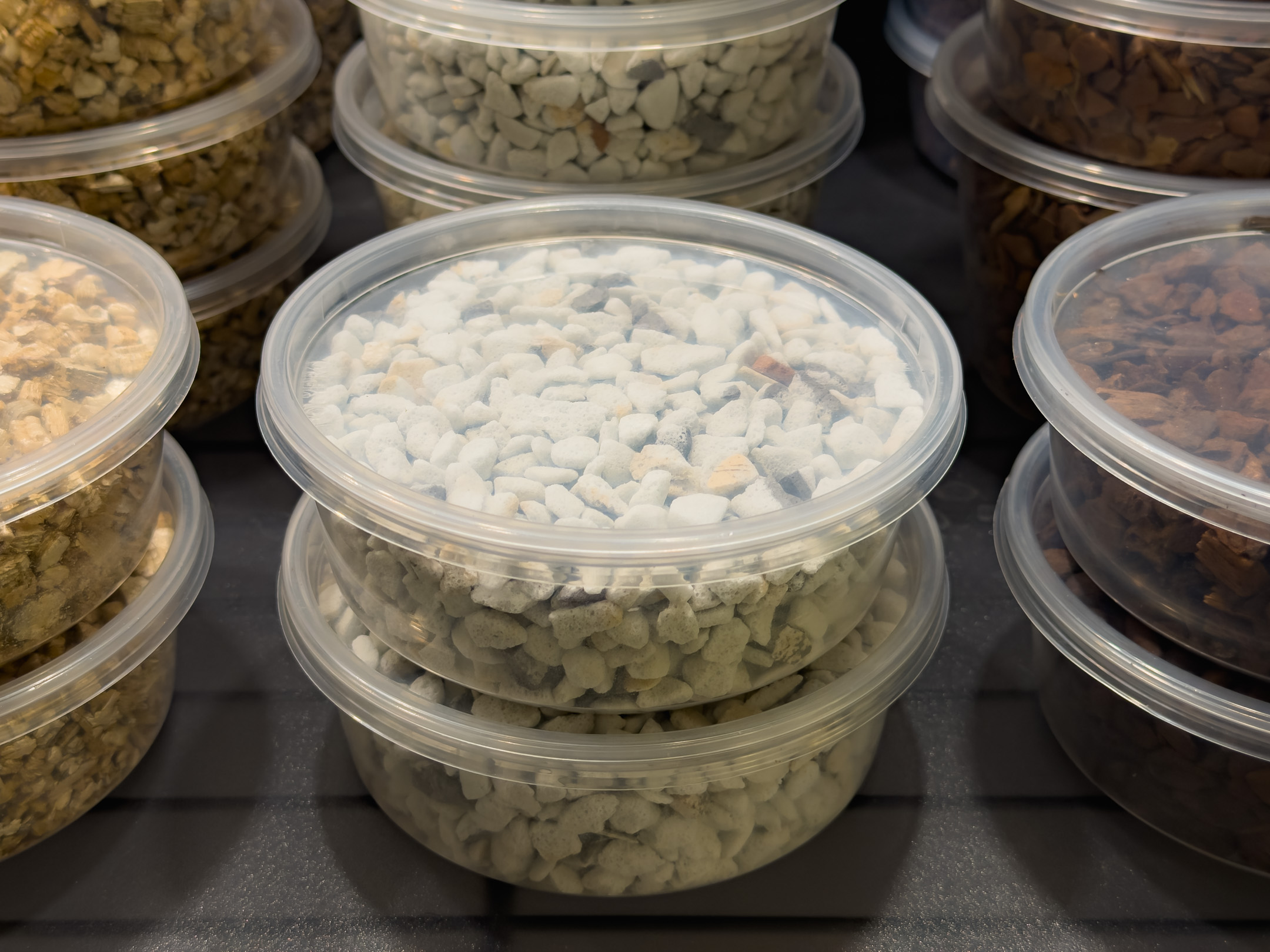
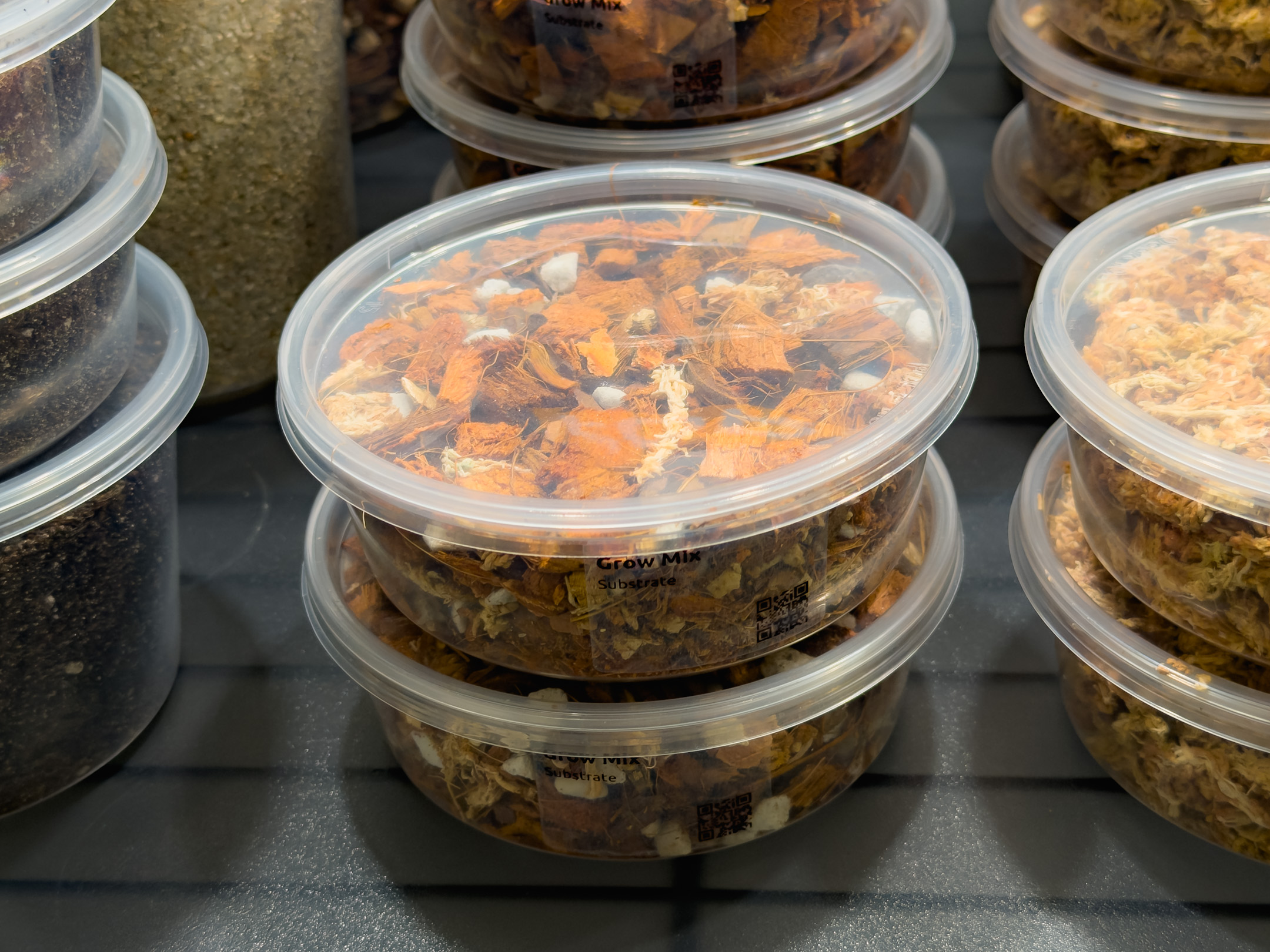
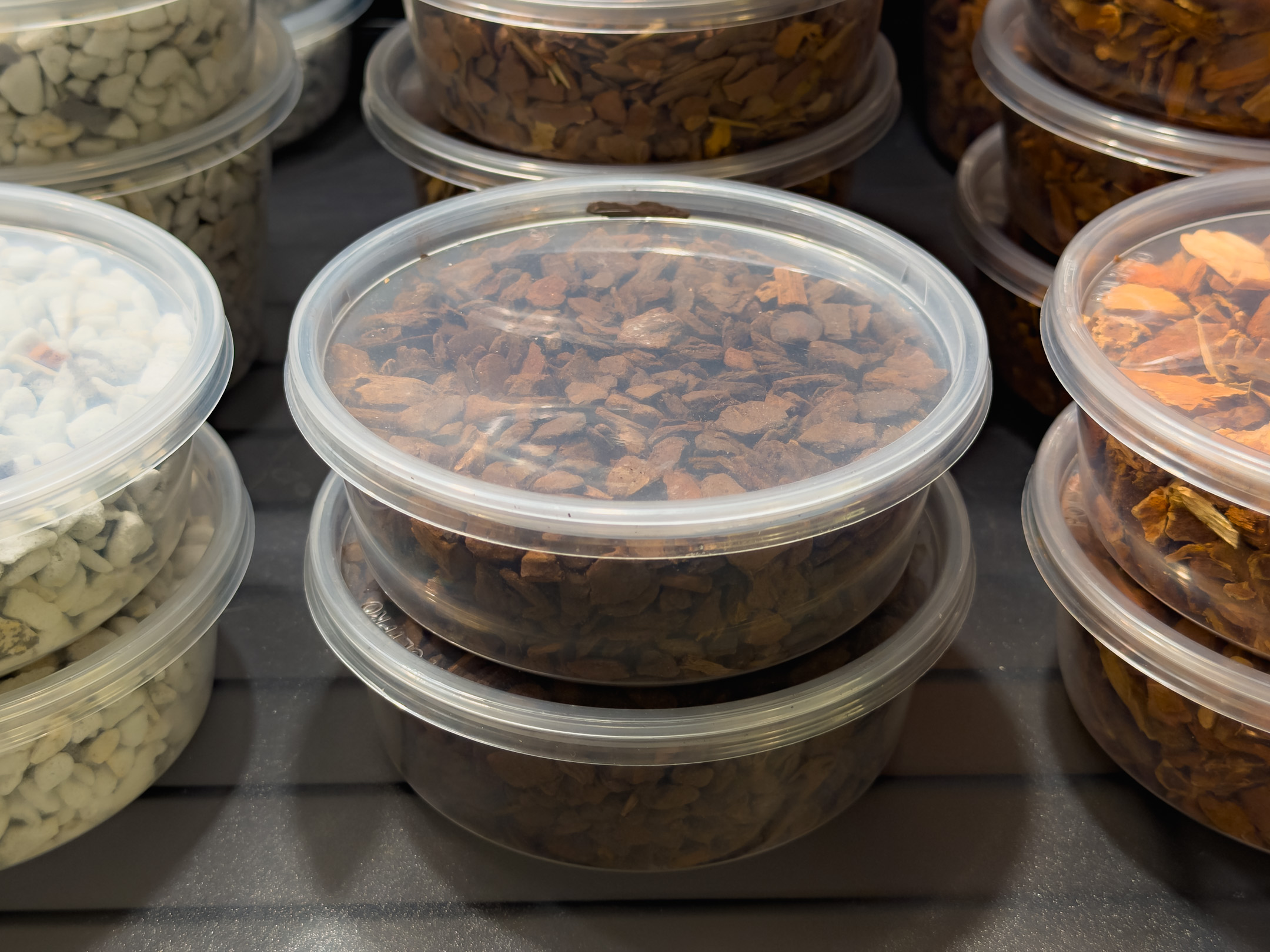
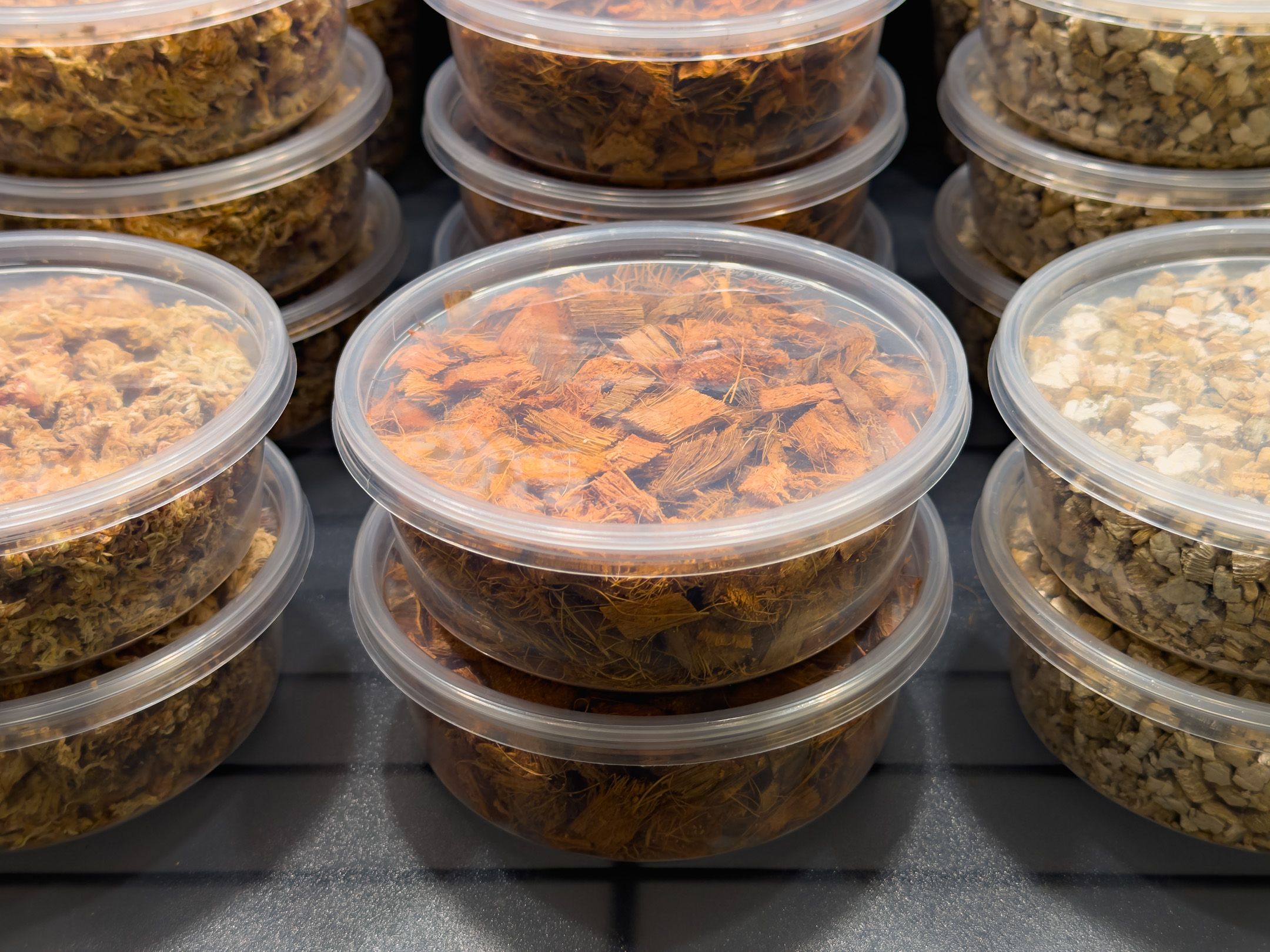
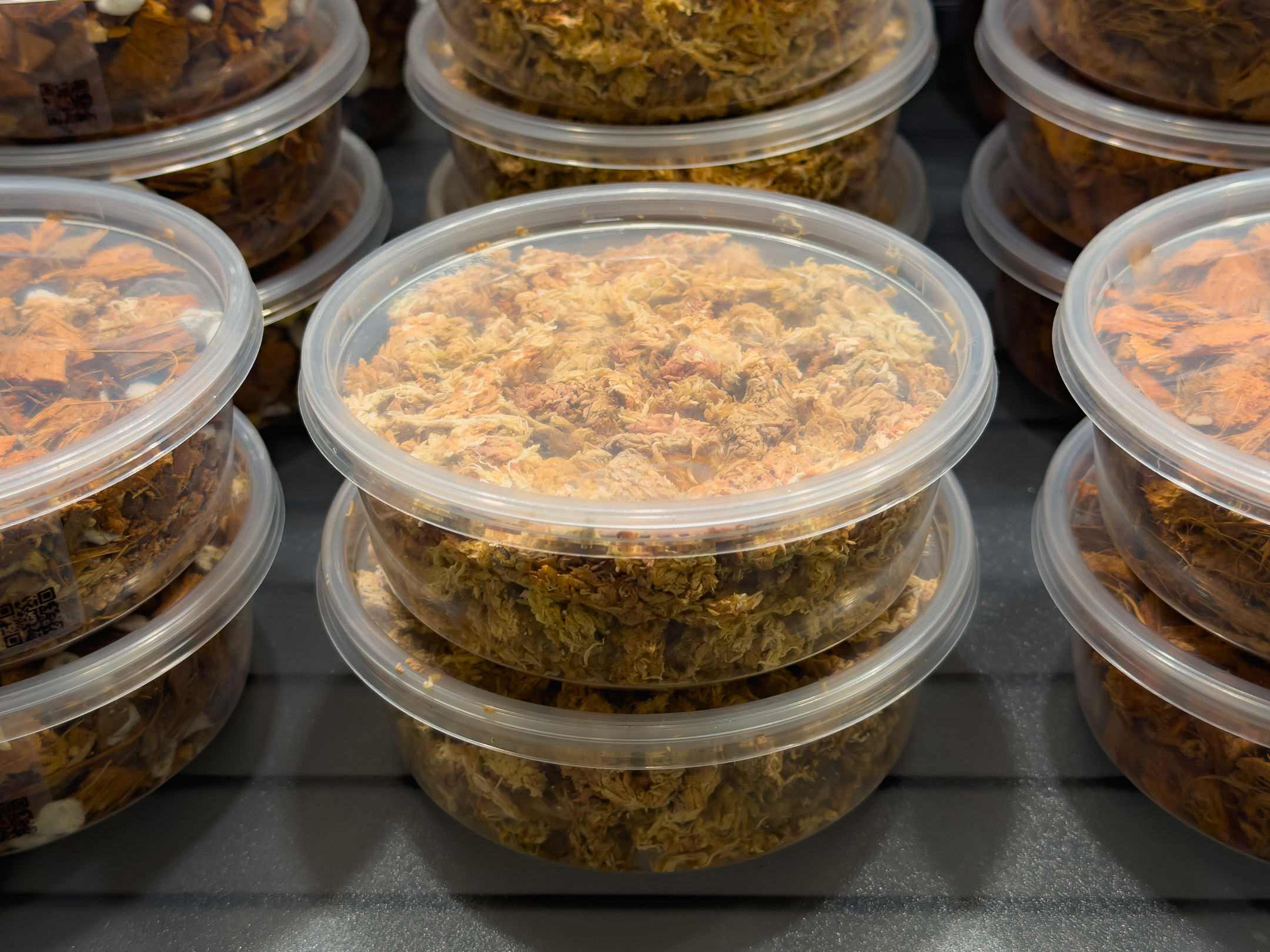
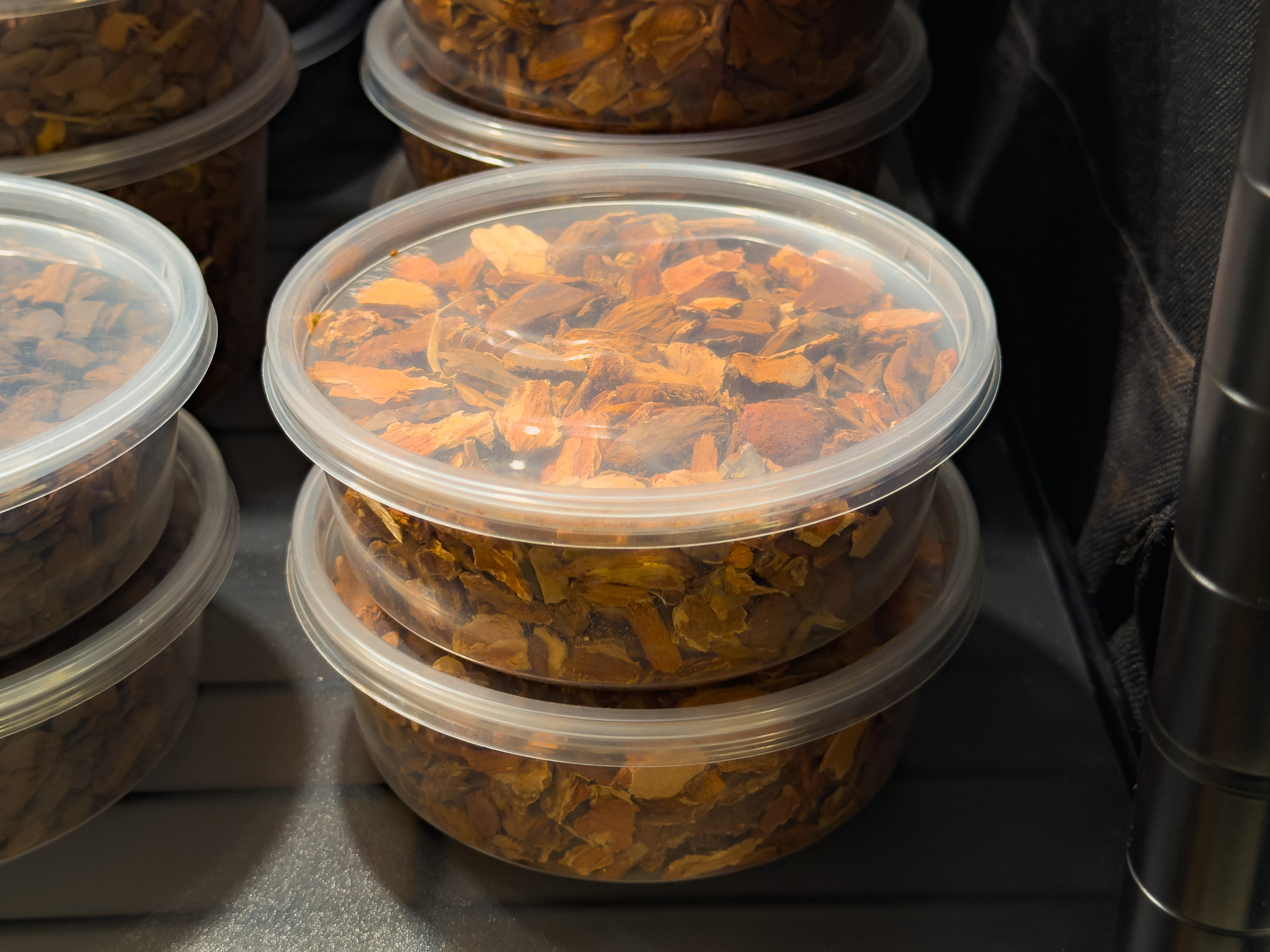
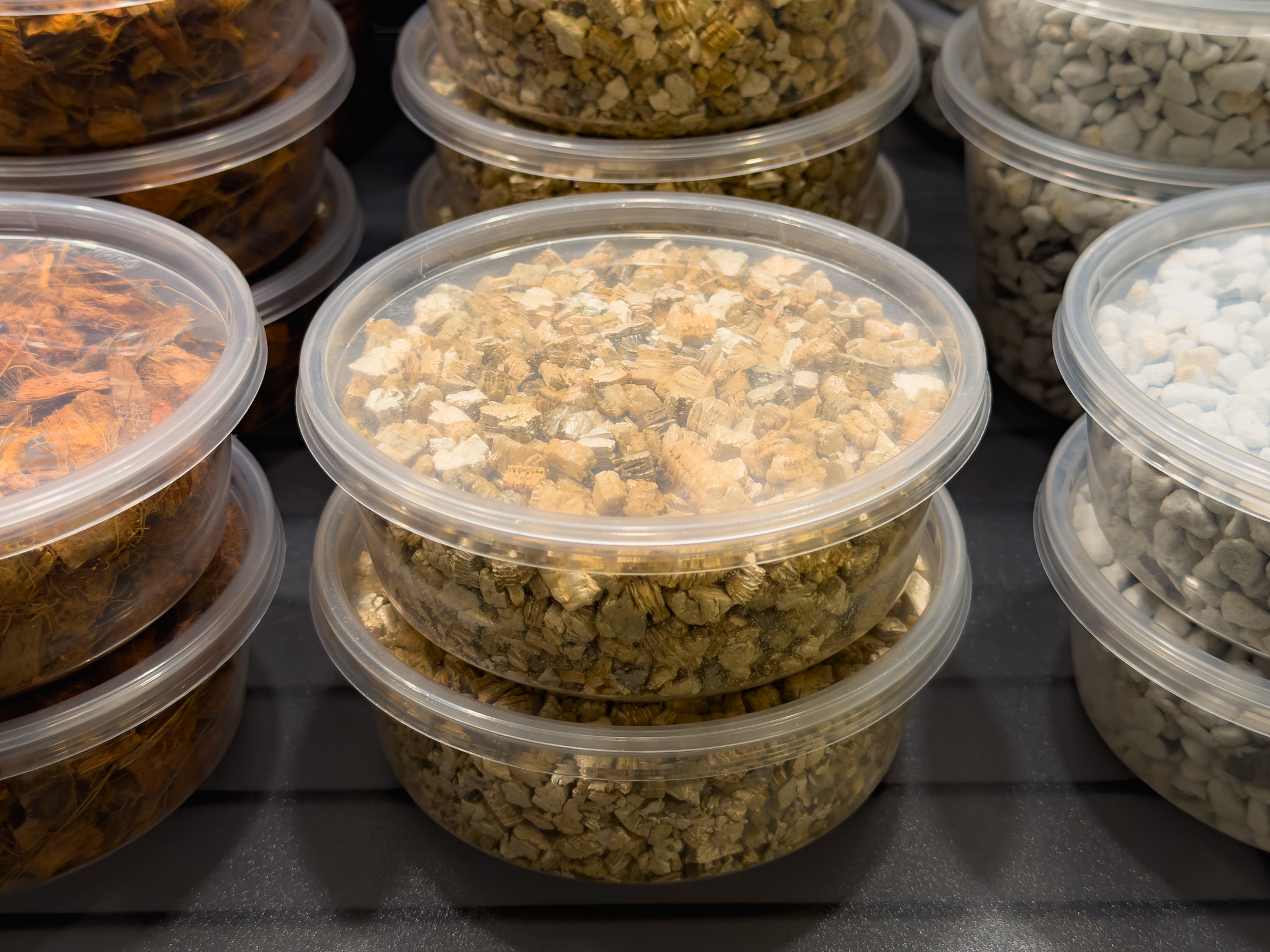
Airy, structural, and fast-draining.
Hoyas thrive in chunked, oxygen-rich substrates that mimic epiphytic conditions. Dense or fine media restrict airflow and slow root metabolism.
Substrate should support the roots, not smother them.
Root visibility and airflow matter.
Hoyas adapt well to glass vessels, drainage-equipped glass pots, and semi-hydro compatible systems when moisture is managed correctly. Containers should encourage air exchange and root observation, allowing intervention before stress occurs.
Moderate to high preferred, but adaptable.
Most Hoyas perform well between 40–70% humidity. Higher humidity supports leaf expansion and rooting, but stable airflow is more important than saturation.
Warm and stable.
Ideal range: 65–85°F (18–29°C)
Hoyas are climbers and trailers.
Most species benefit from support structures such as trellises, guides, or vertical surfaces.
Avoid frequent repositioning once vines are established.
Never remove peduncles.
Hoyas bloom from persistent flower spurs that rebloom over time.
Encouraged by
Light, consistent, and biologically aligned.
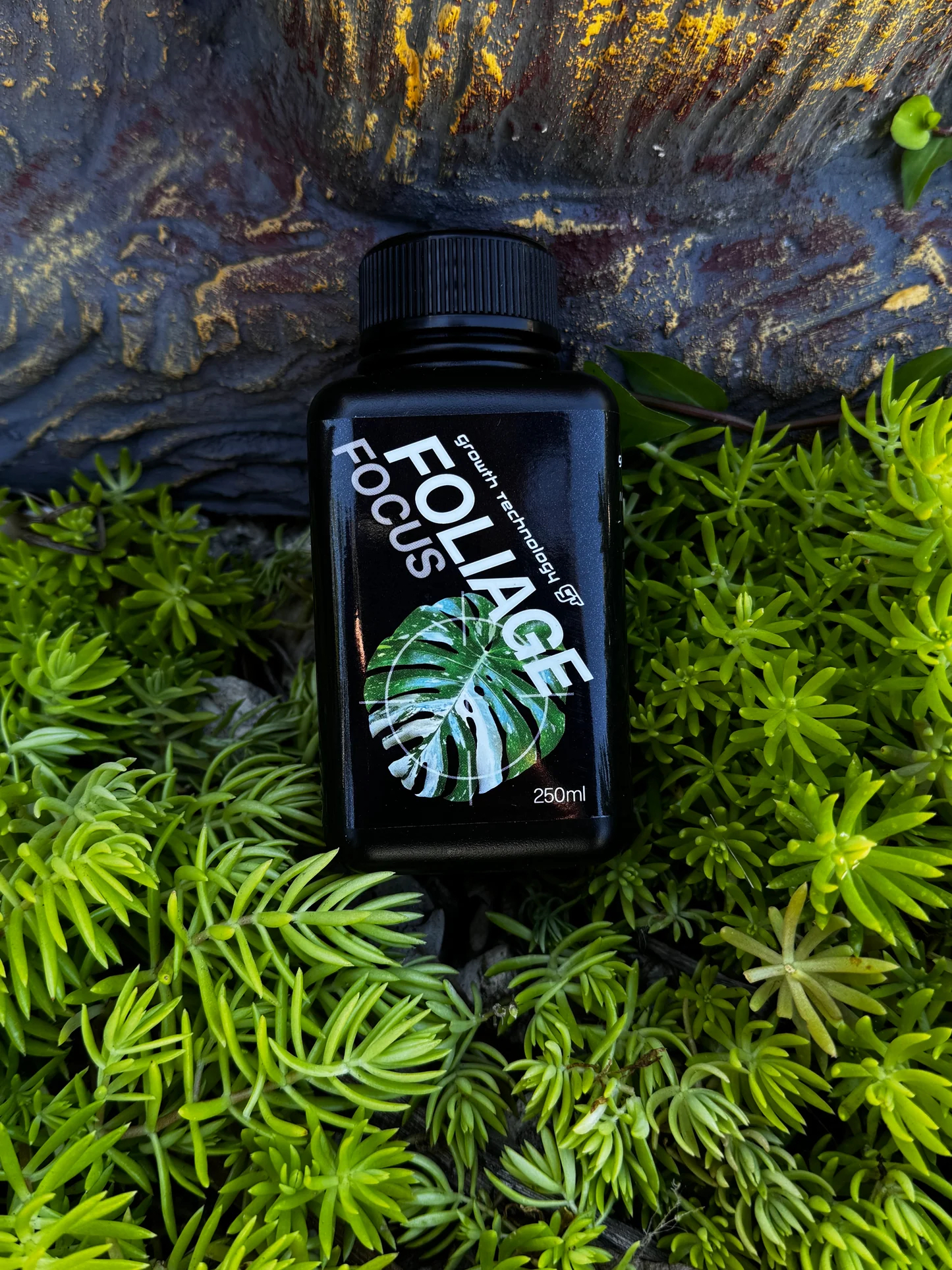
Hoyas respond best to diluted, balanced nutrients during active growth.
Most issues are system-related, not plant-related.
Hoyas reward patience.
These are slow-intentional plants, not fast fillers. When given the right system, light, airflow, substrate, and rhythm. They become long-lived, architectural companions that improve with time.