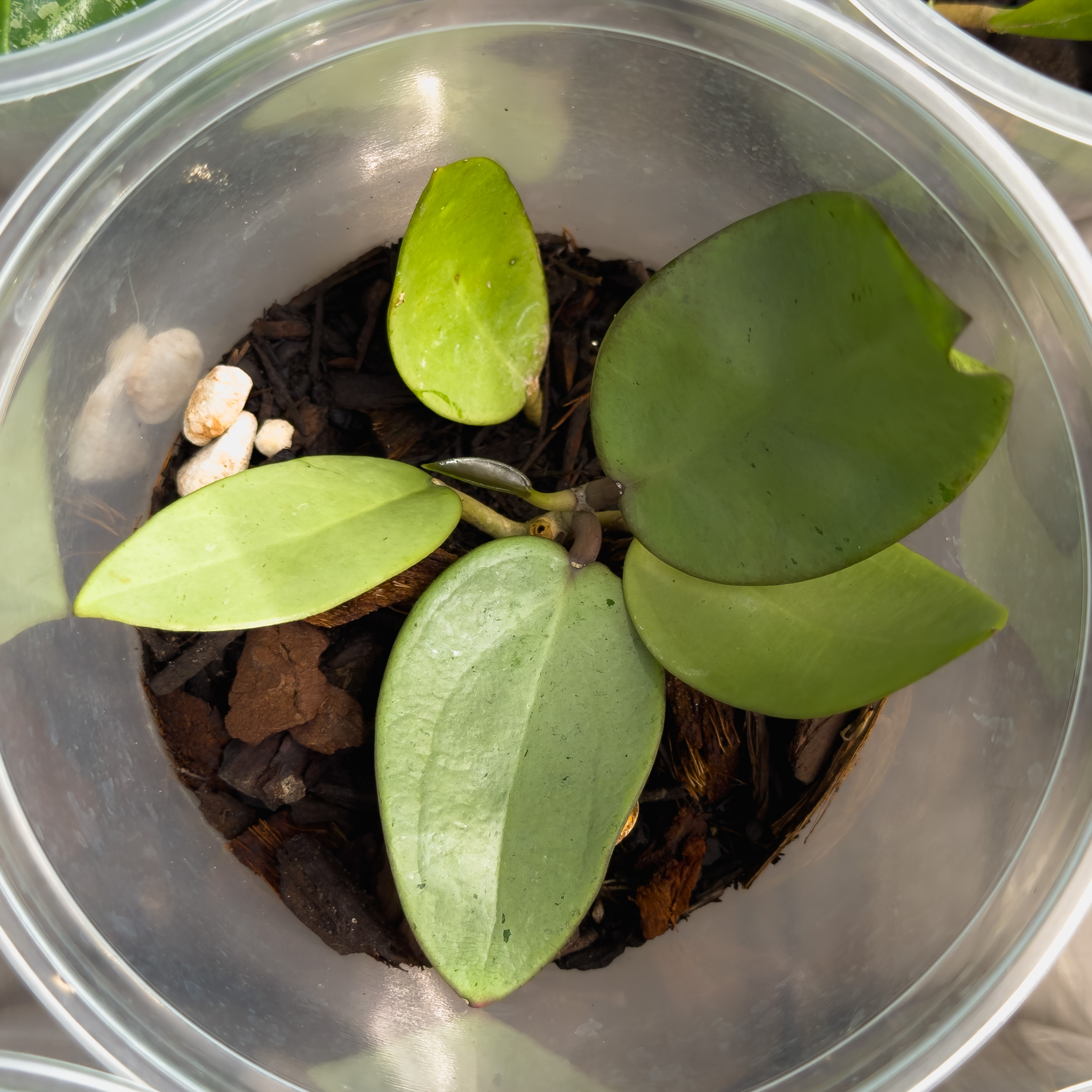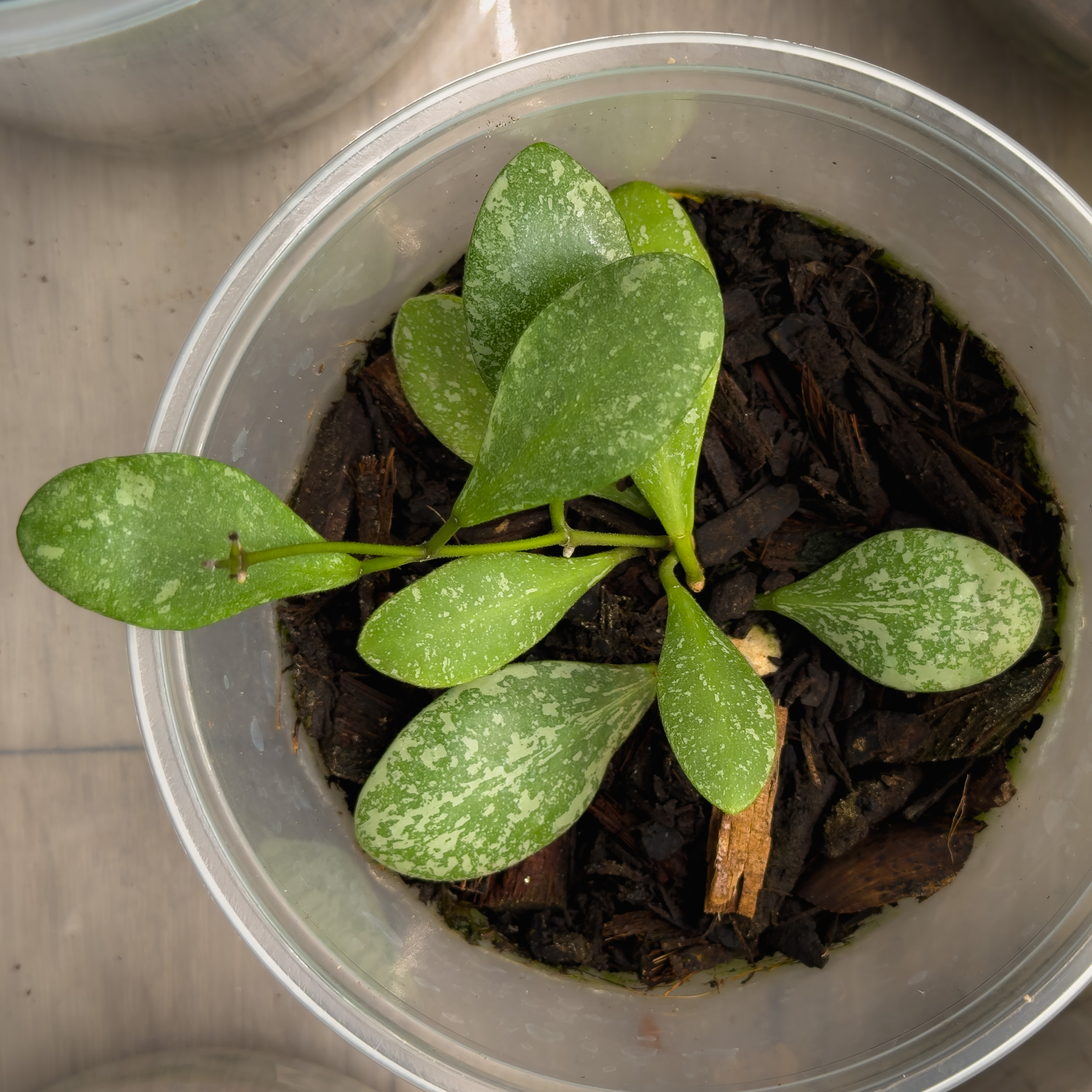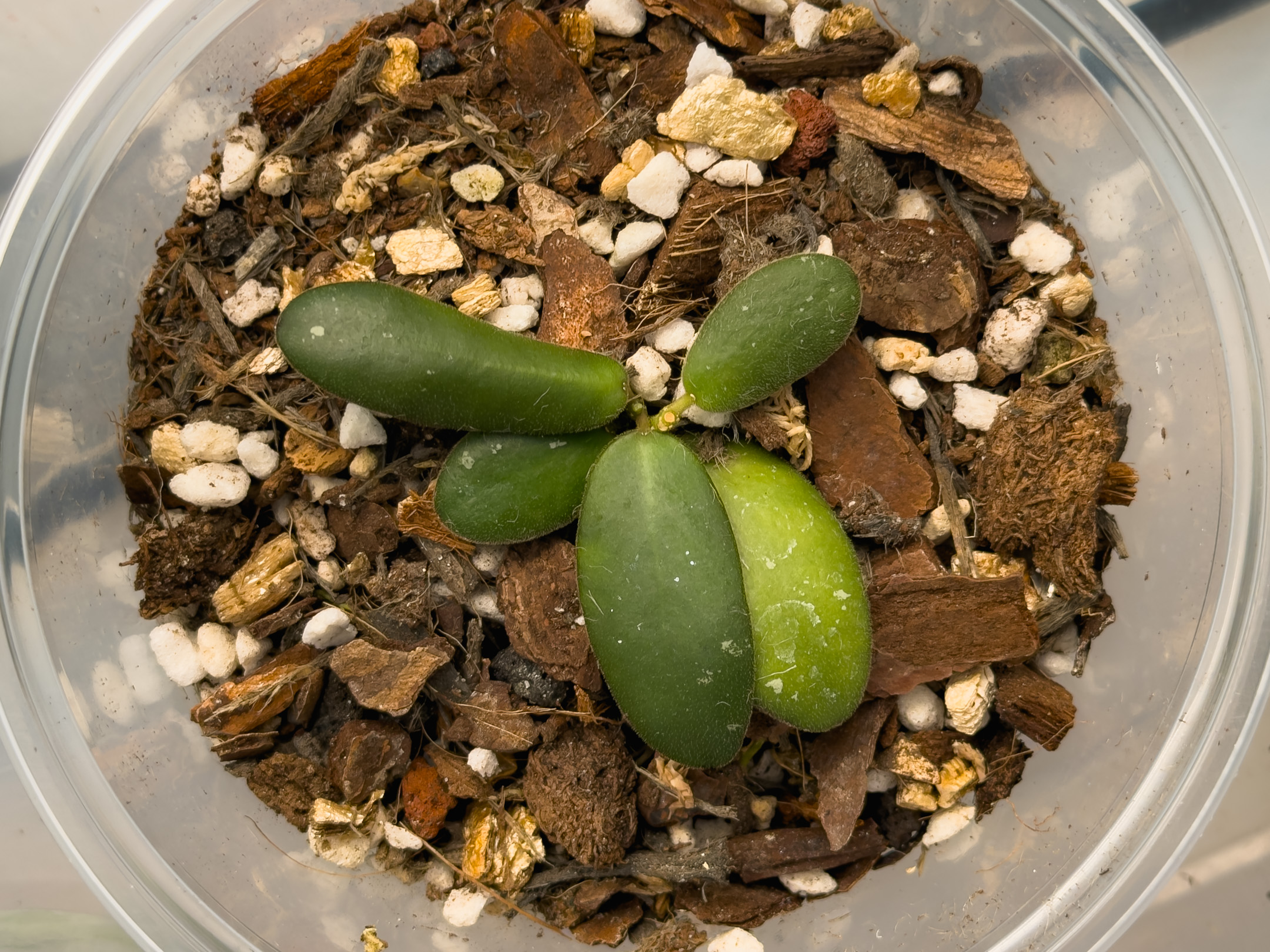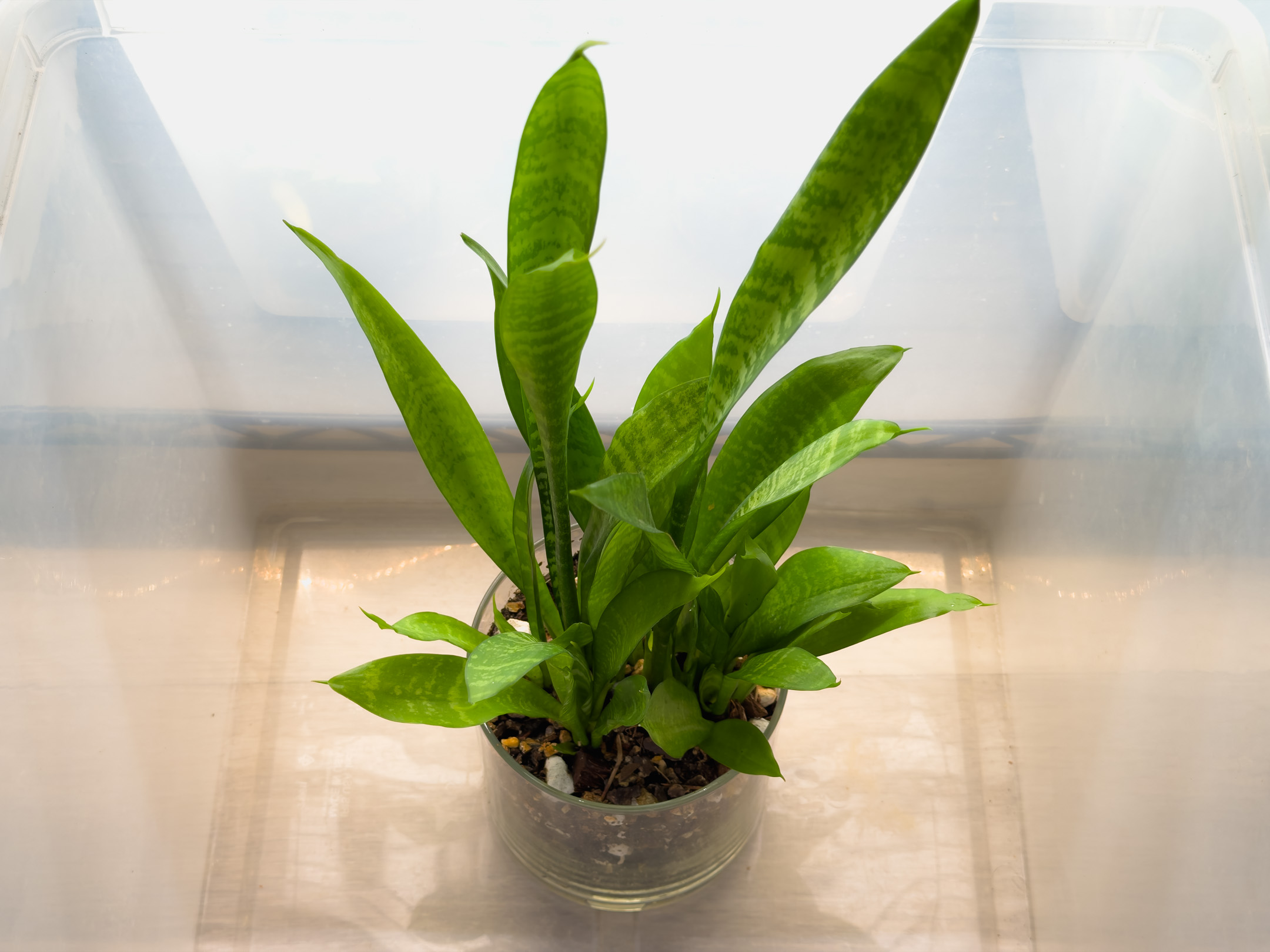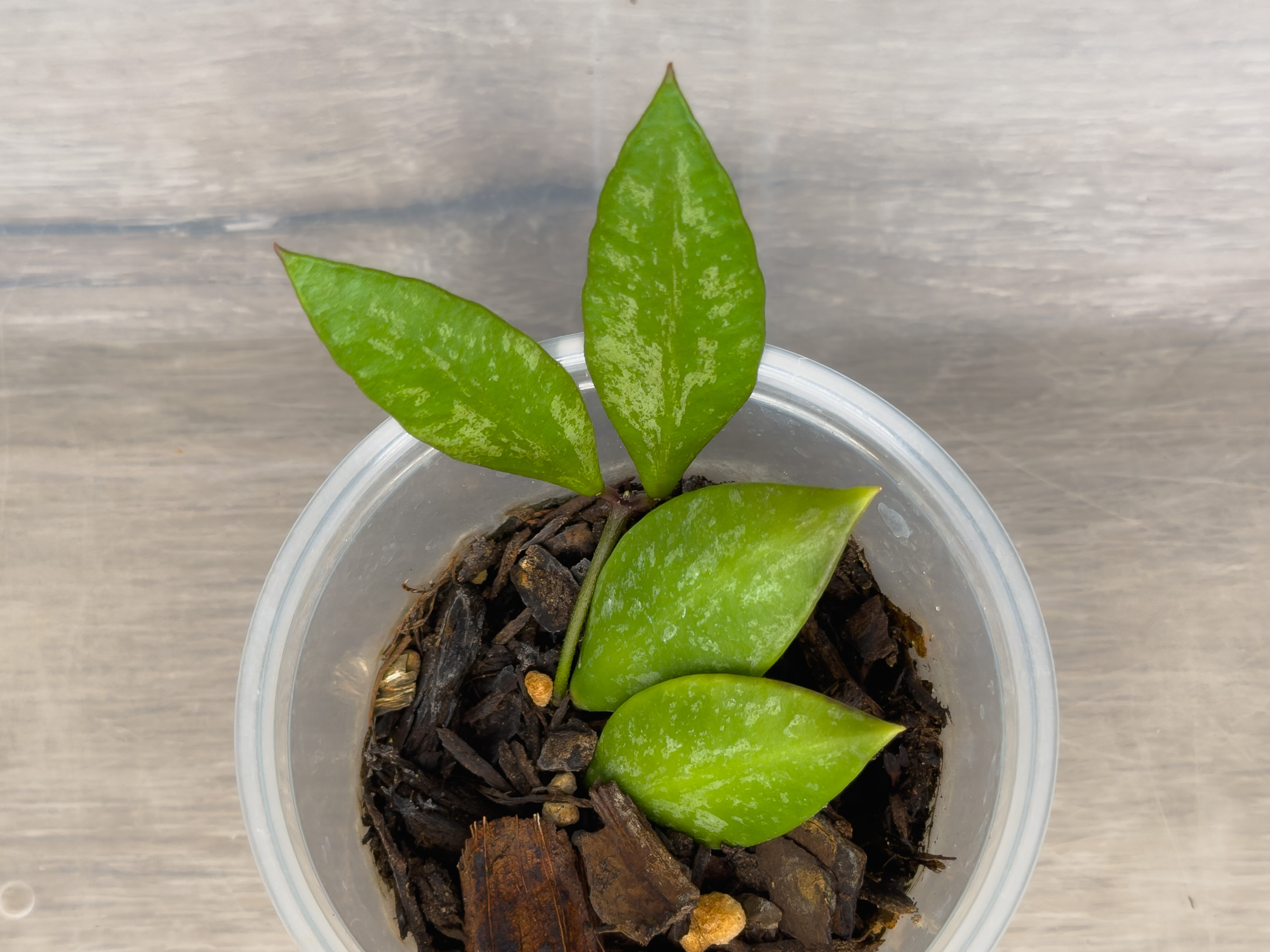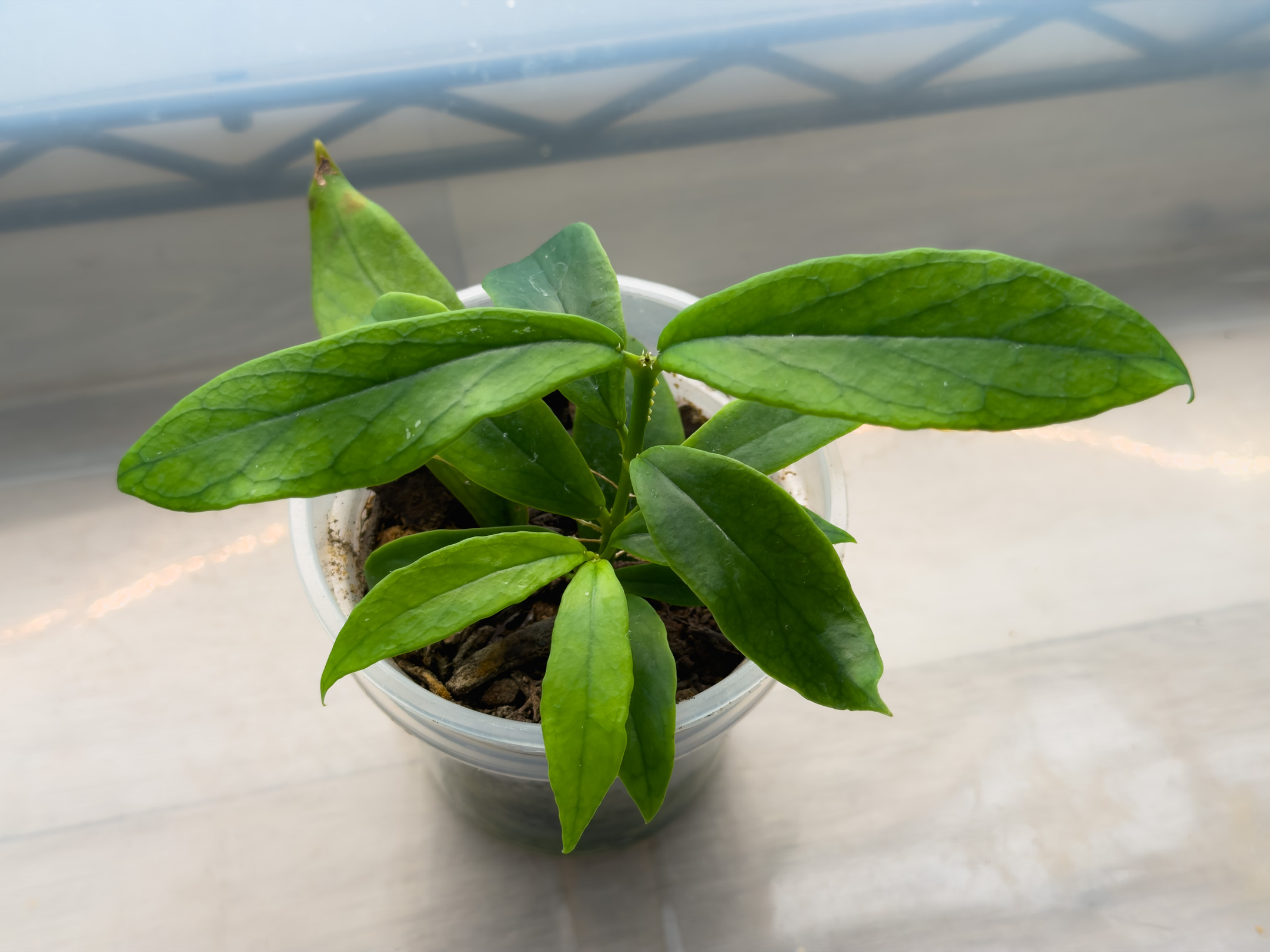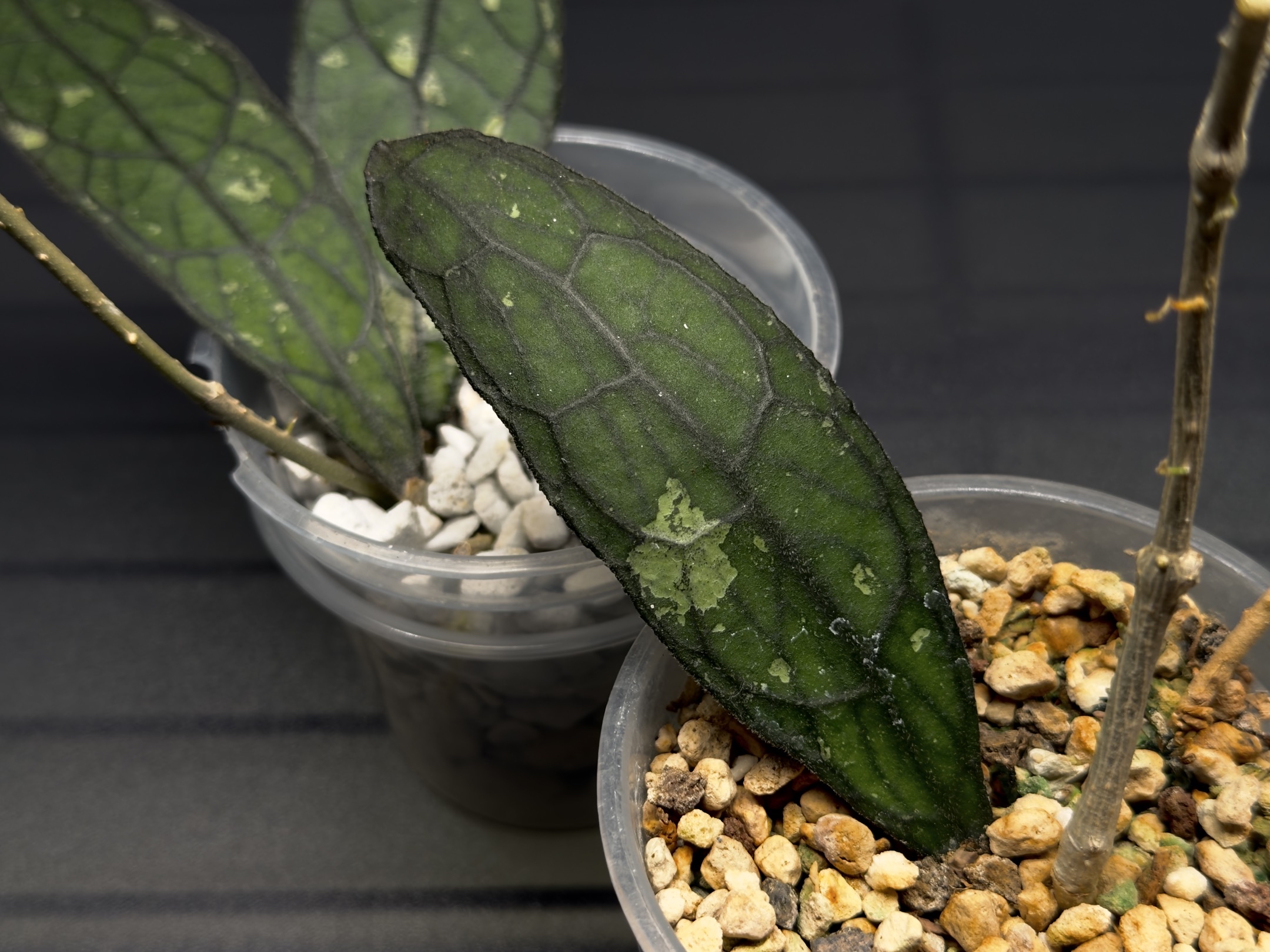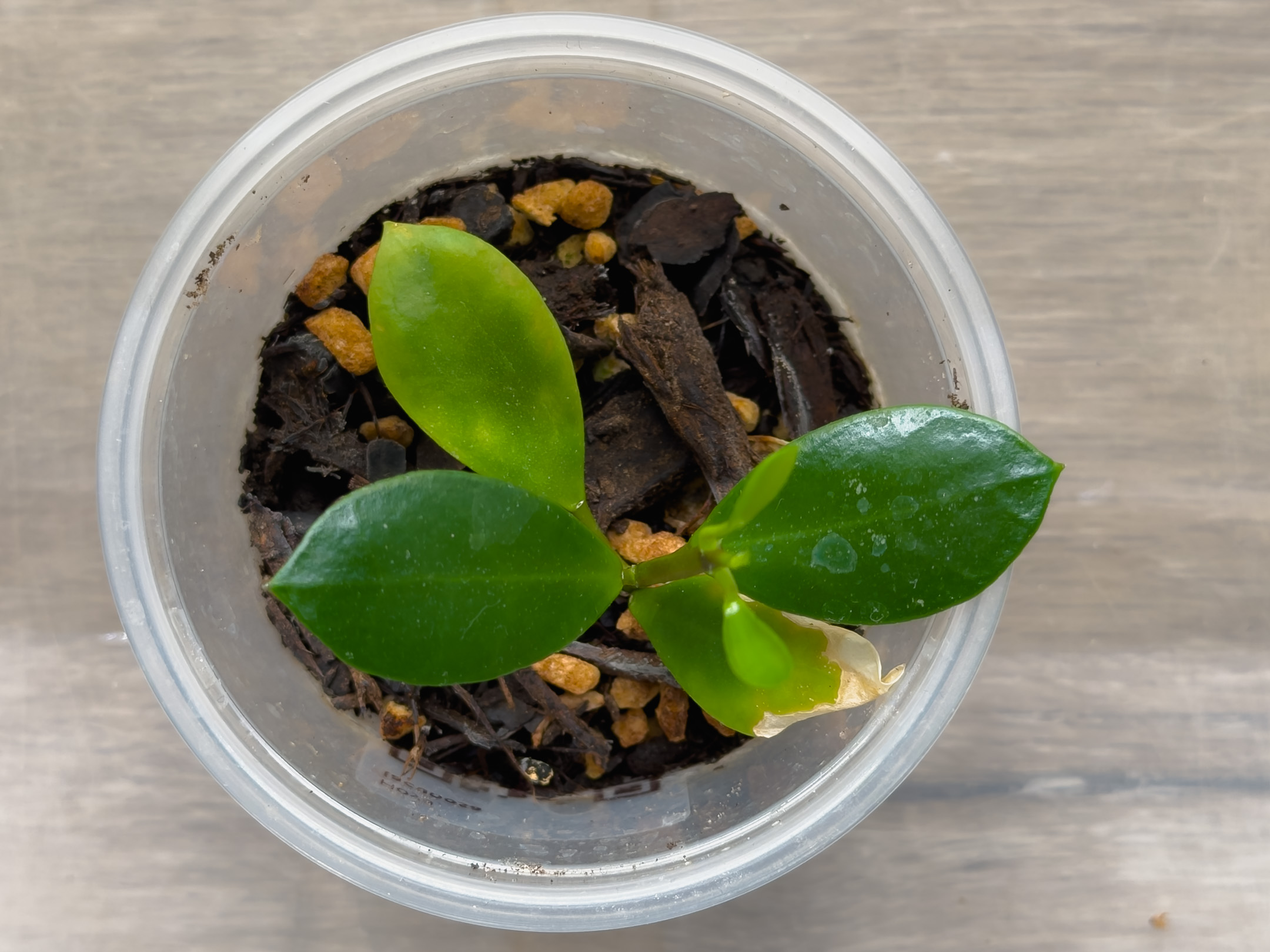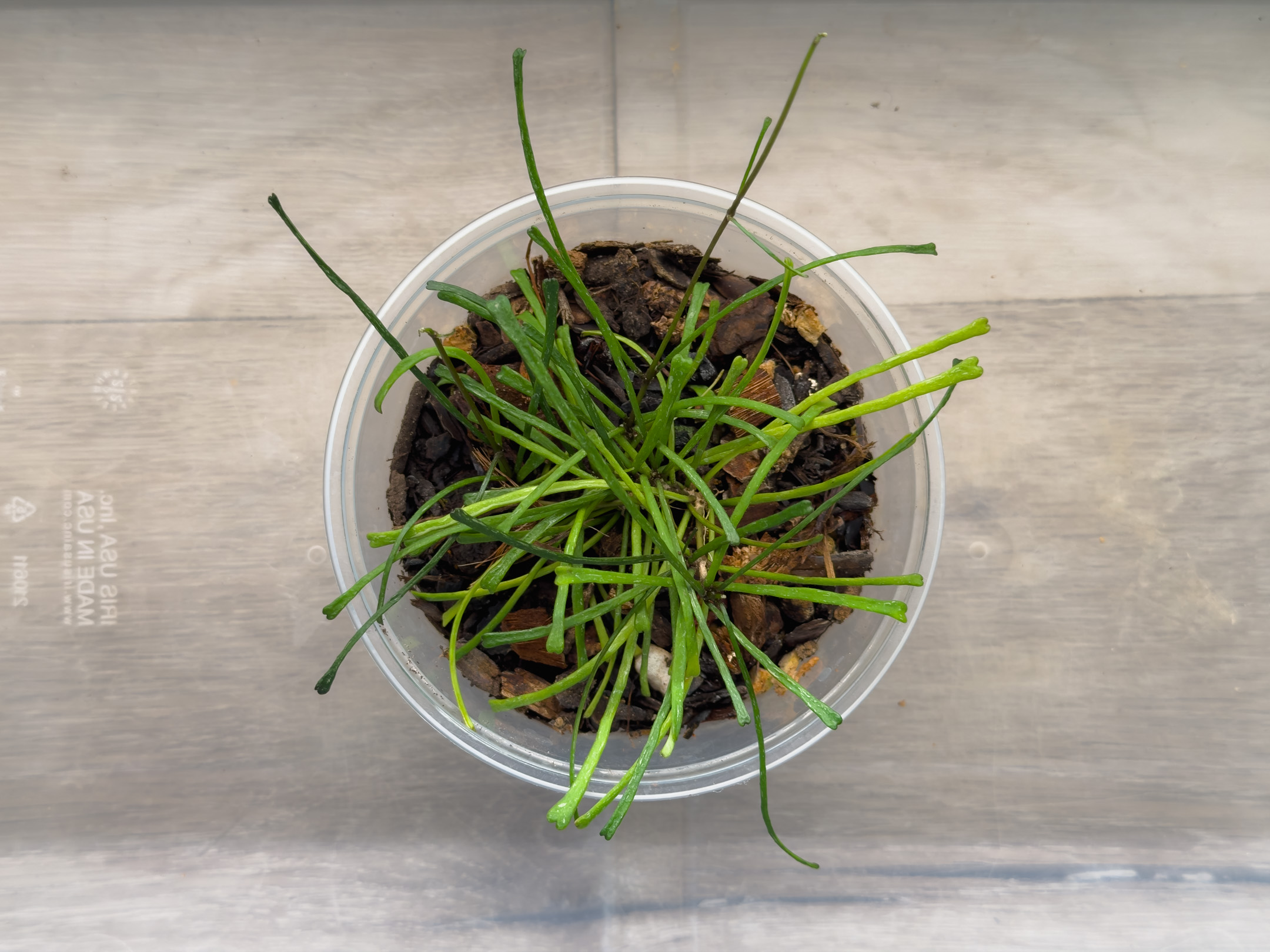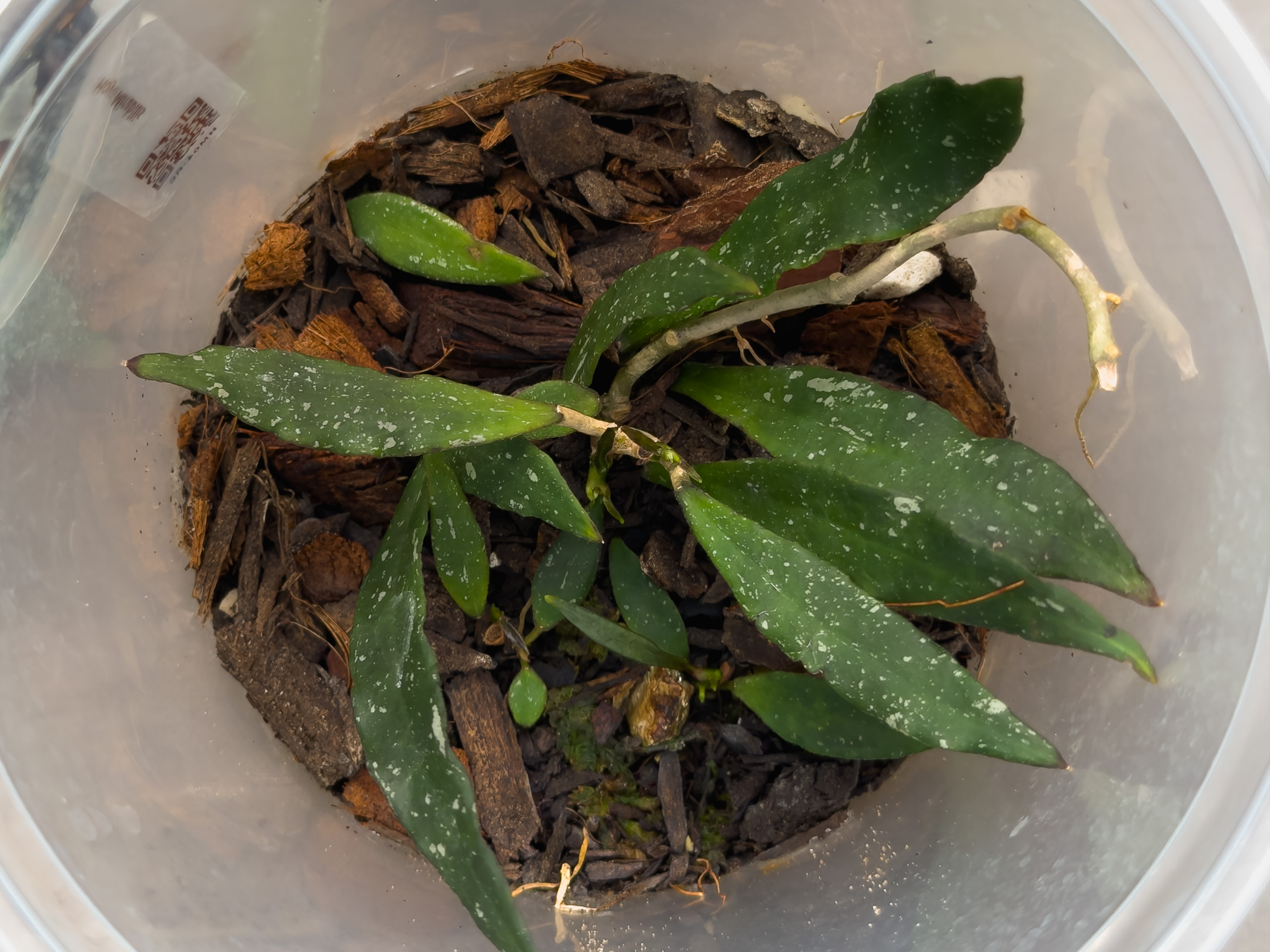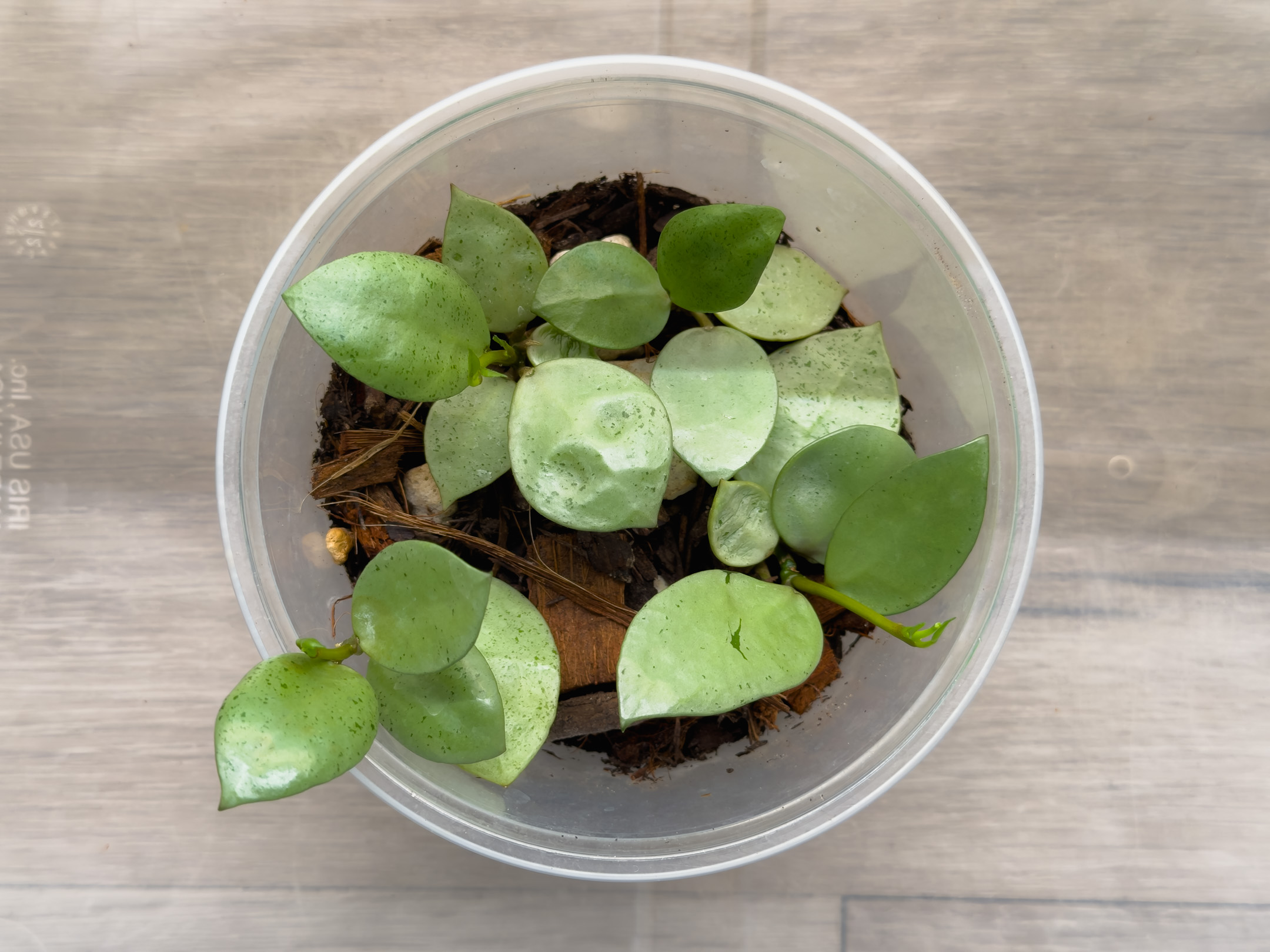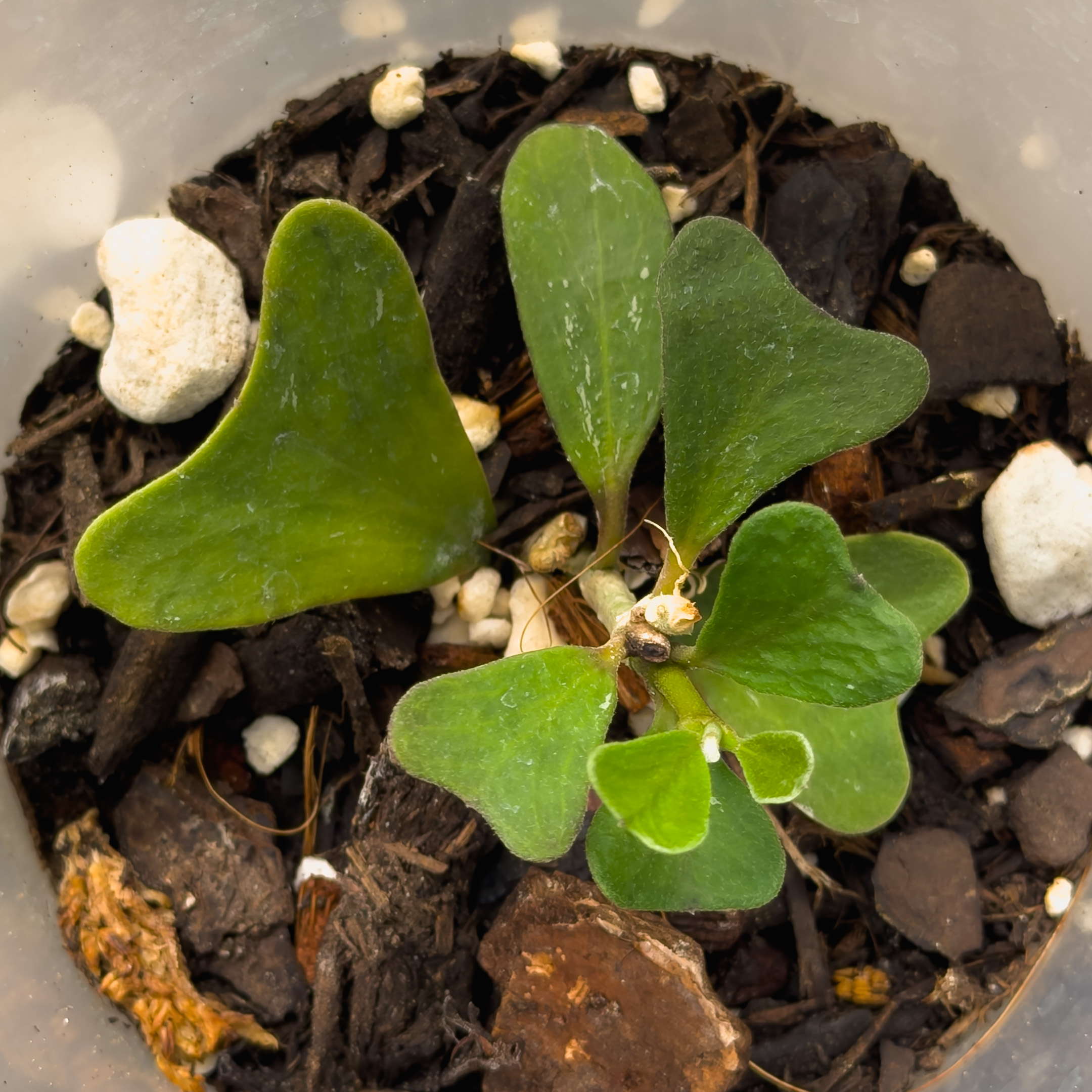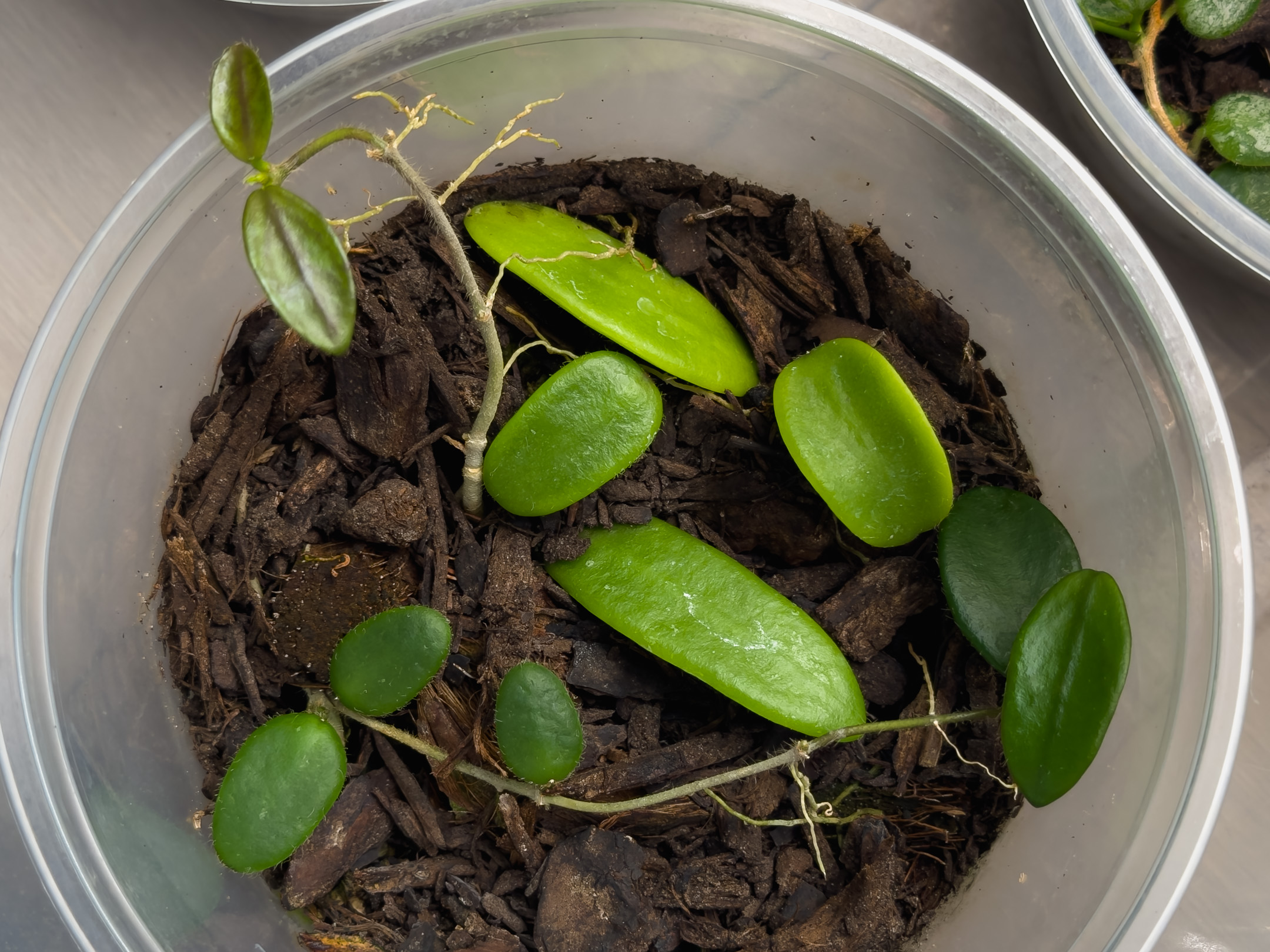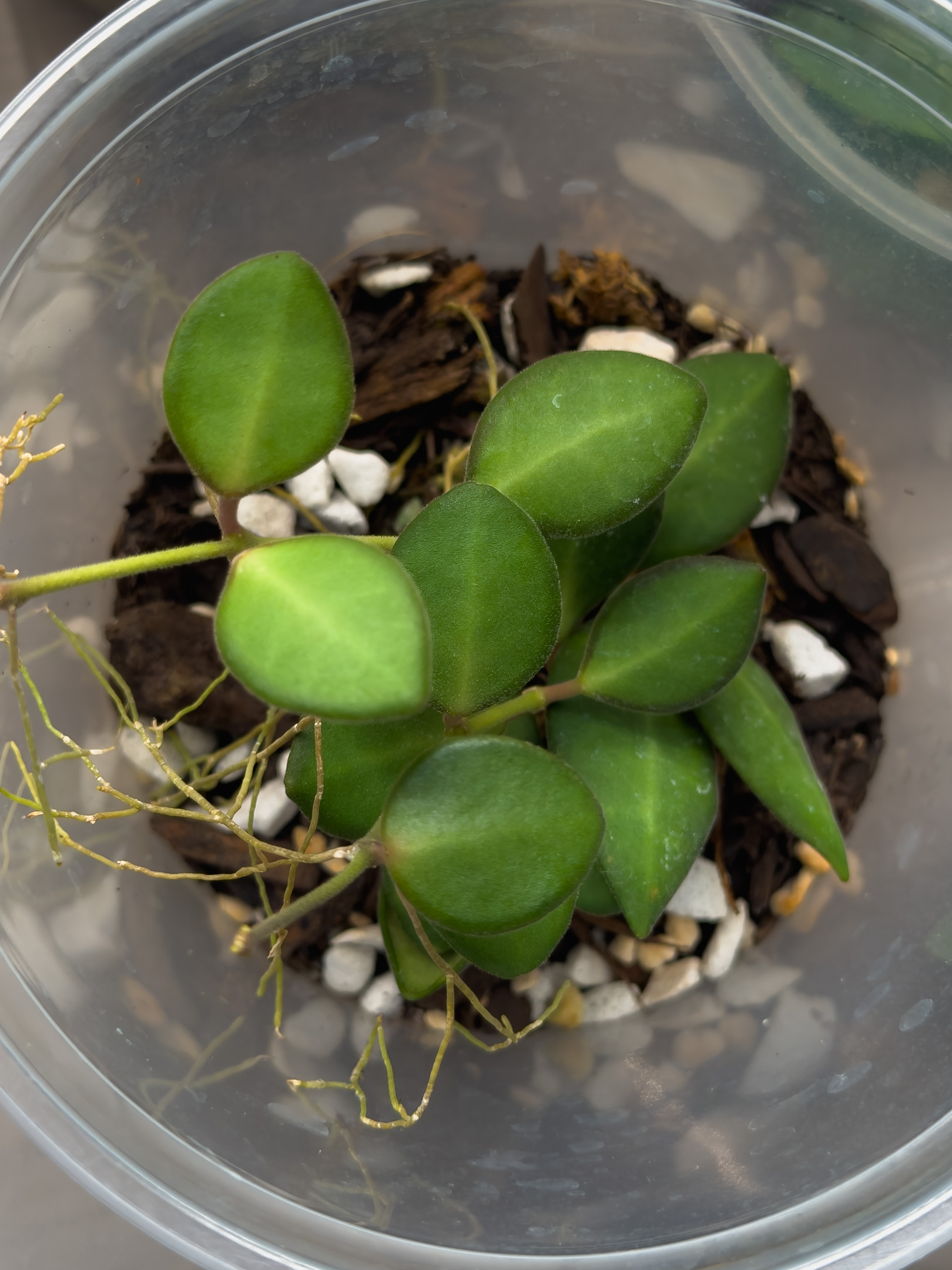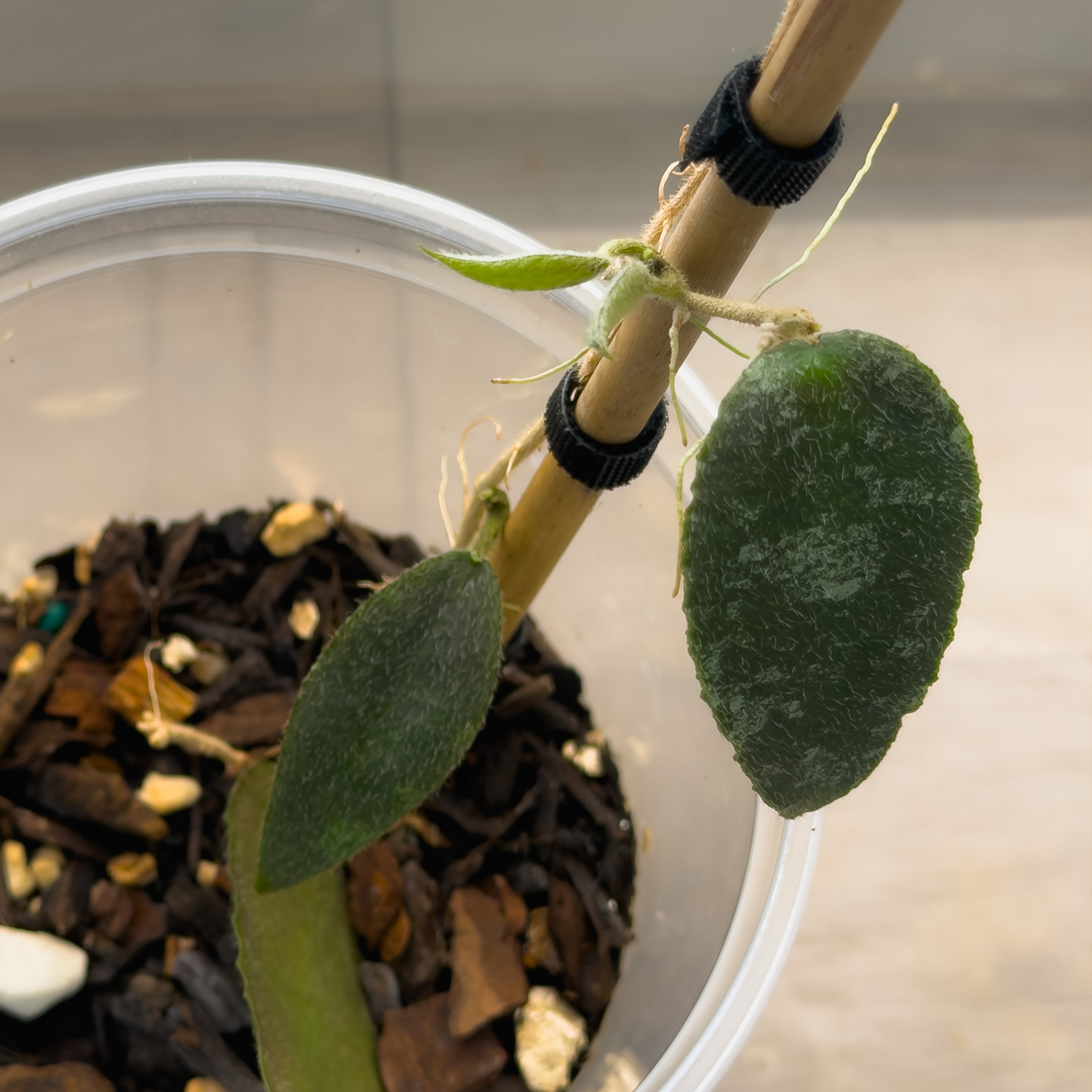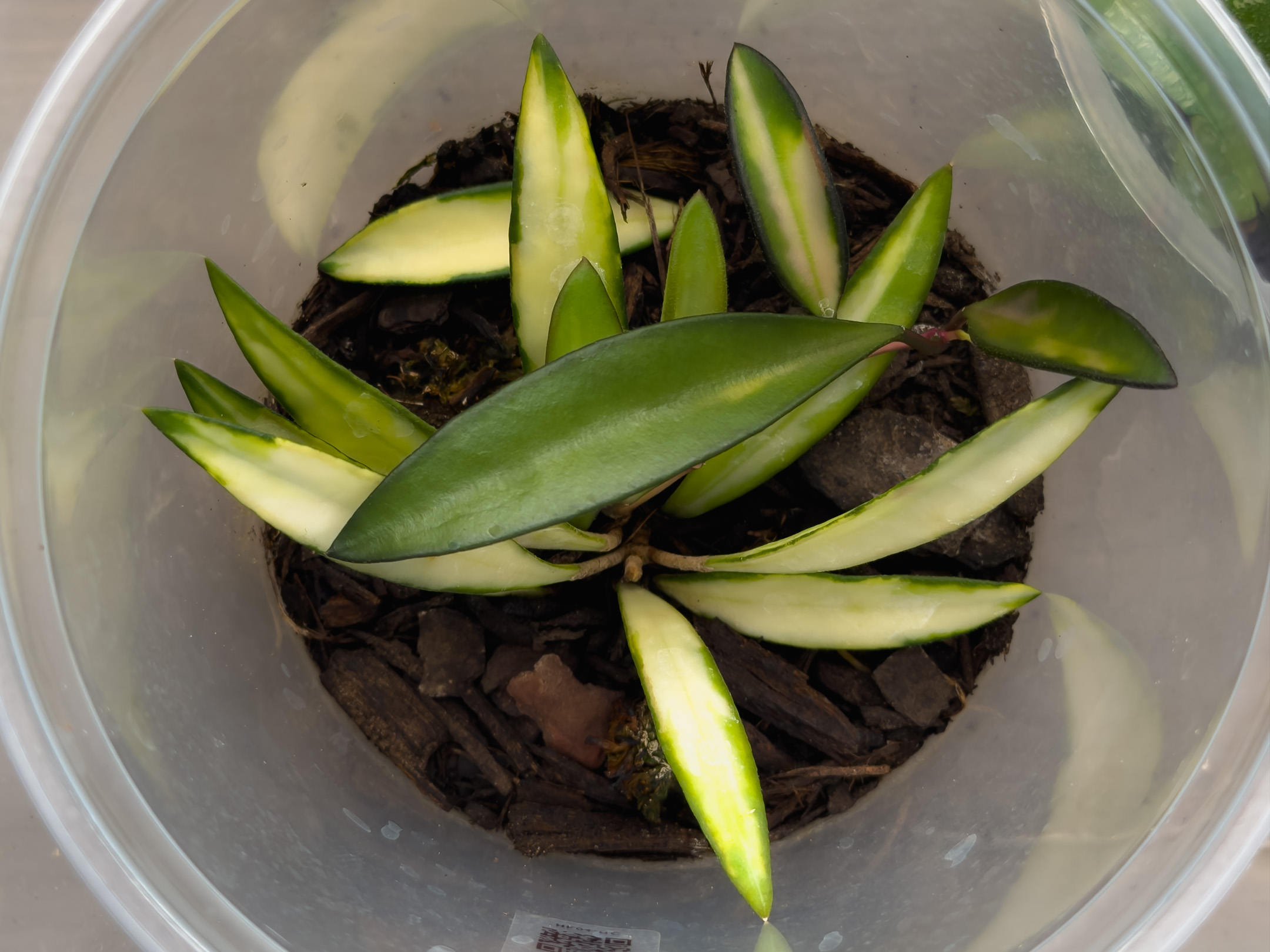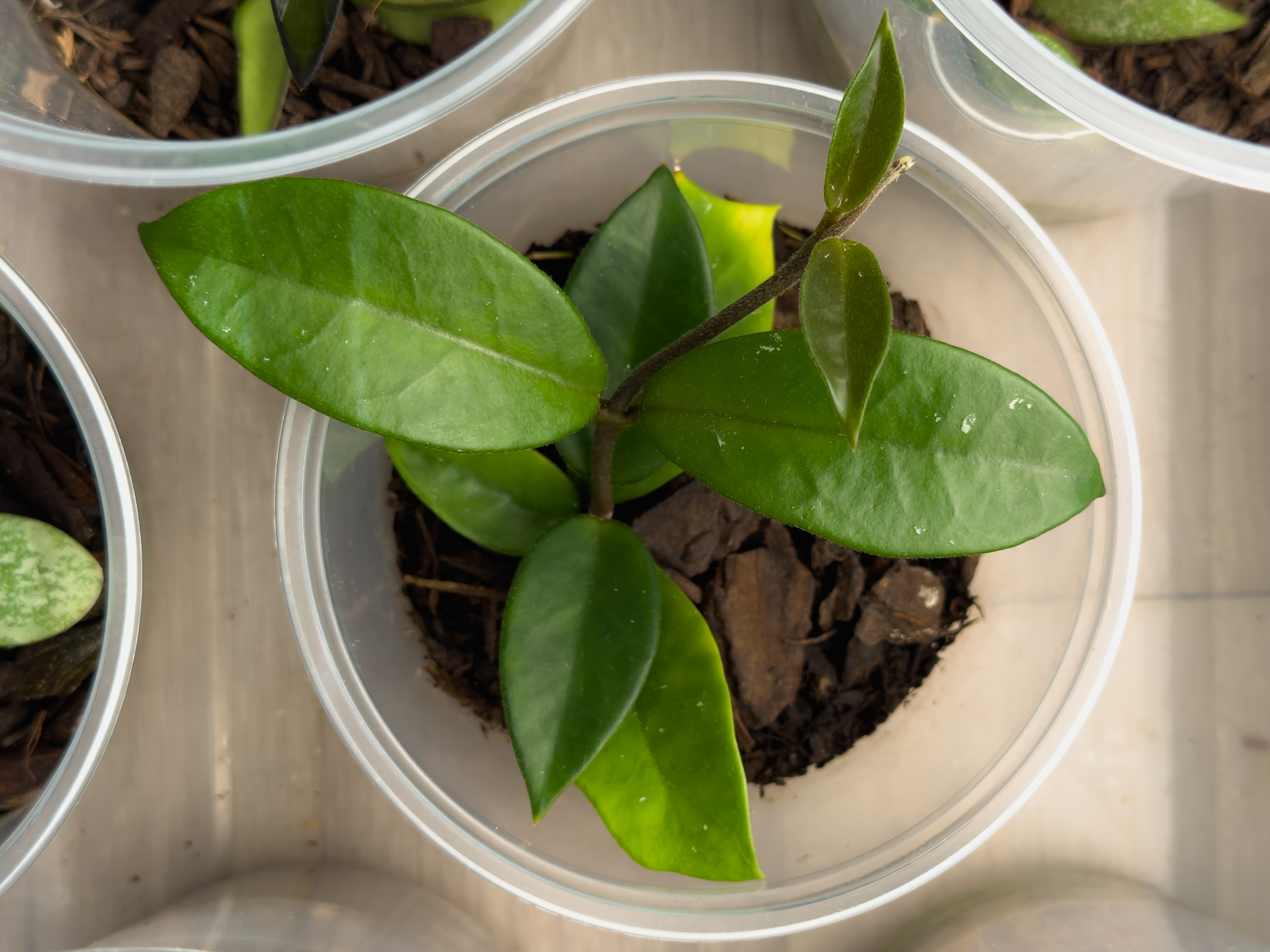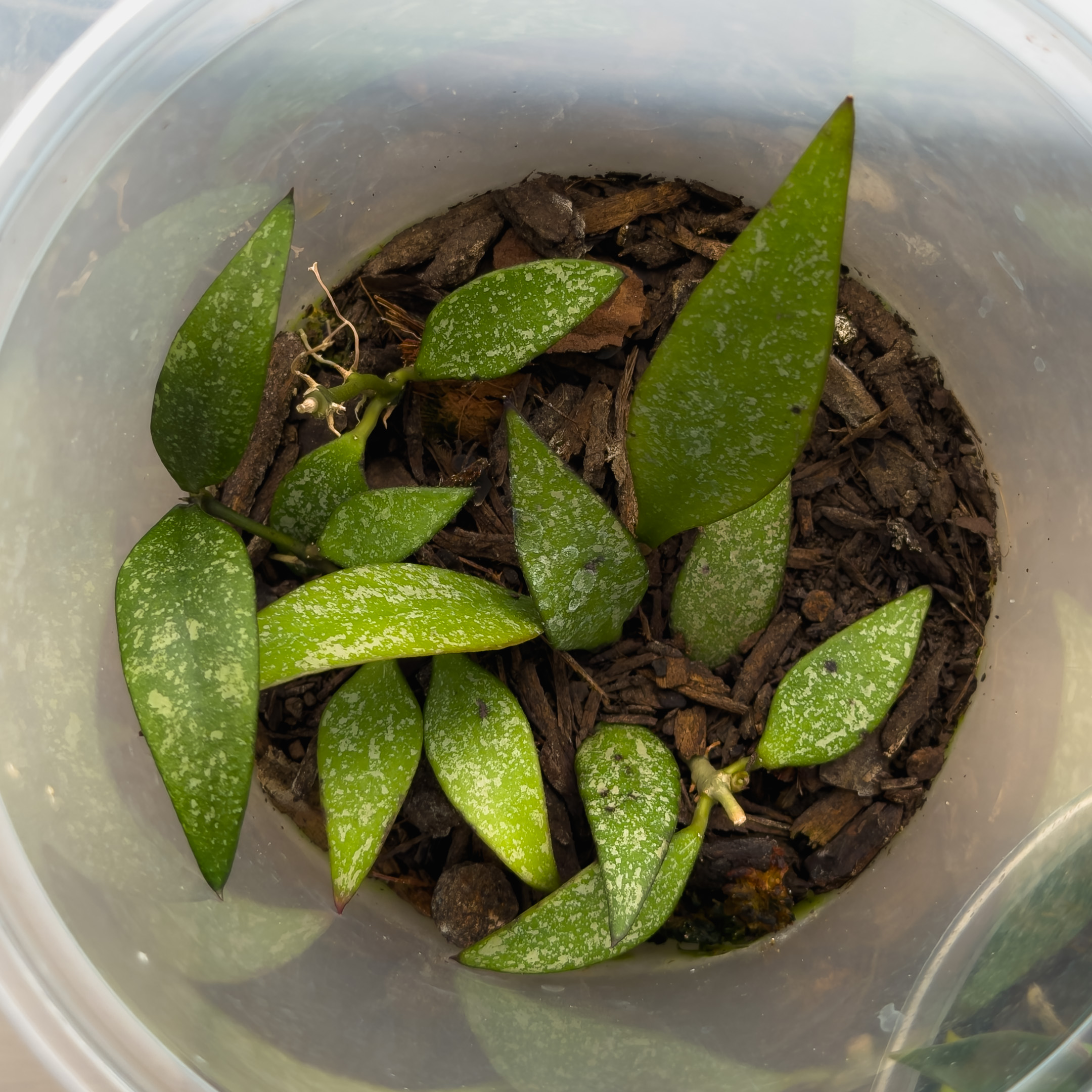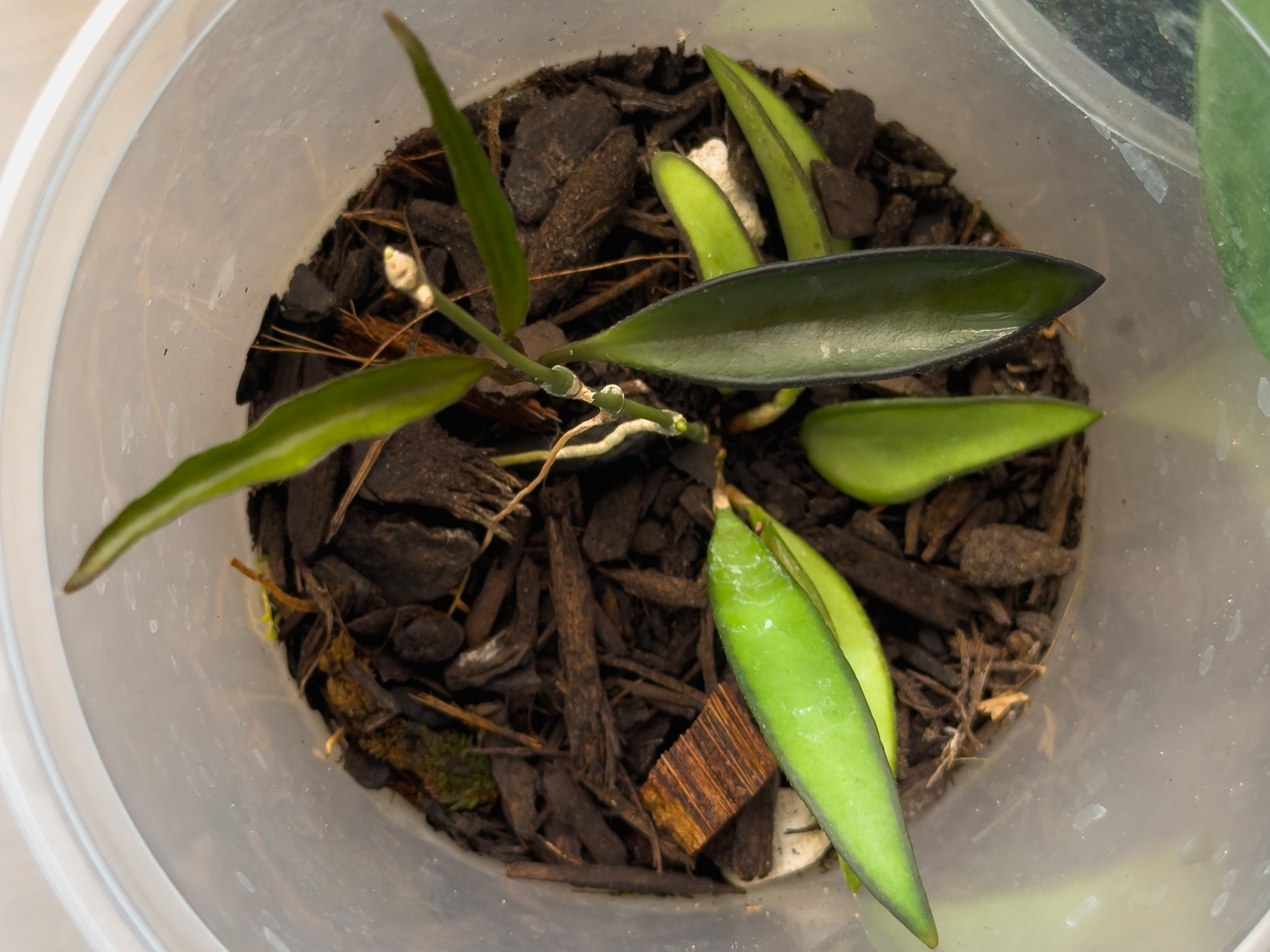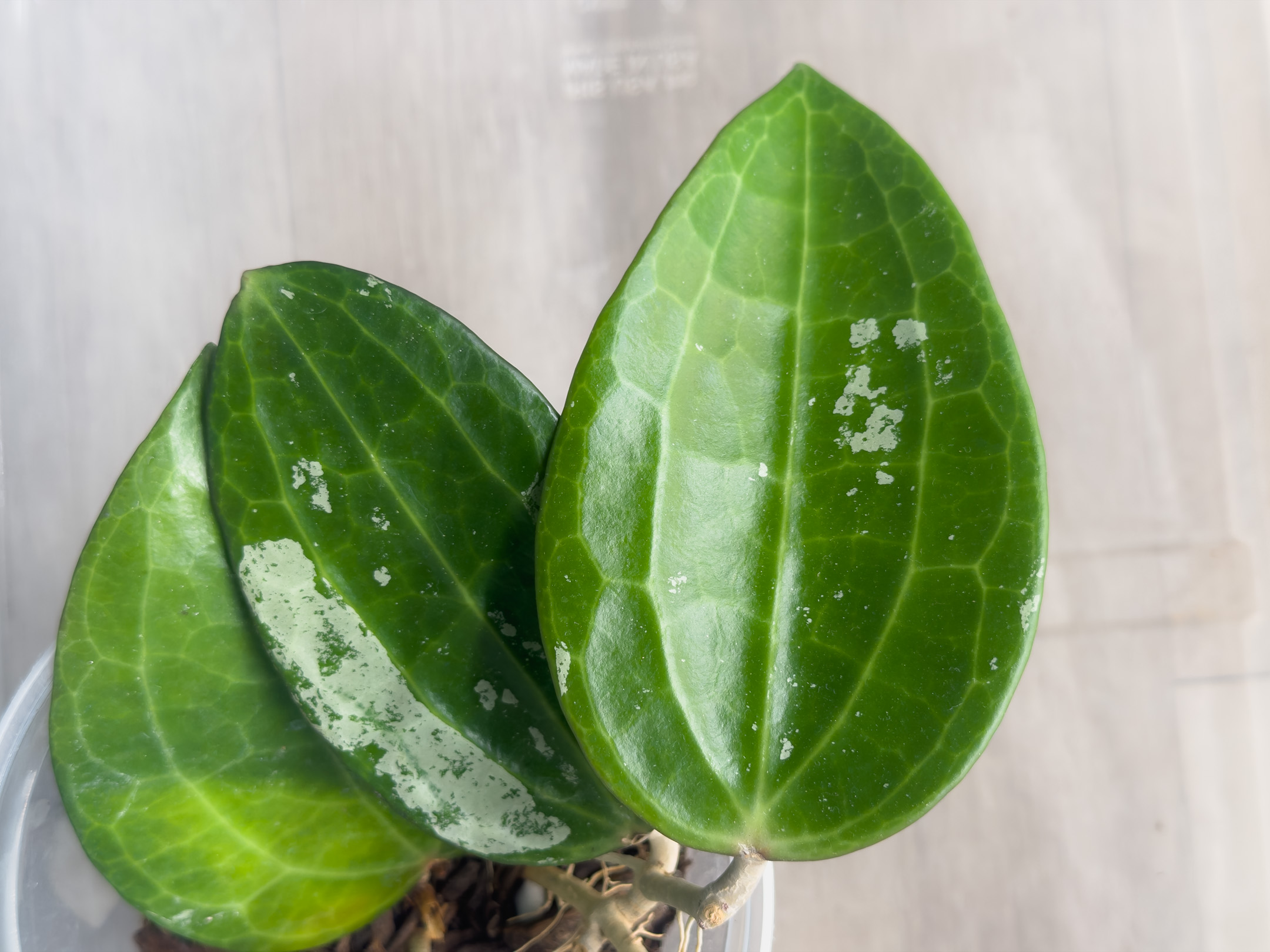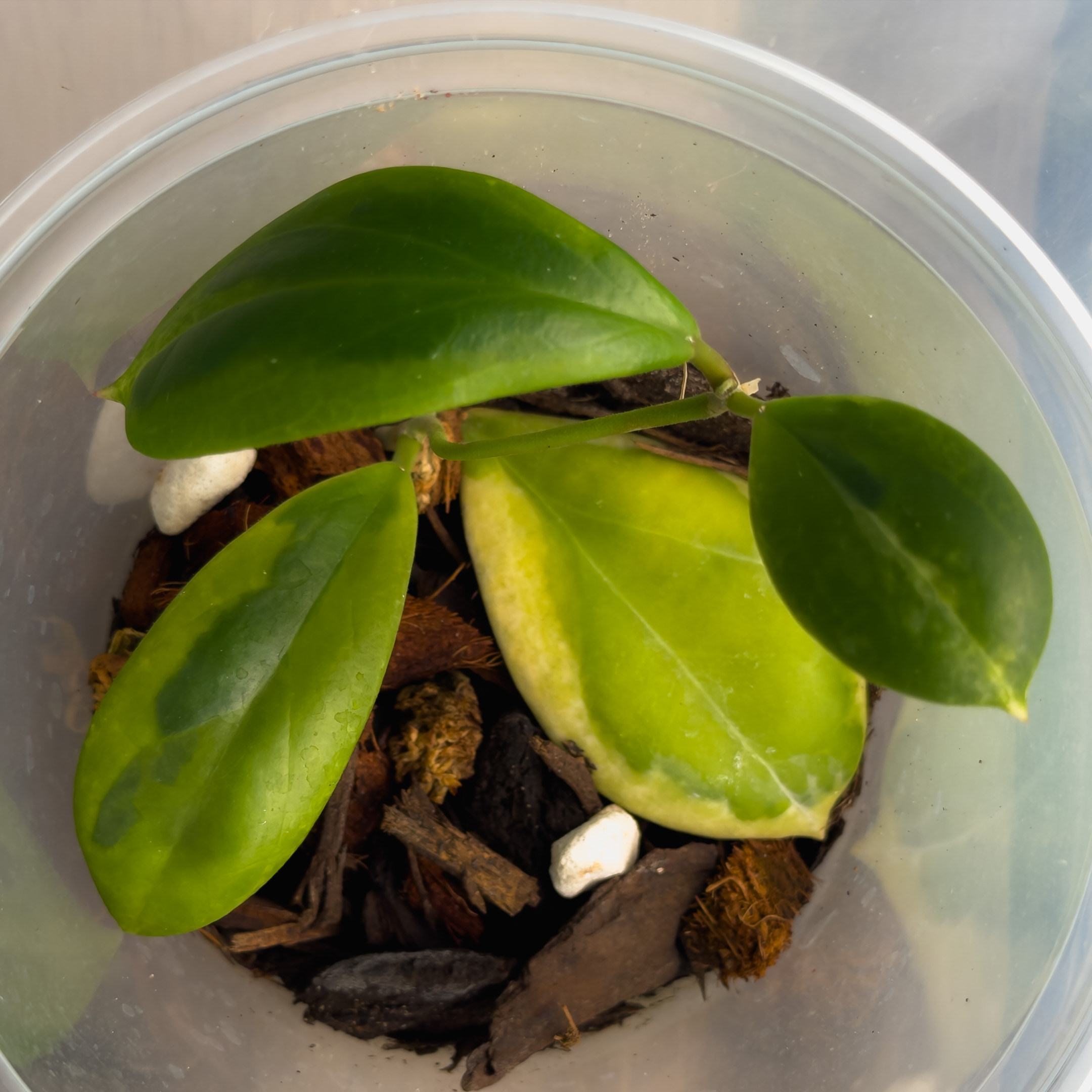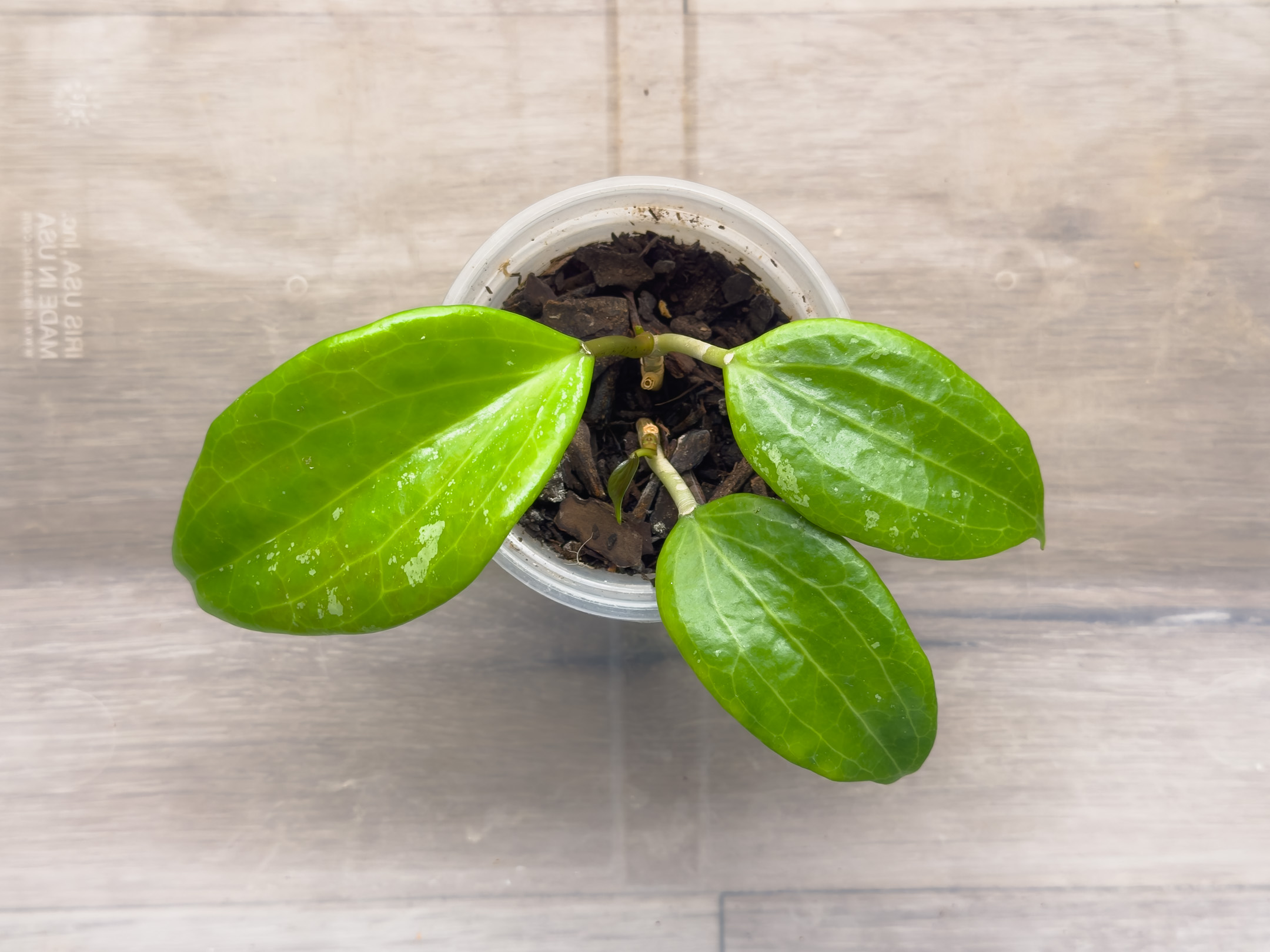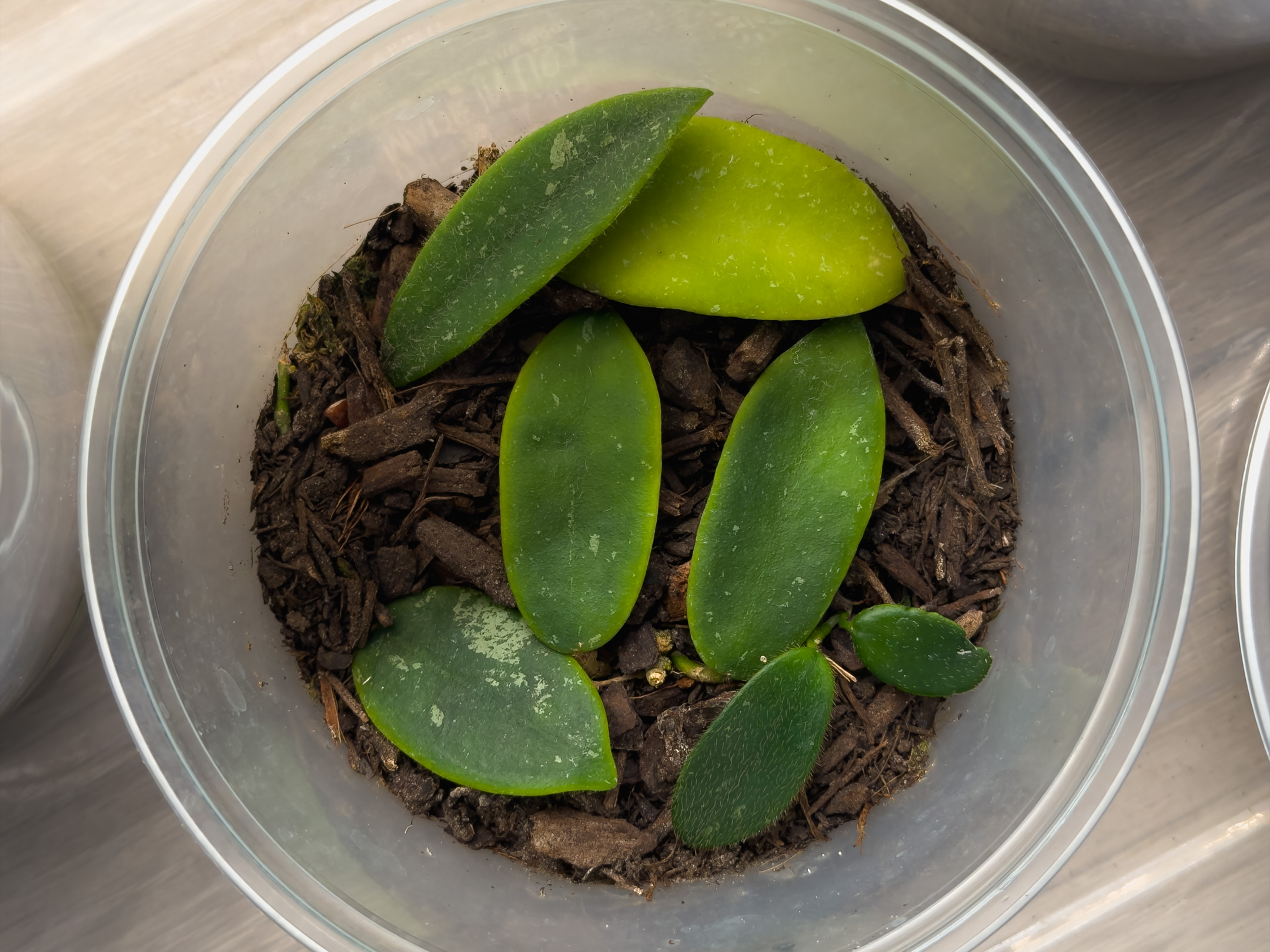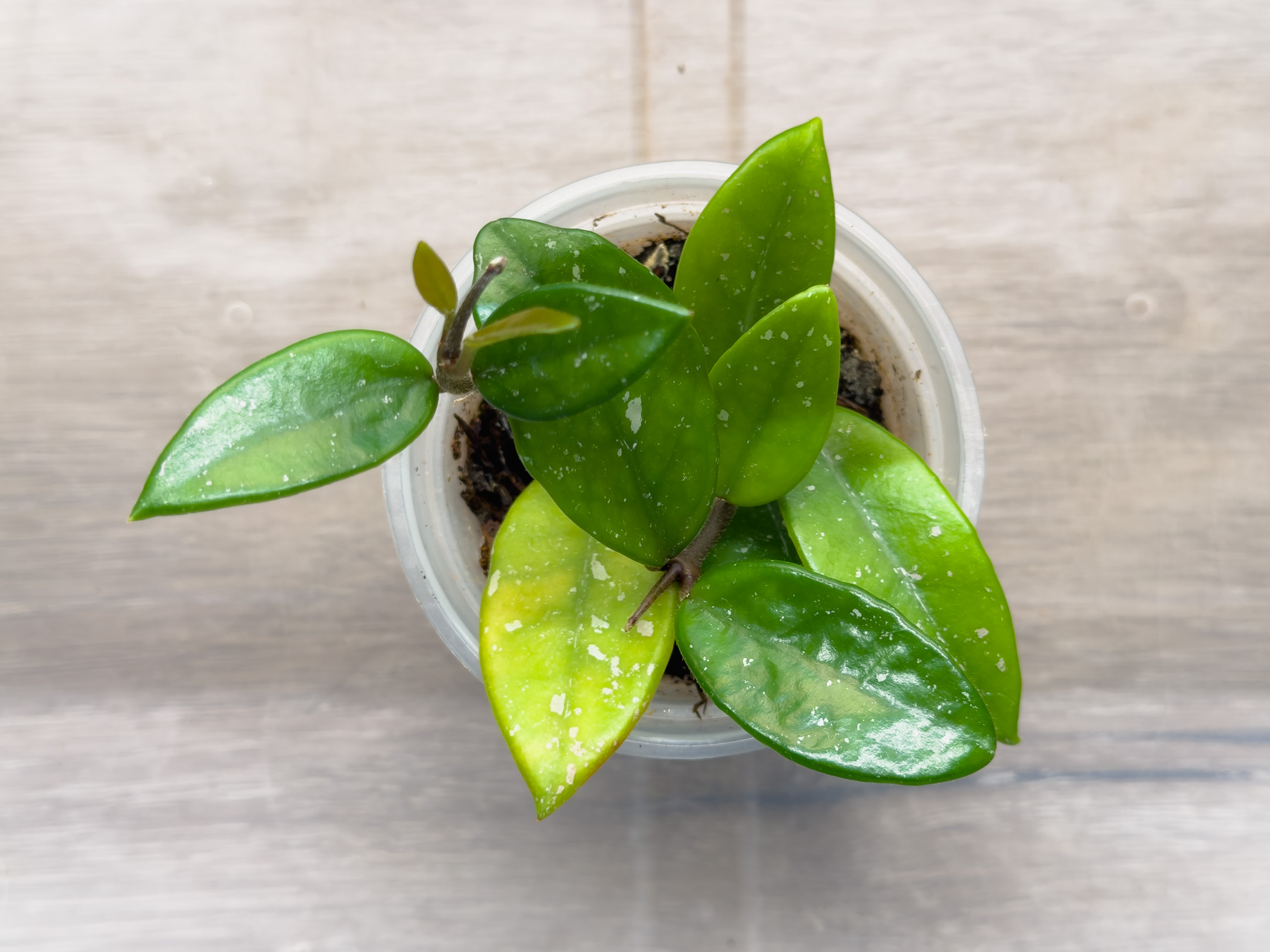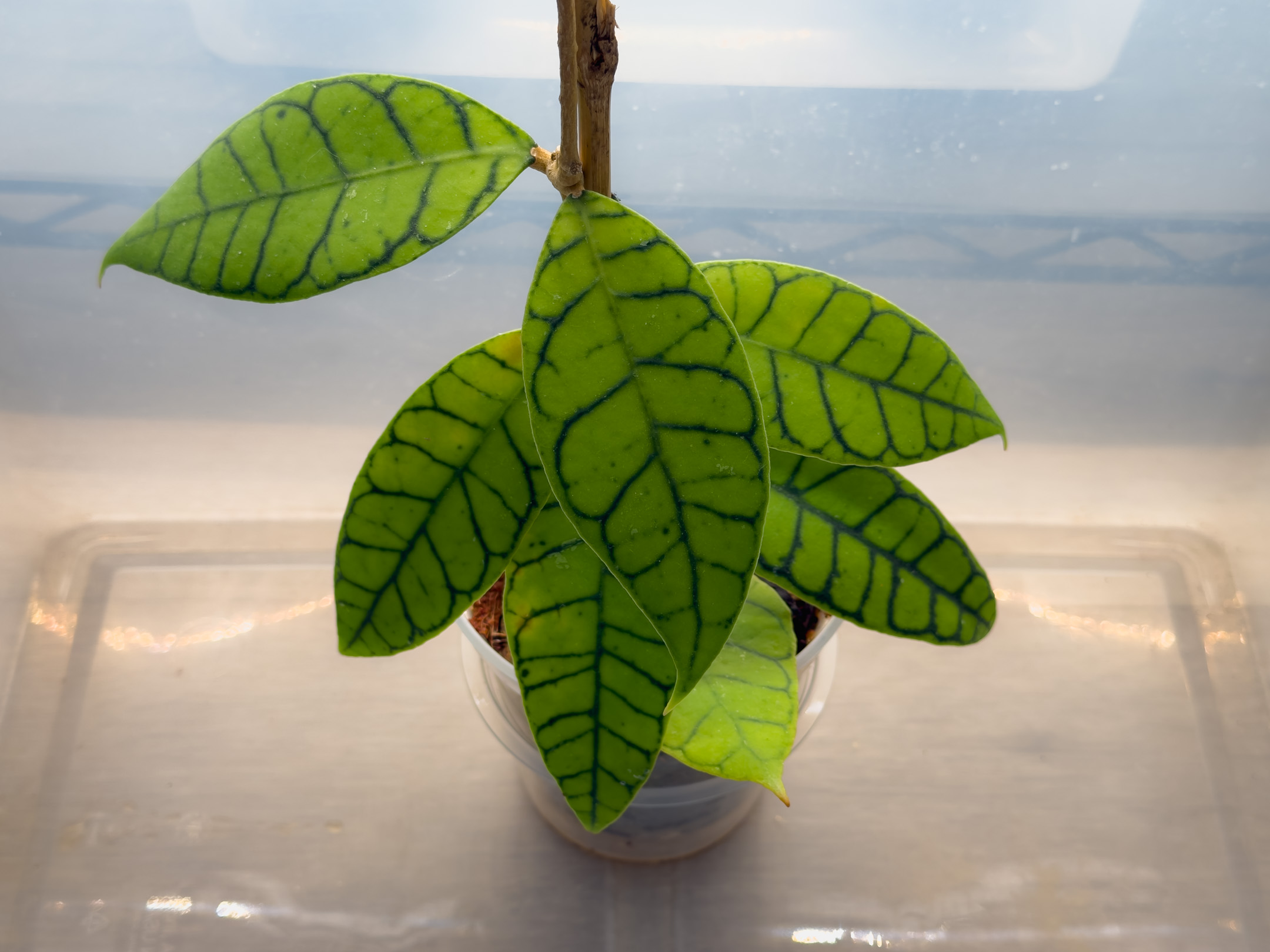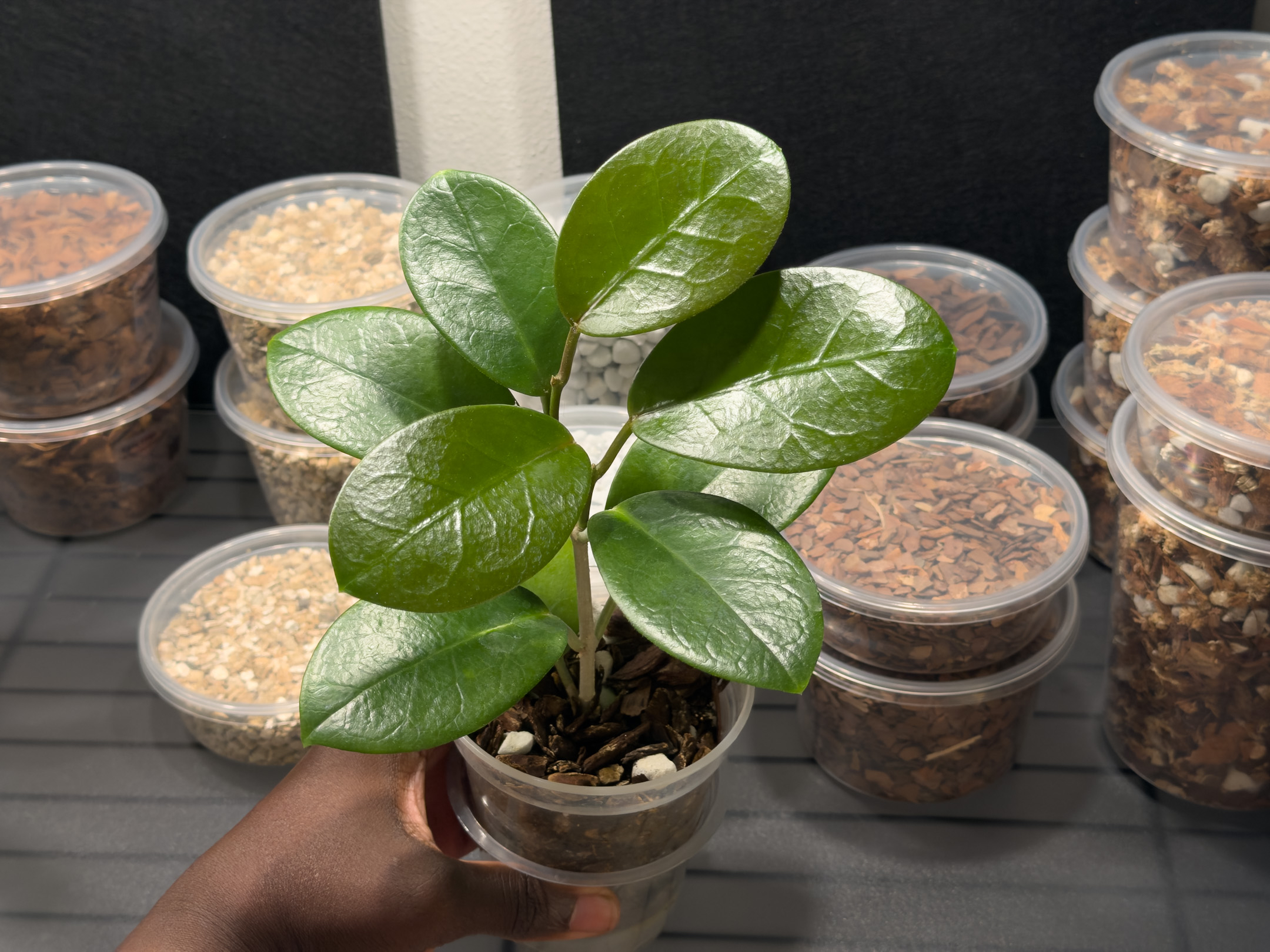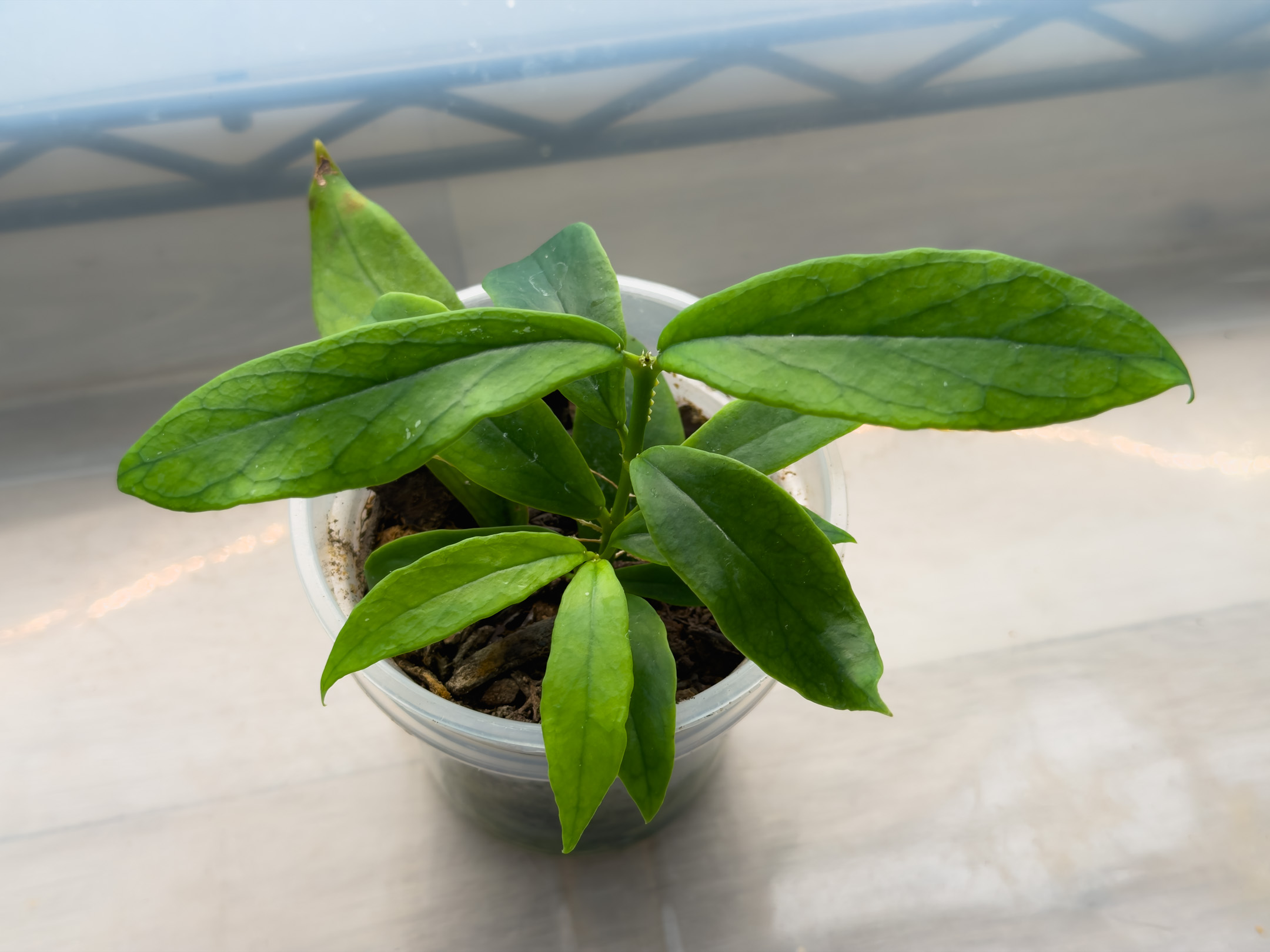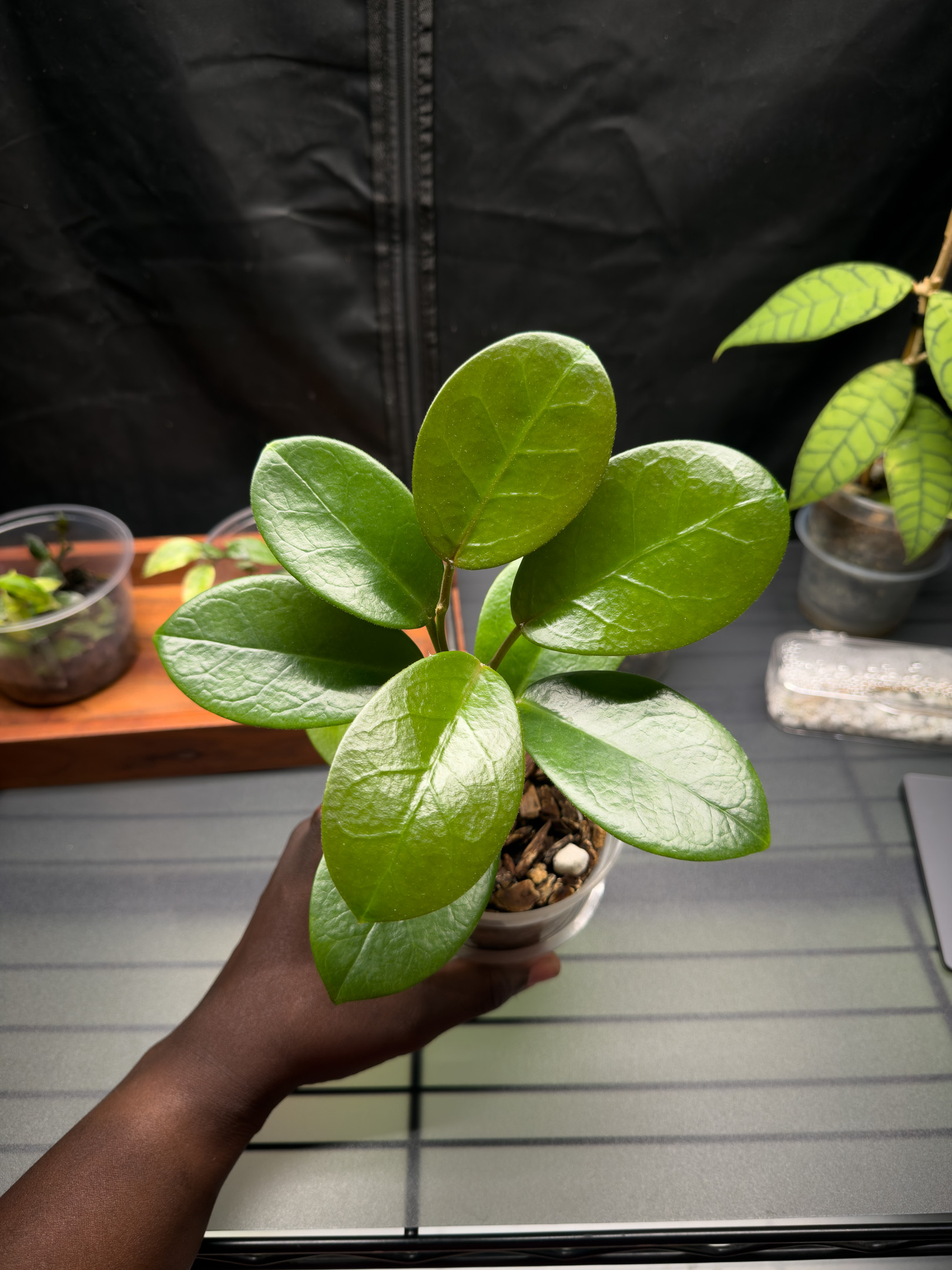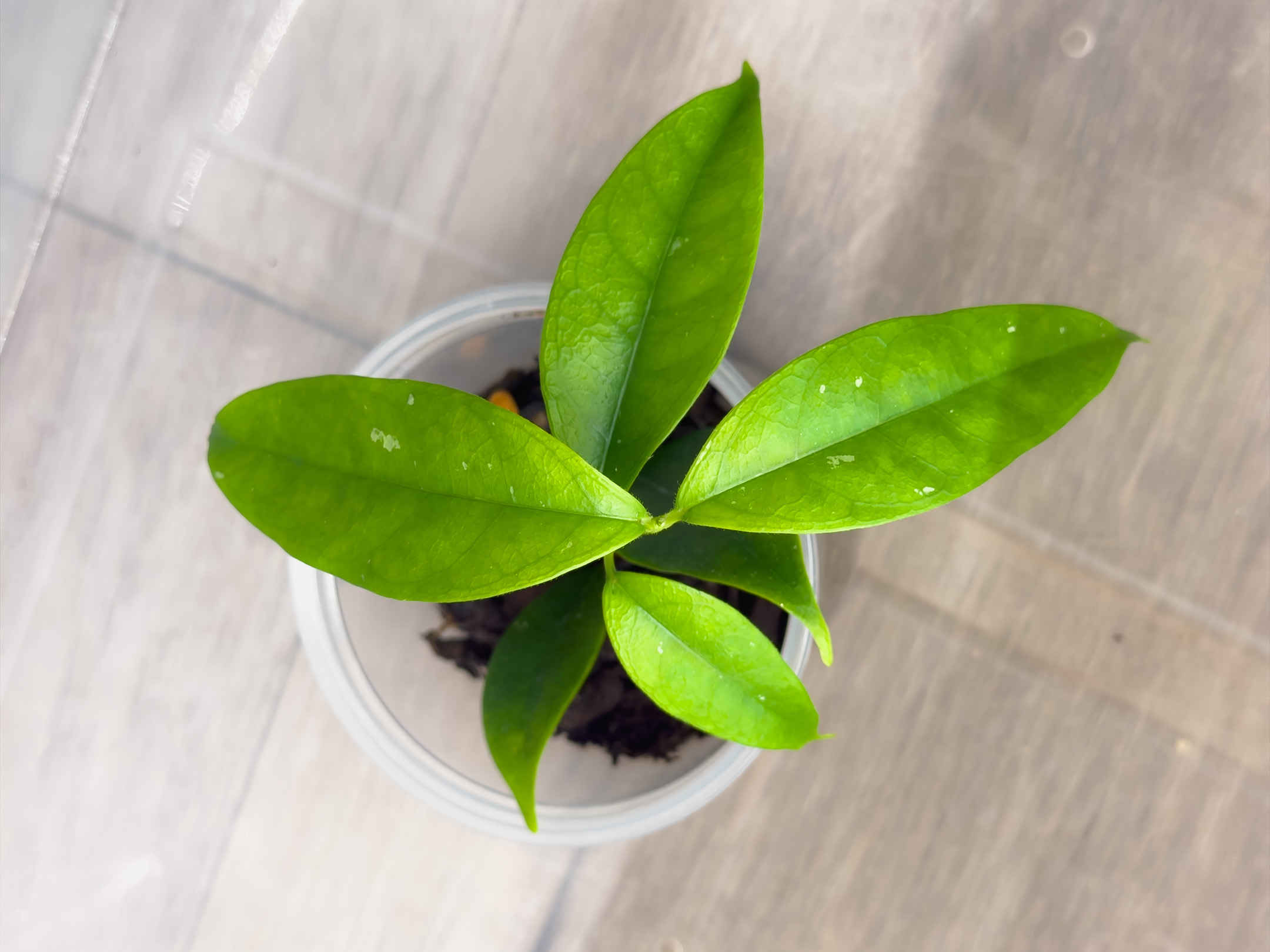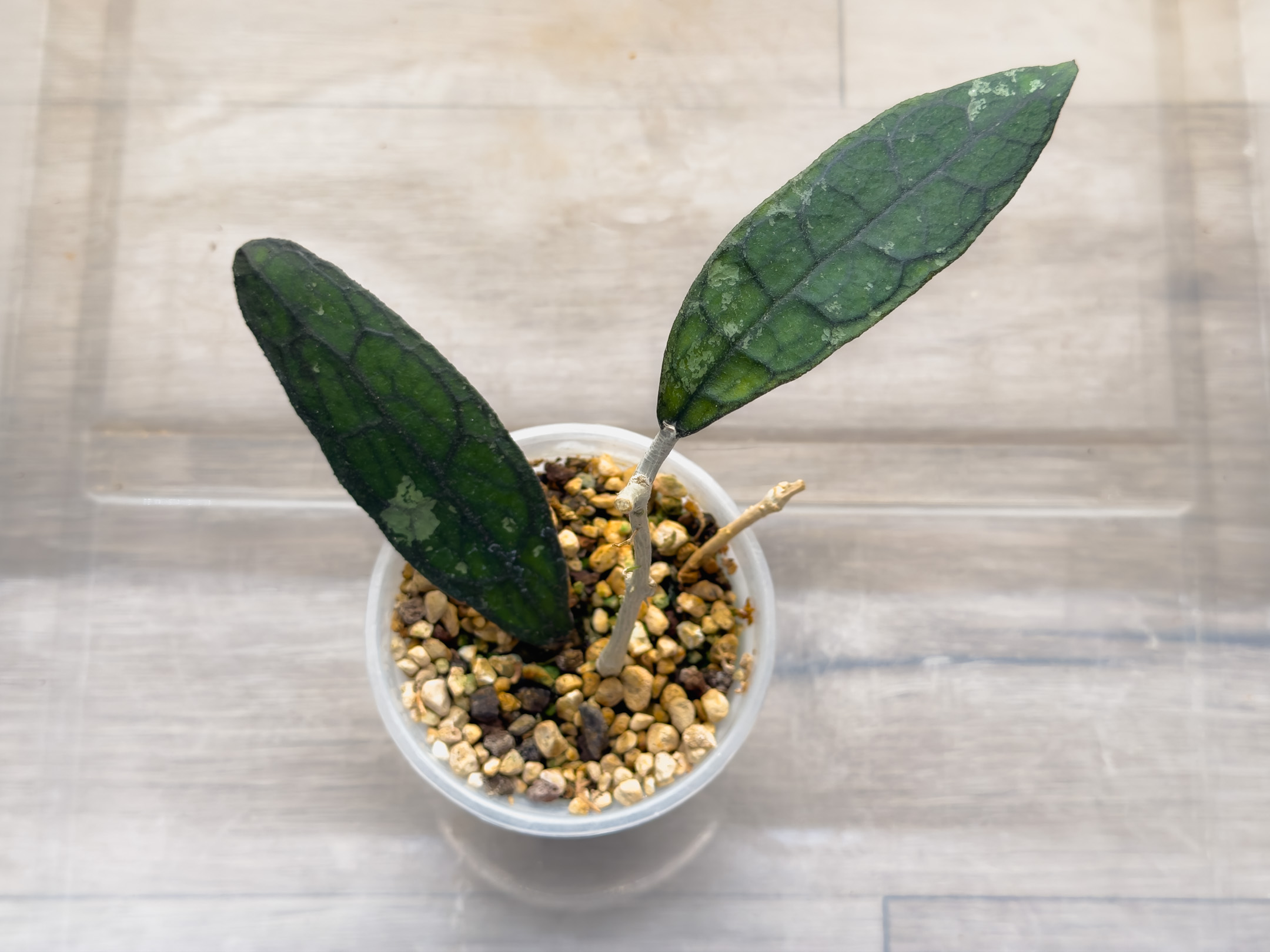




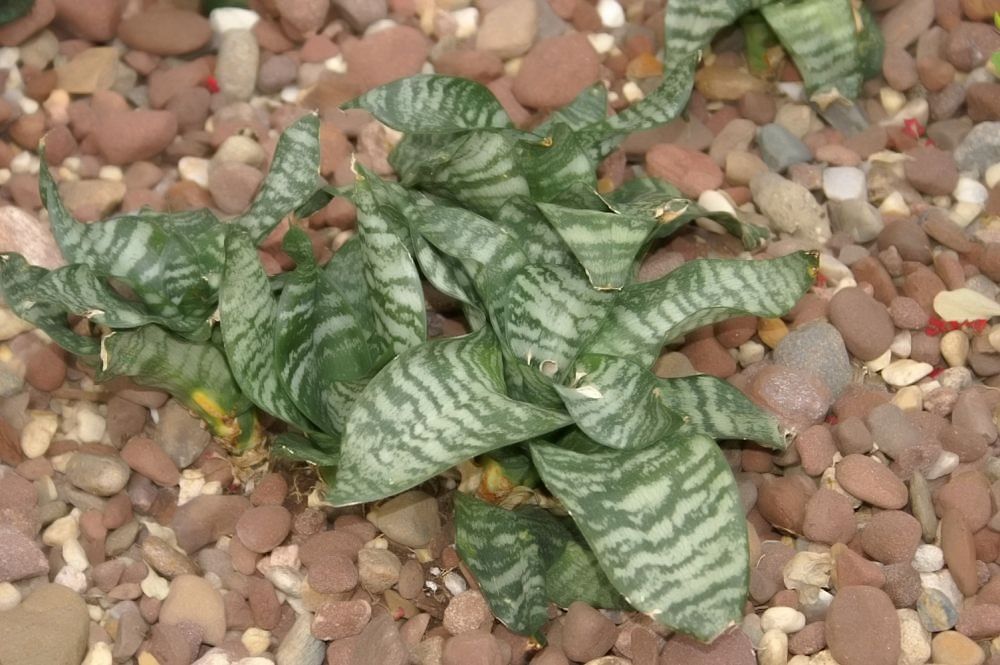
Dracaena trifasciata ‘Hahnii’ is a dwarf, rosette-forming selection commonly called the bird’s-nest snake plant. Shorter leaves radiate from tight fans, with dark green foliage broken by pale grey-green horizontal markings.
Instead of creating the tall vertical rhythm associated with standard trifasciata, ‘Hahnii’ develops as a low, dense cluster. This makes it especially useful as a compact structural element in smaller glass systems. Its care remains drought-tolerant and straightforward, but the tight rosette makes it important to avoid water sitting persistently around the leaf bases.

WATER / ROOT ZONE
The compact rosette and thick leaves use water slowly. Allow substantial dry-back and avoid letting water sit in the center of the rosette or around the crown.
CONTAINER
Its low, clumping architecture works best in a snug, stable vessel rather than a deep oversized root zone.
LIGHT
Brighter indirect light helps maintain compact rosette form and banding, while lower light generally slows water use further.
Dracaena plants thrive in moderate humidity and slightly moist soil. However, it’s important to let the soil dry out completely before watering to avoid overwatering. This plant can go several weeks without water.
In terms of lighting, Dracaena plants prefer bright, indirect light but can also tolerate low lighting conditions.
When it comes to potting, repot the plant in pots that are no larger than 1 inch in diameter from the root system.
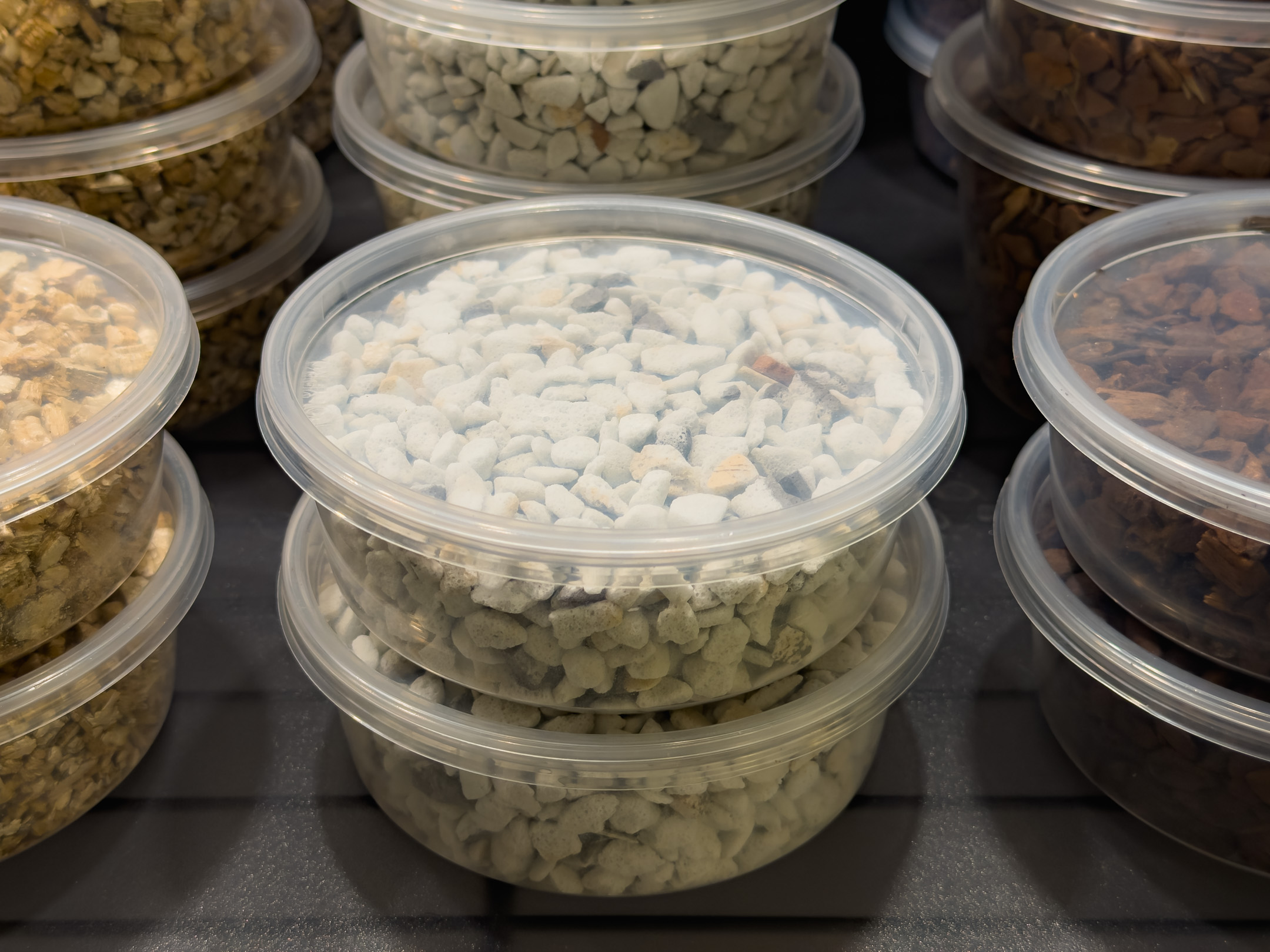
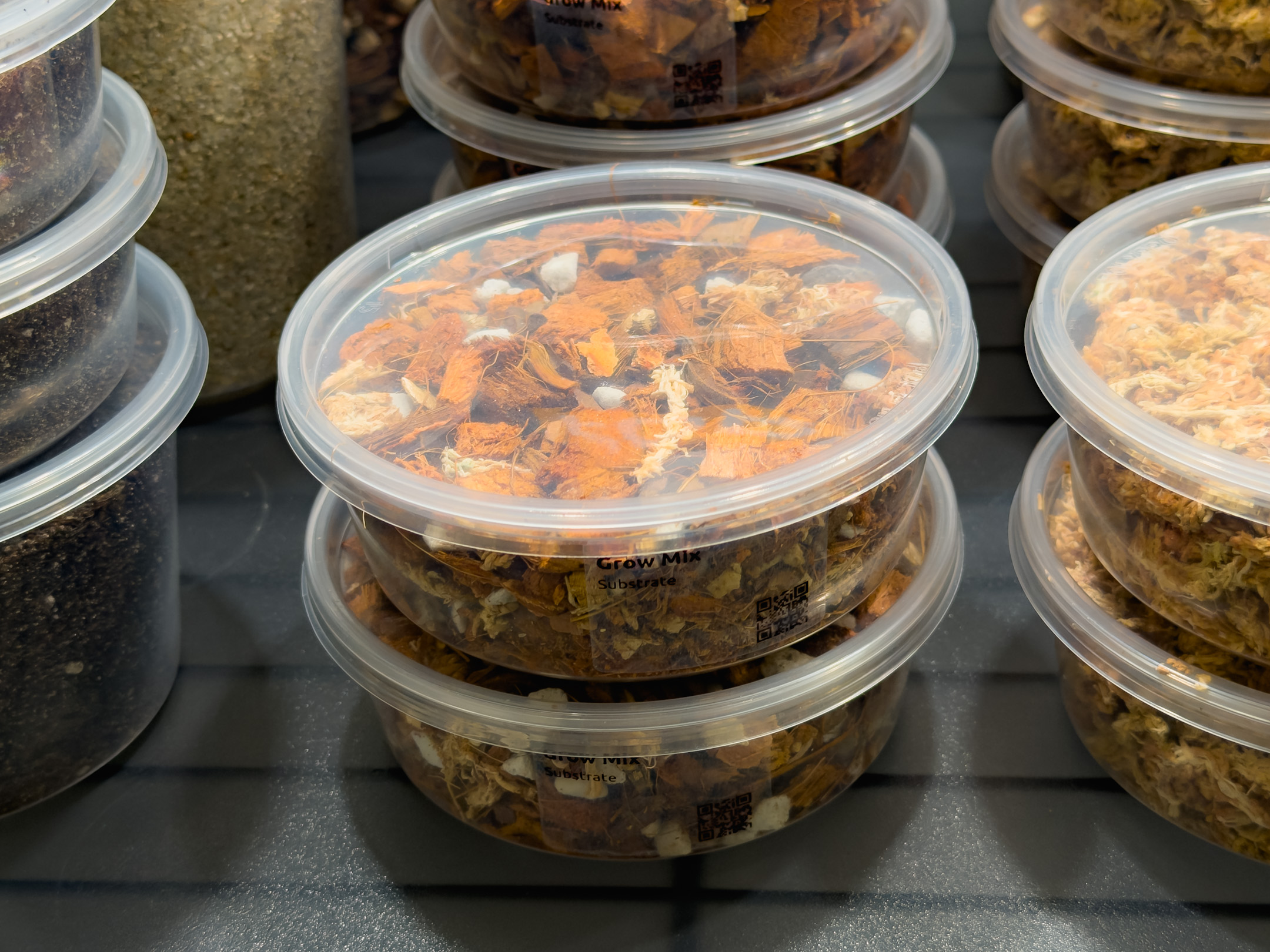
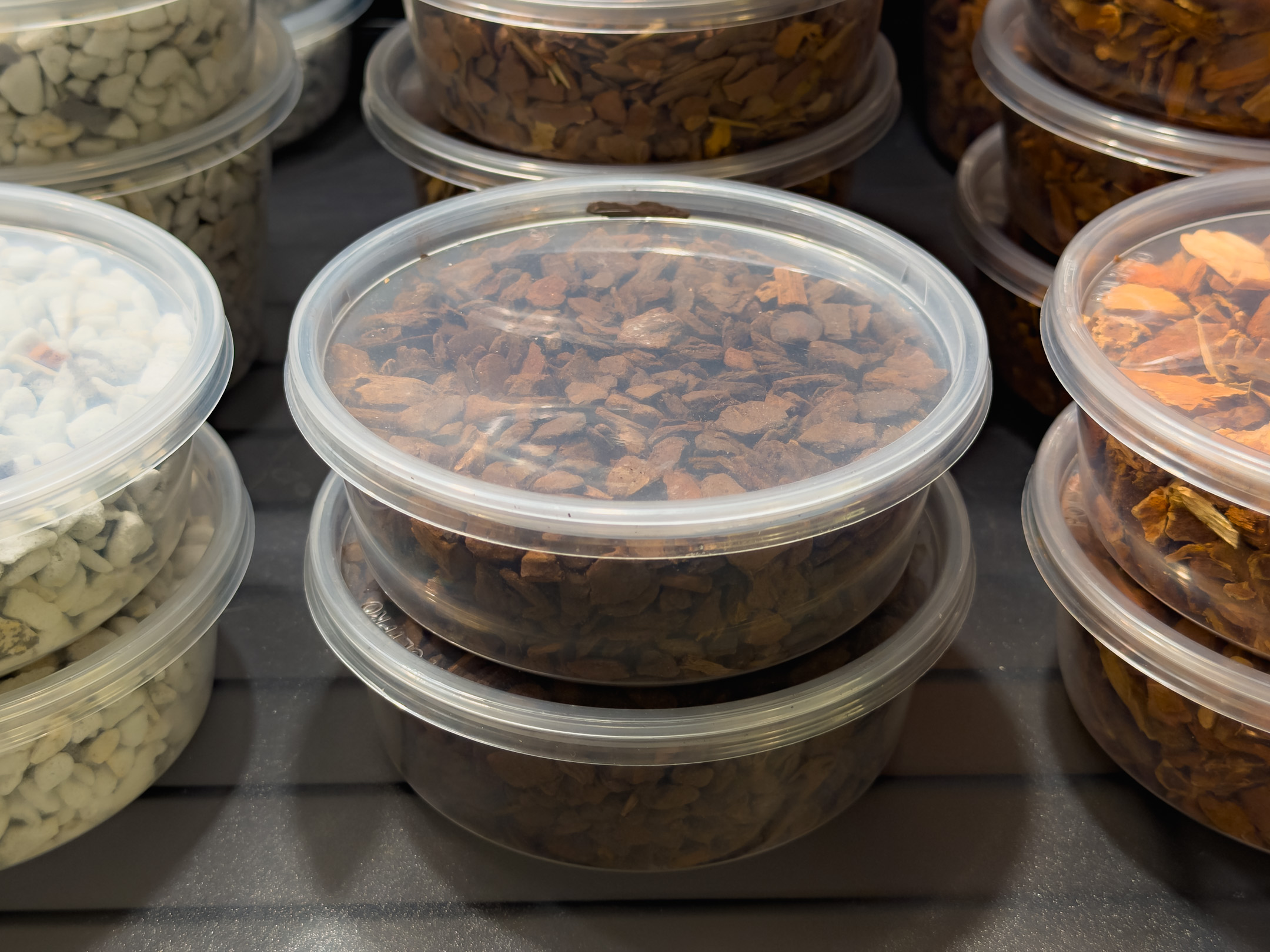
For the soil, use a chunky soil mix specifically designed for orchids or epiphytes, such as any branded potting soil mix for these types of plants.
Dracaena plants prefer moderate humidity and slightly moist soil.
Let the soil dry out completely before watery.
This plant can go several weeks without water.
Thrives in bright, Indirect light but can definitely grow in low lighting.
Repot in pots no larger than 1 inch the diameter of the plant's root system.
Use a chunky soil mix such as any orchid or epiphyte branded potting soil mix.
Fast Growth Tip: Provide it lots of bright light and nutrition! This will also increase its watering needs.