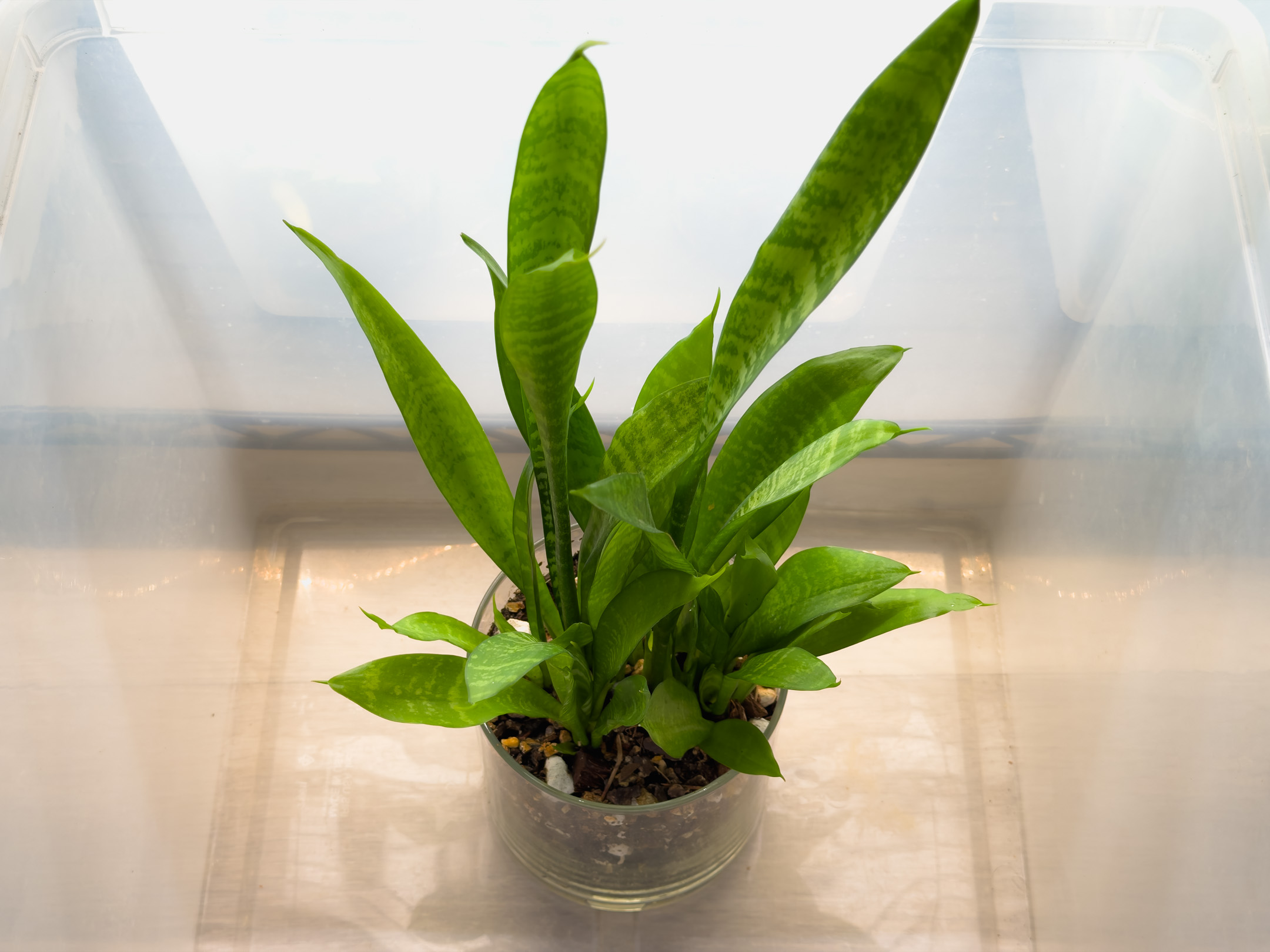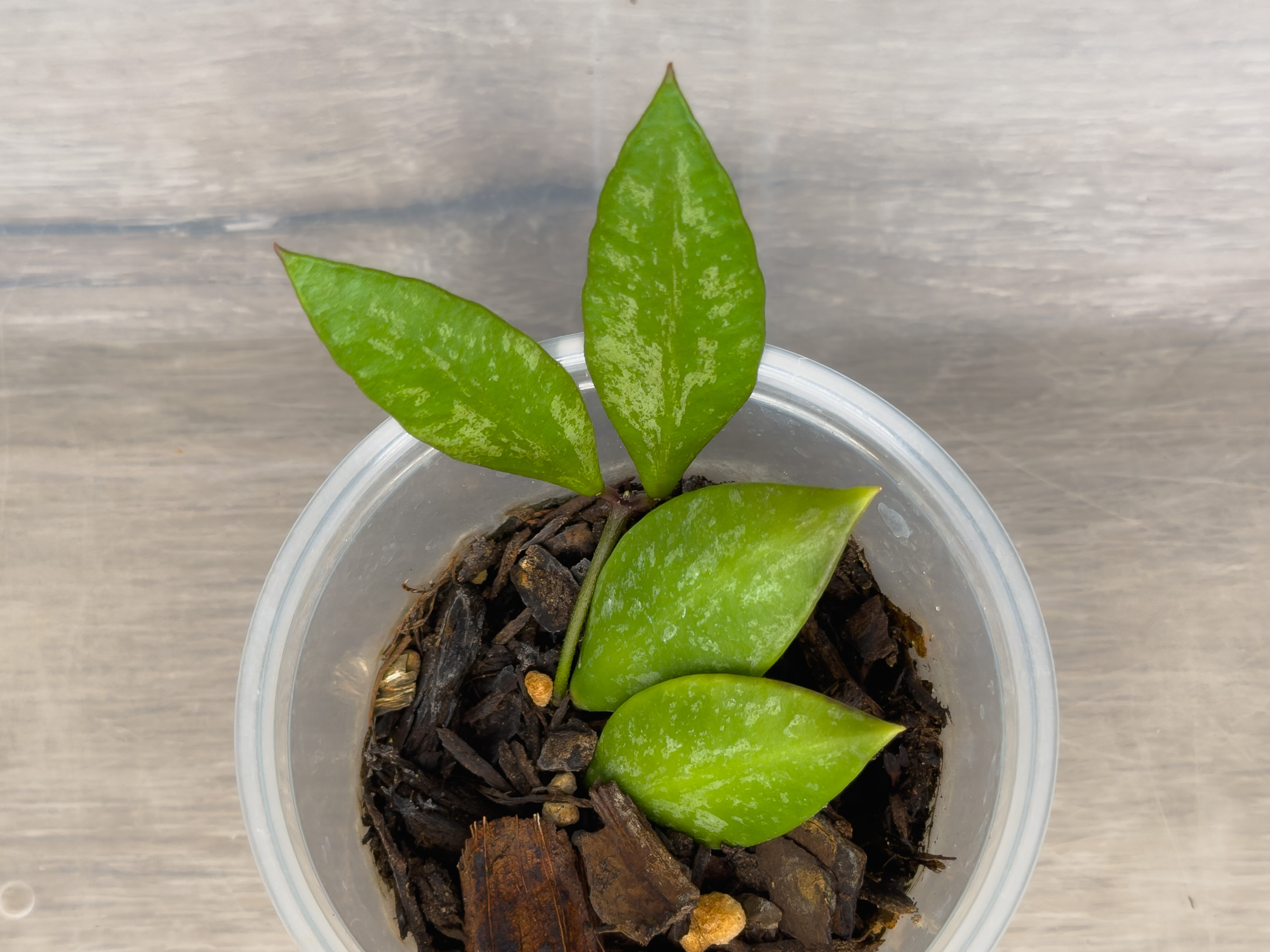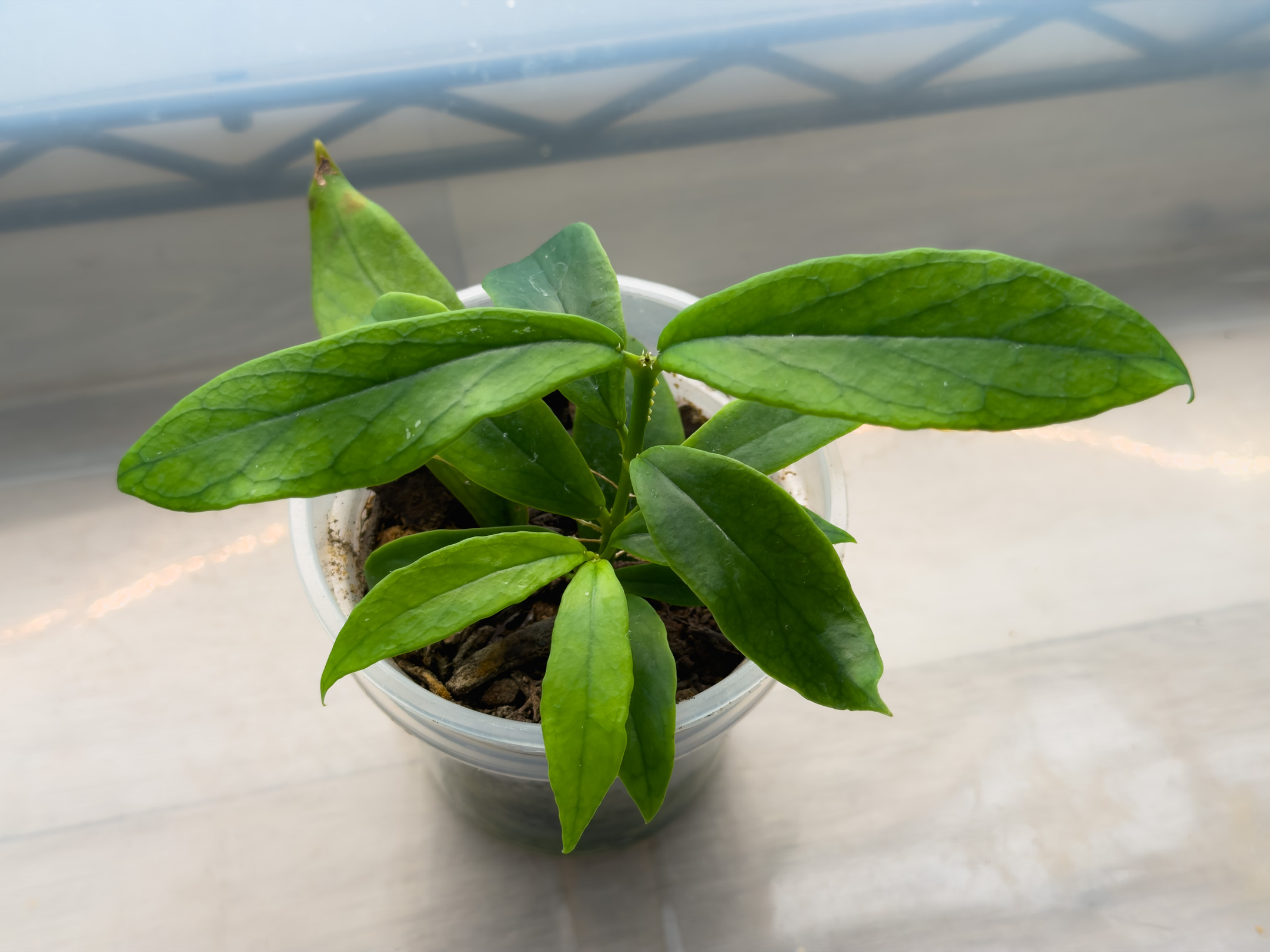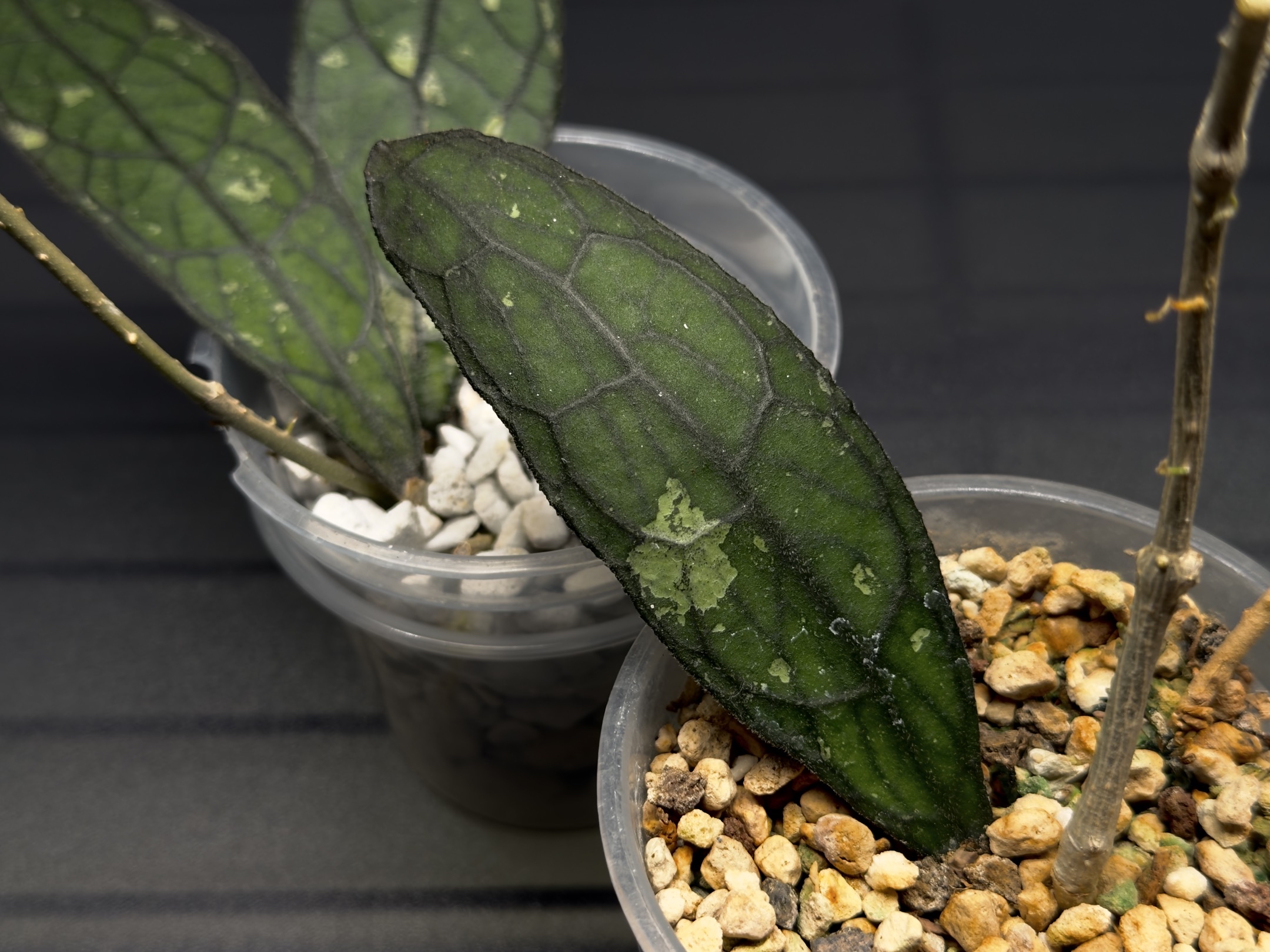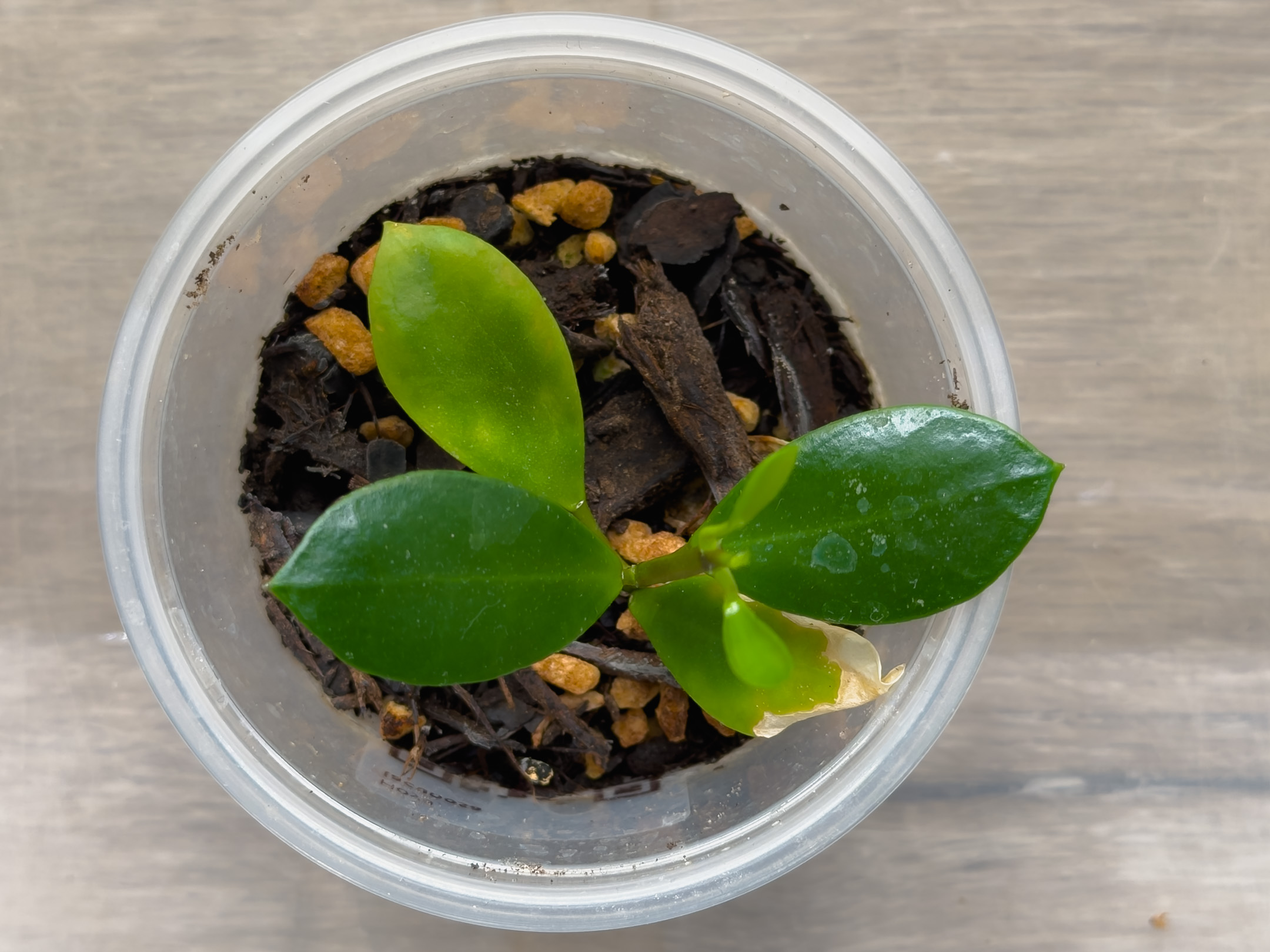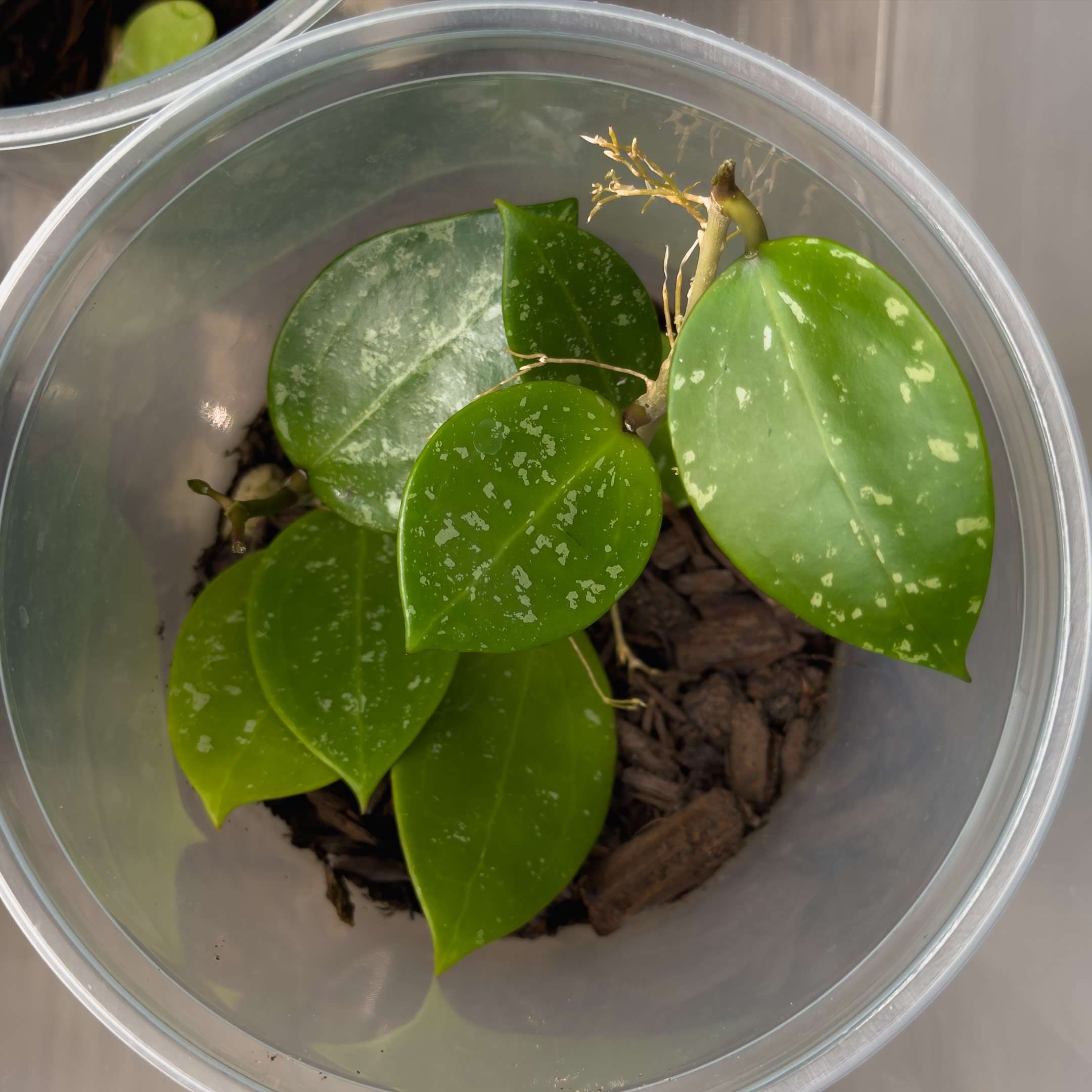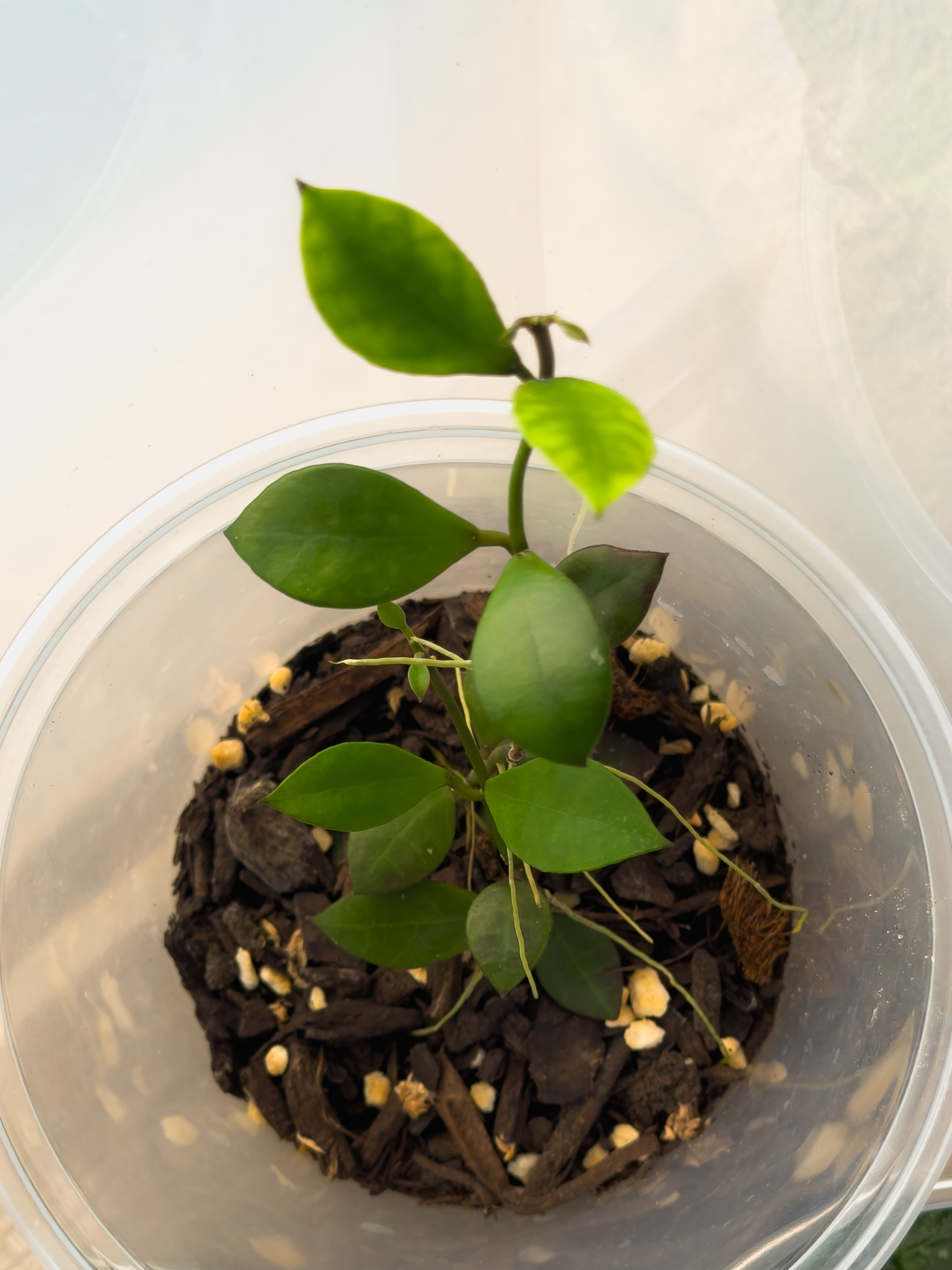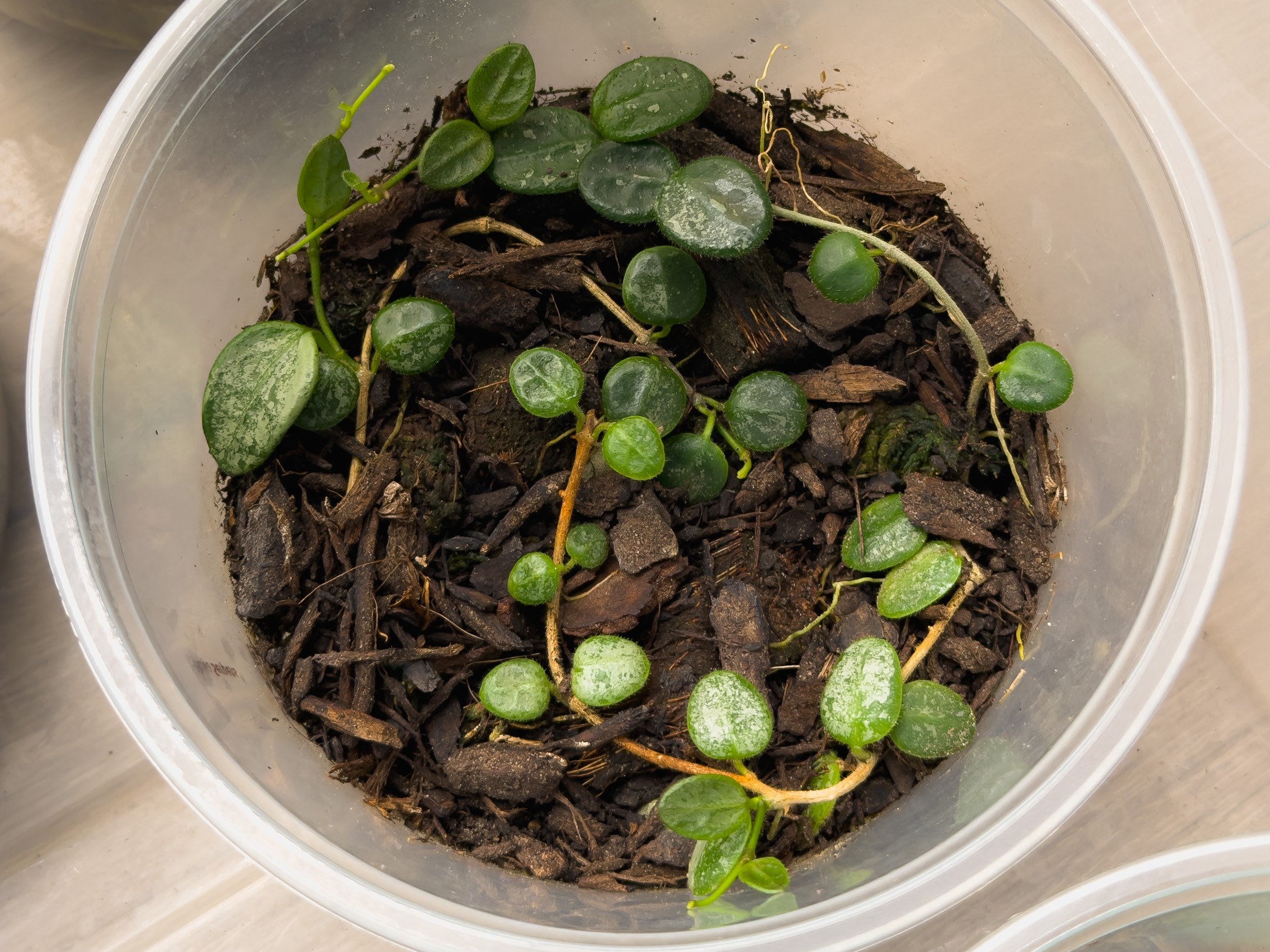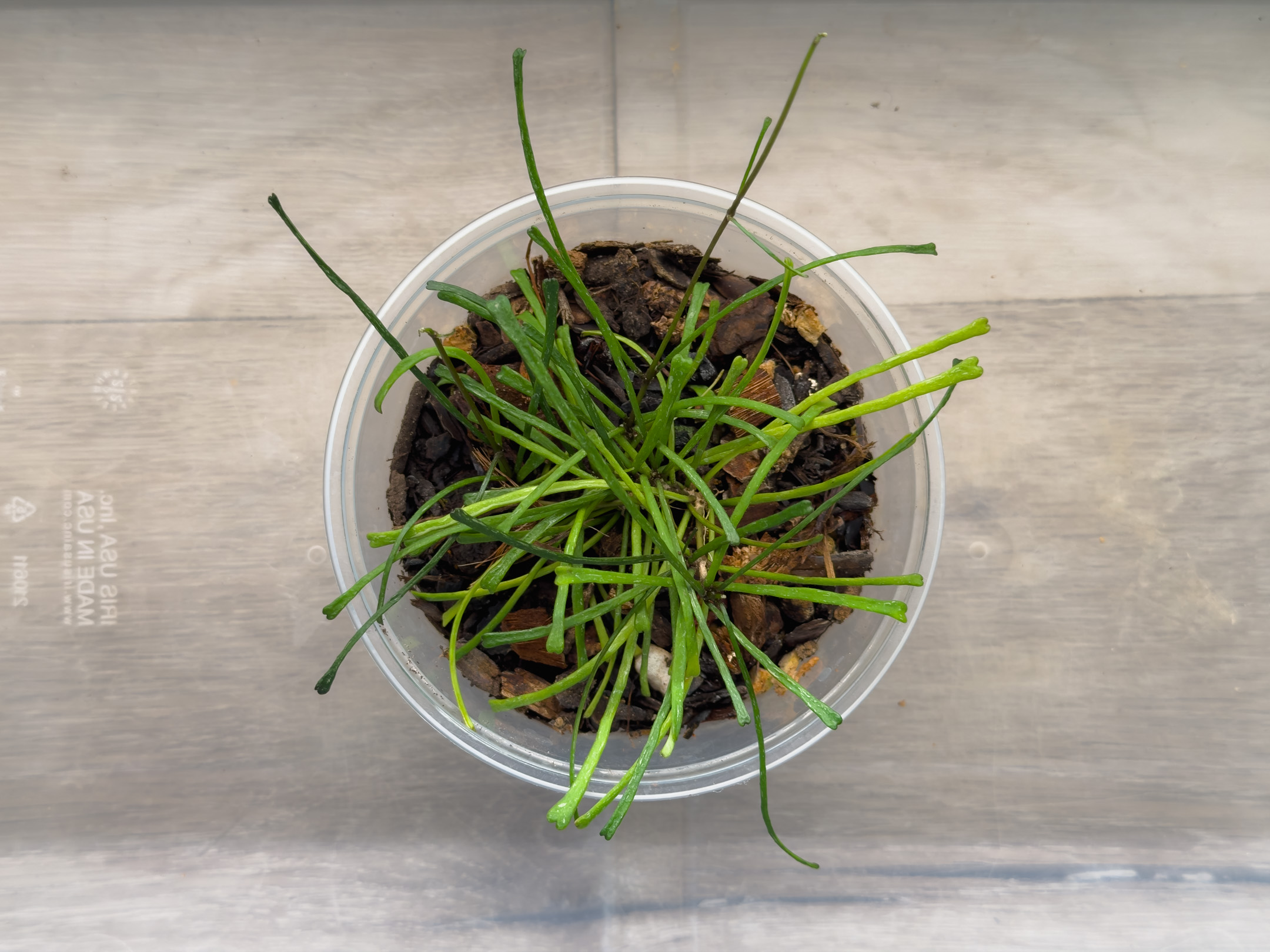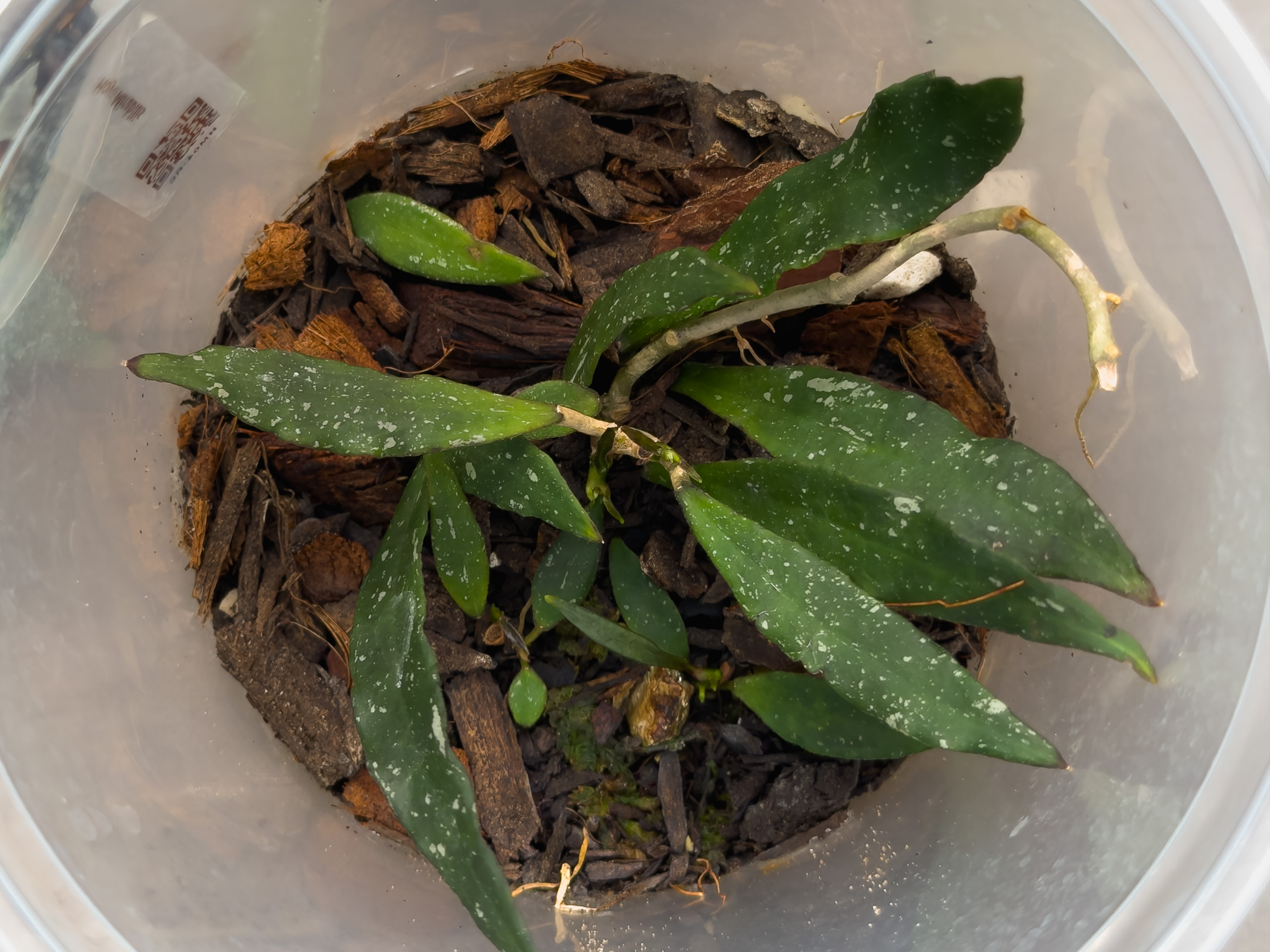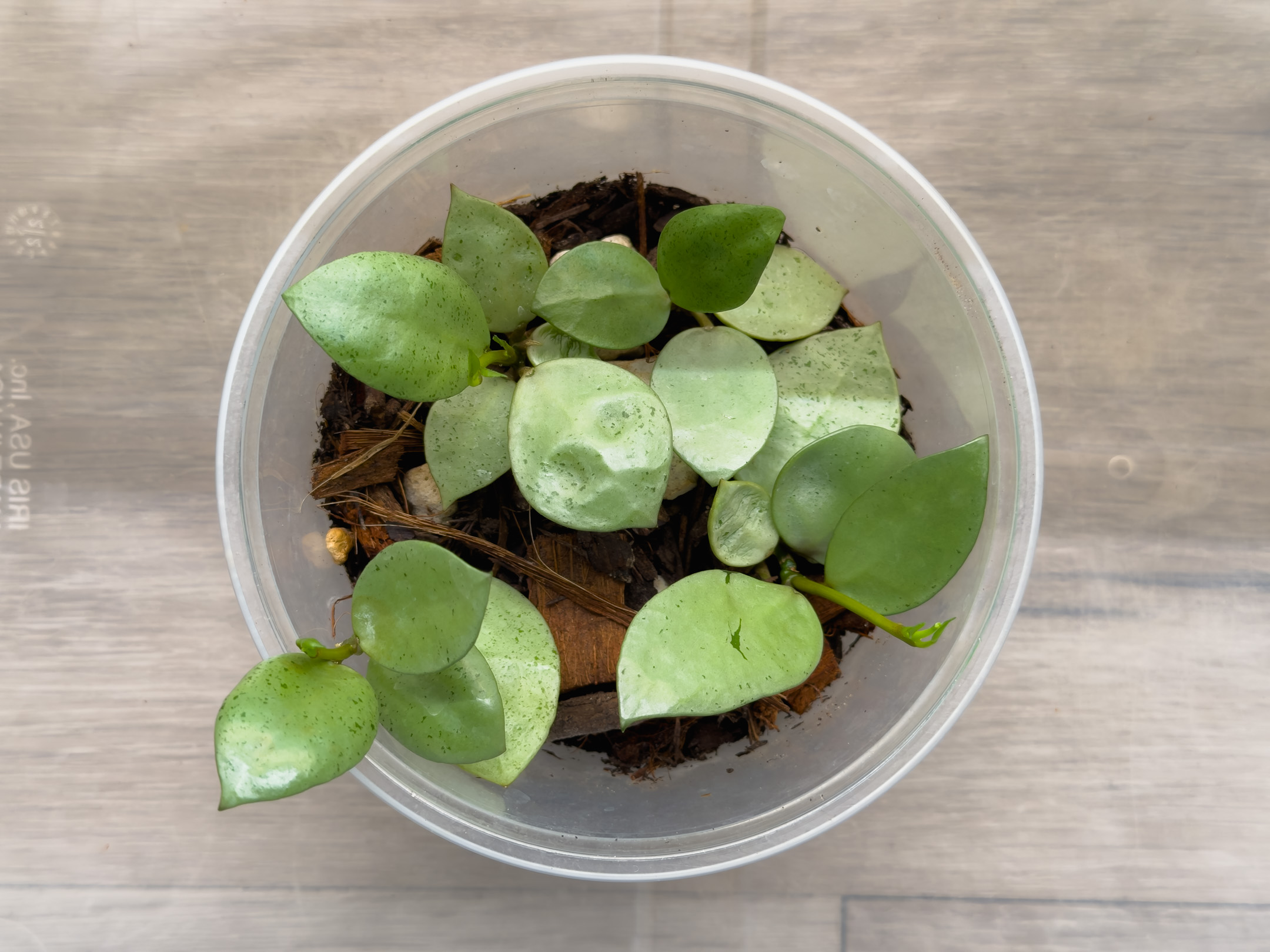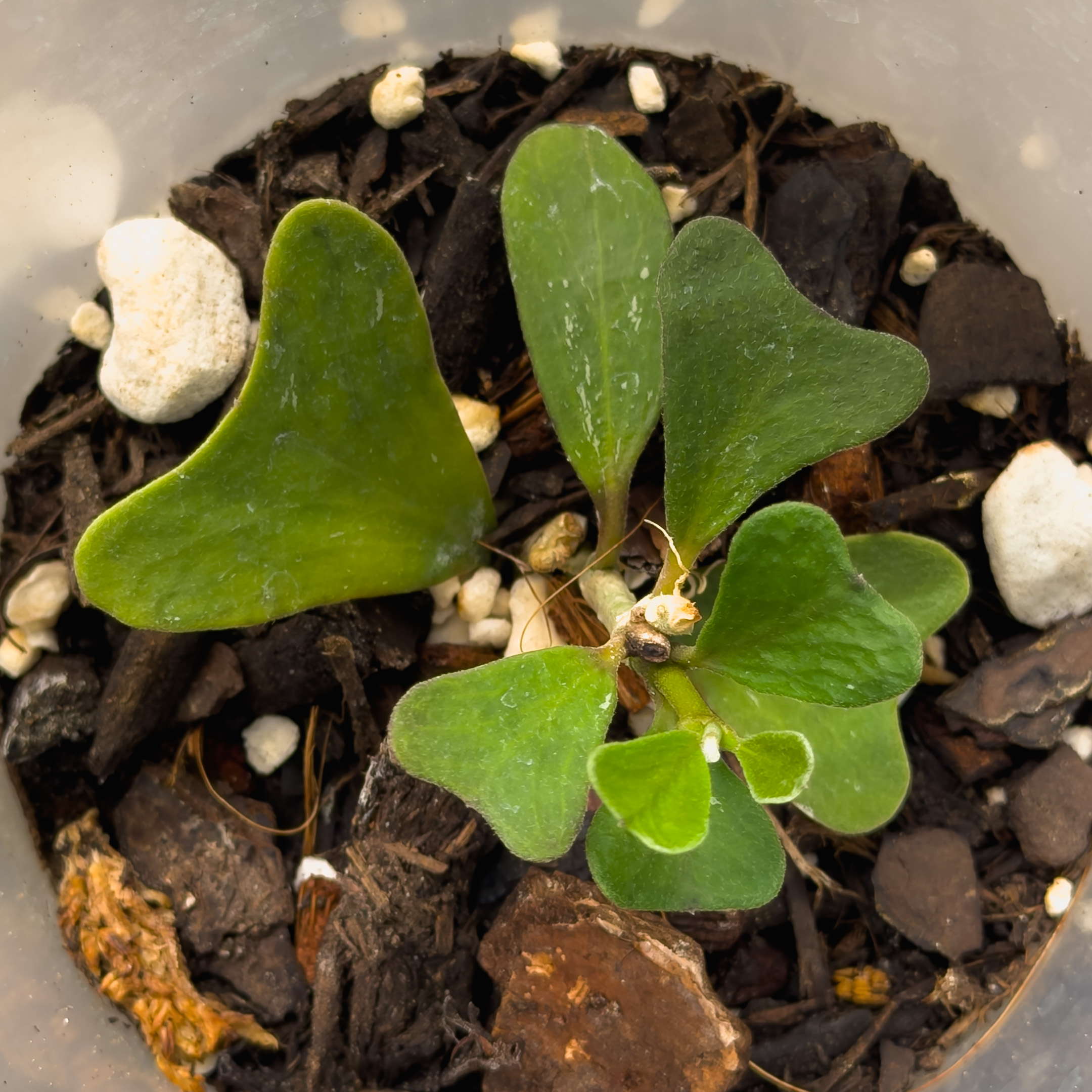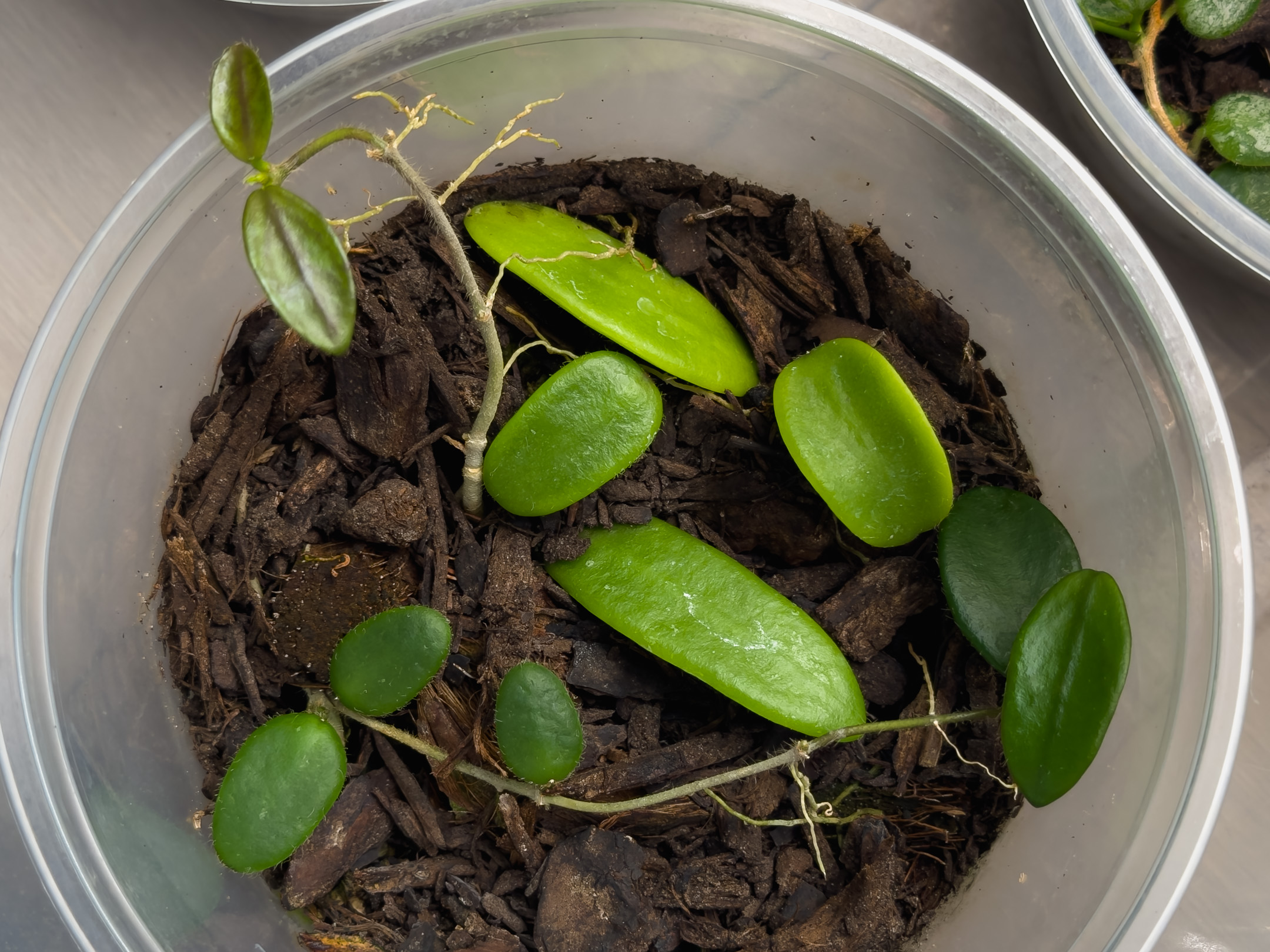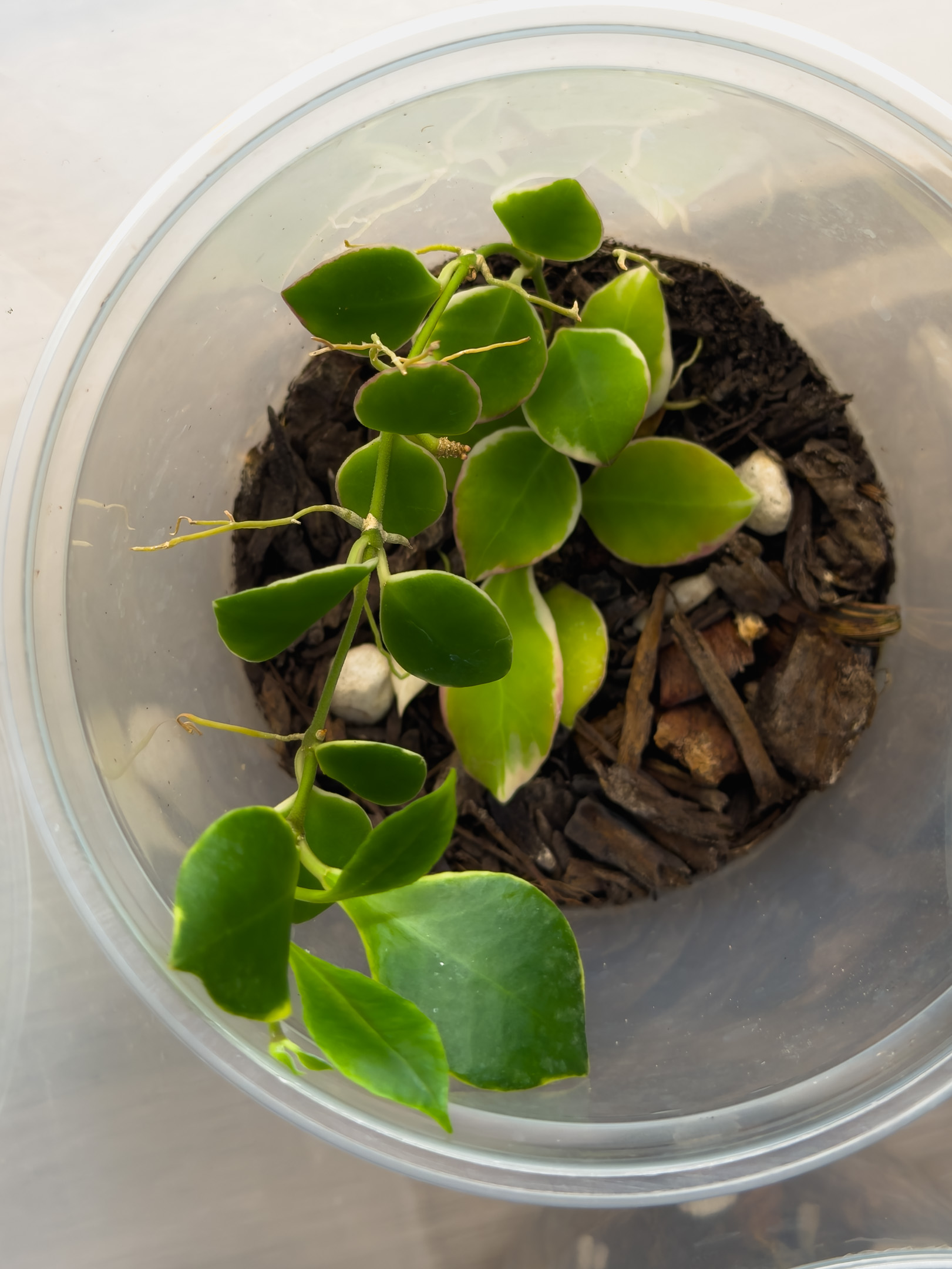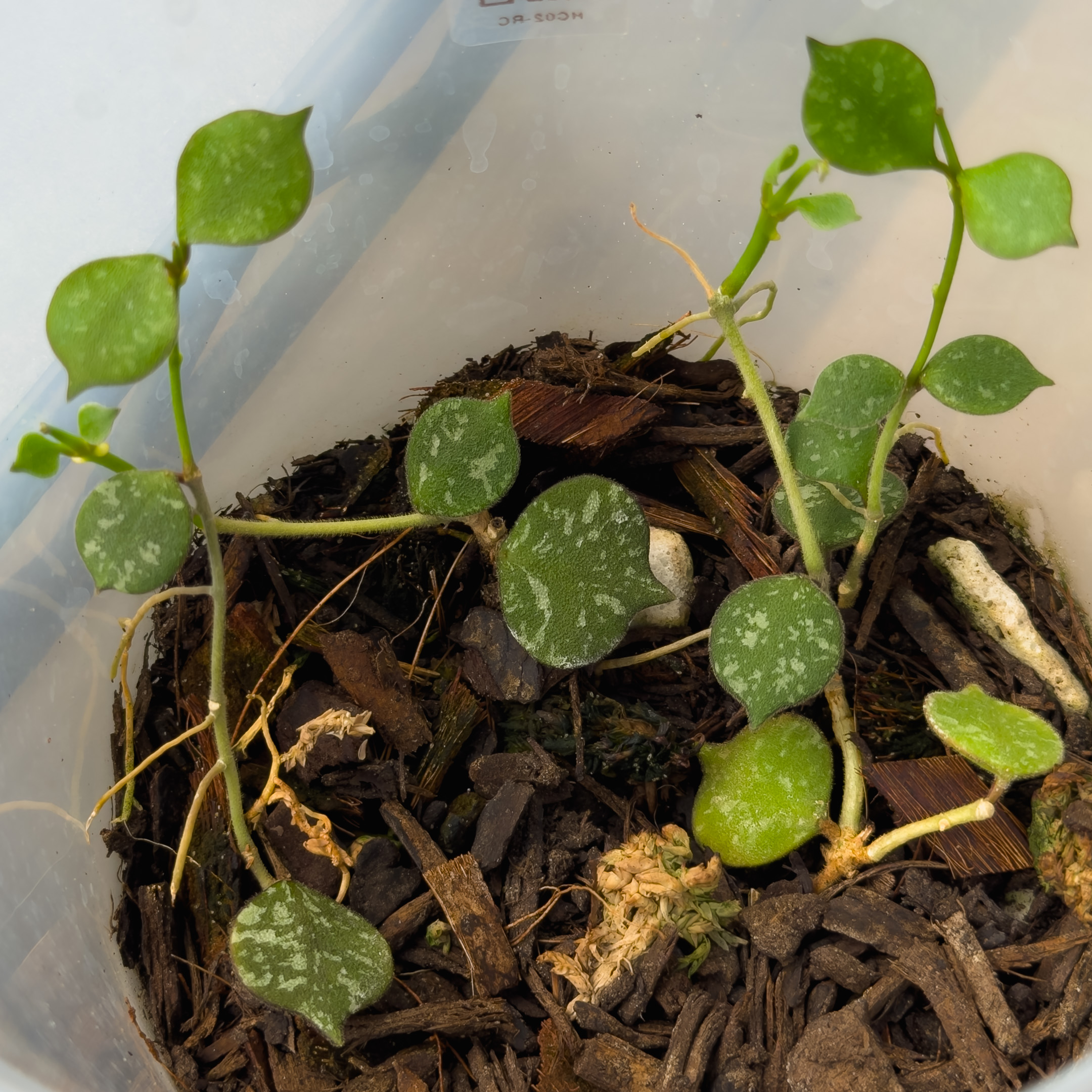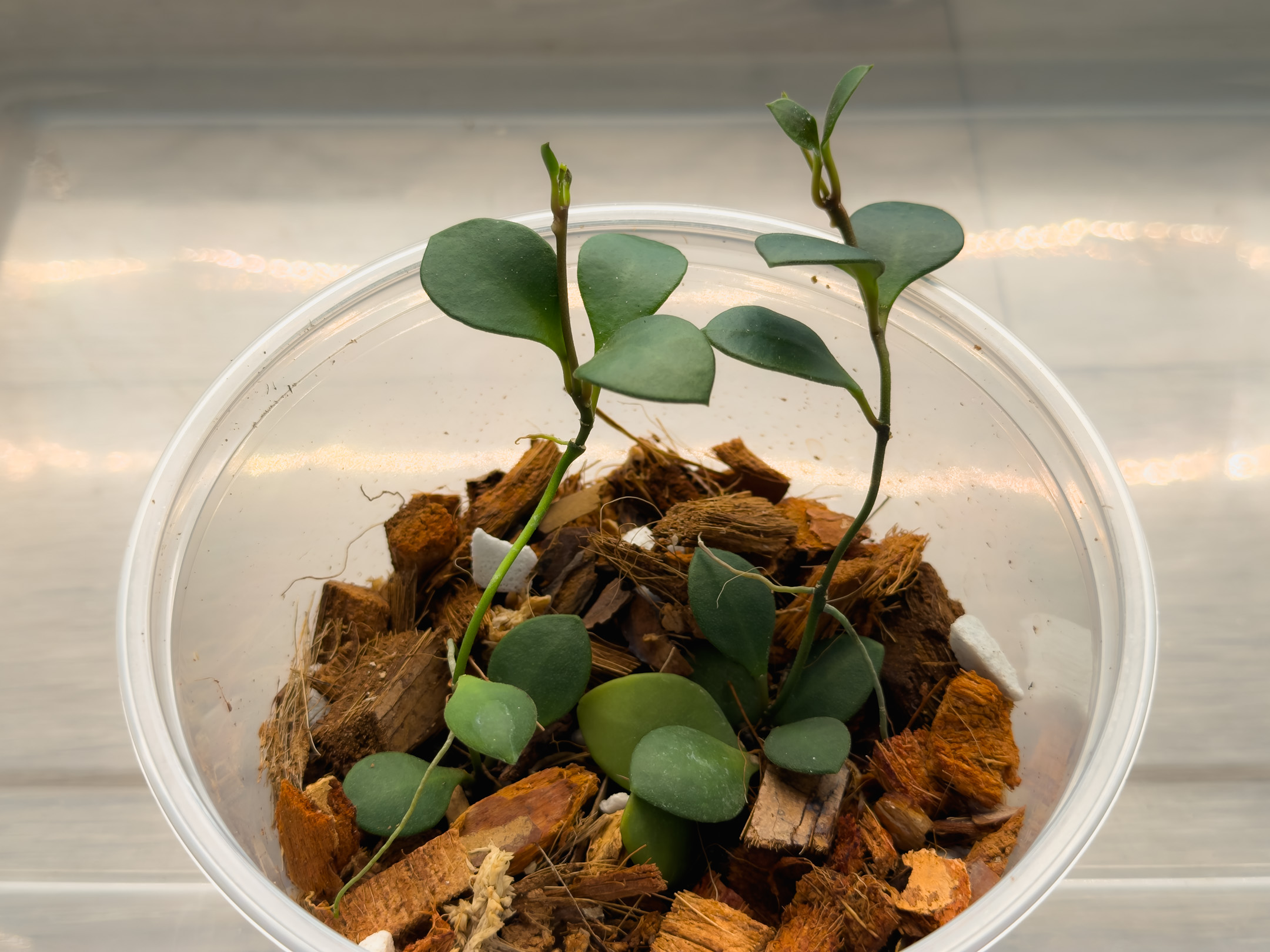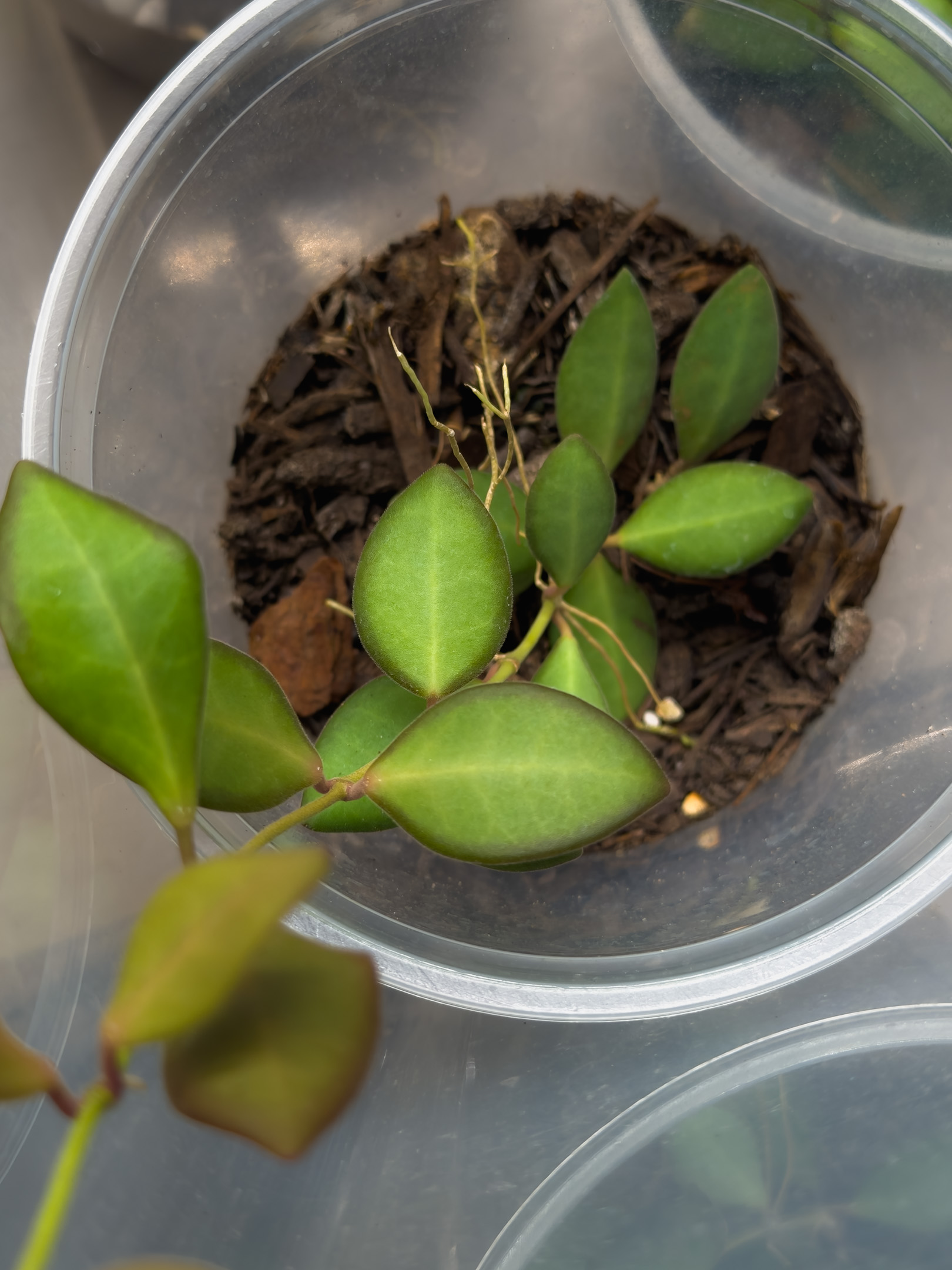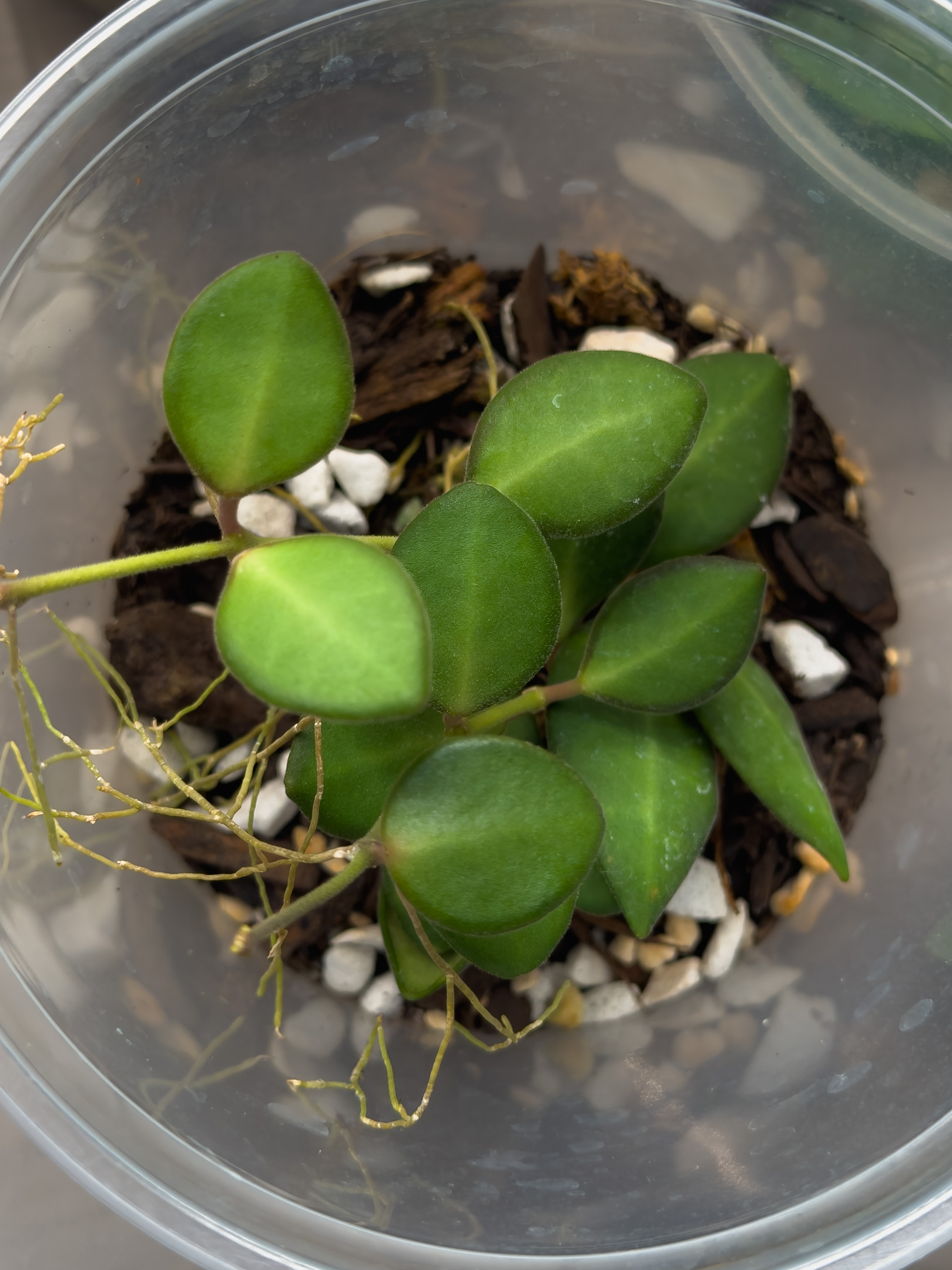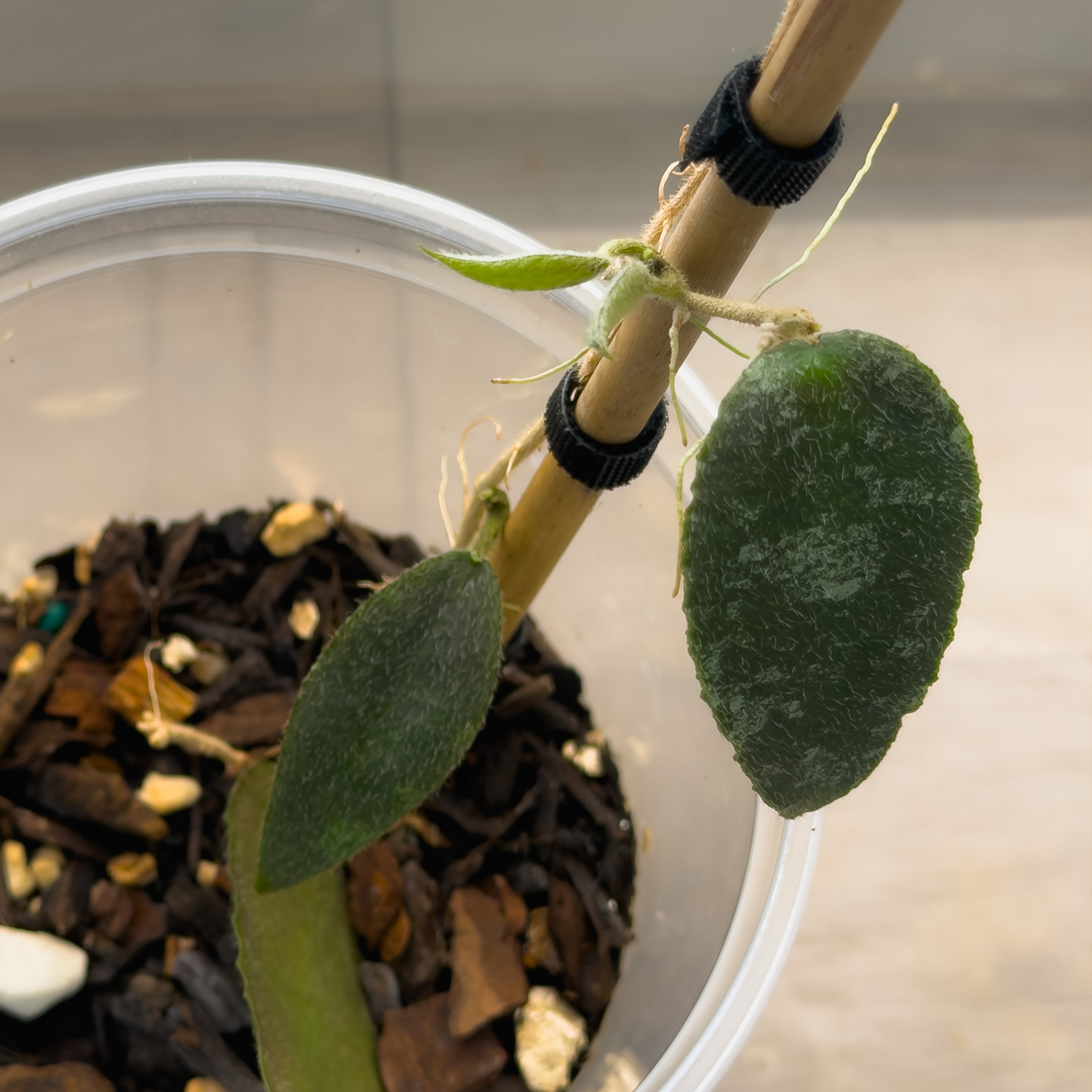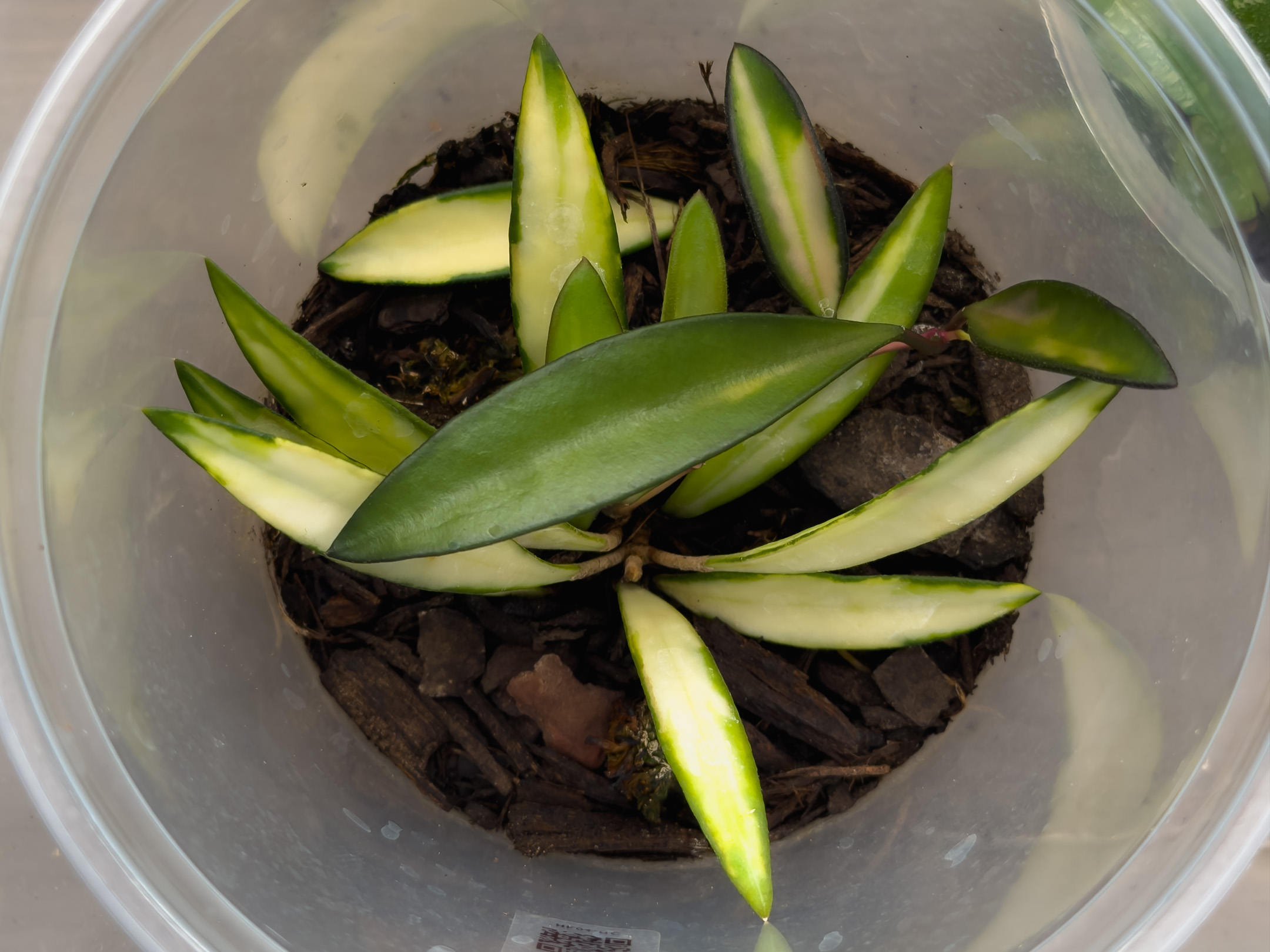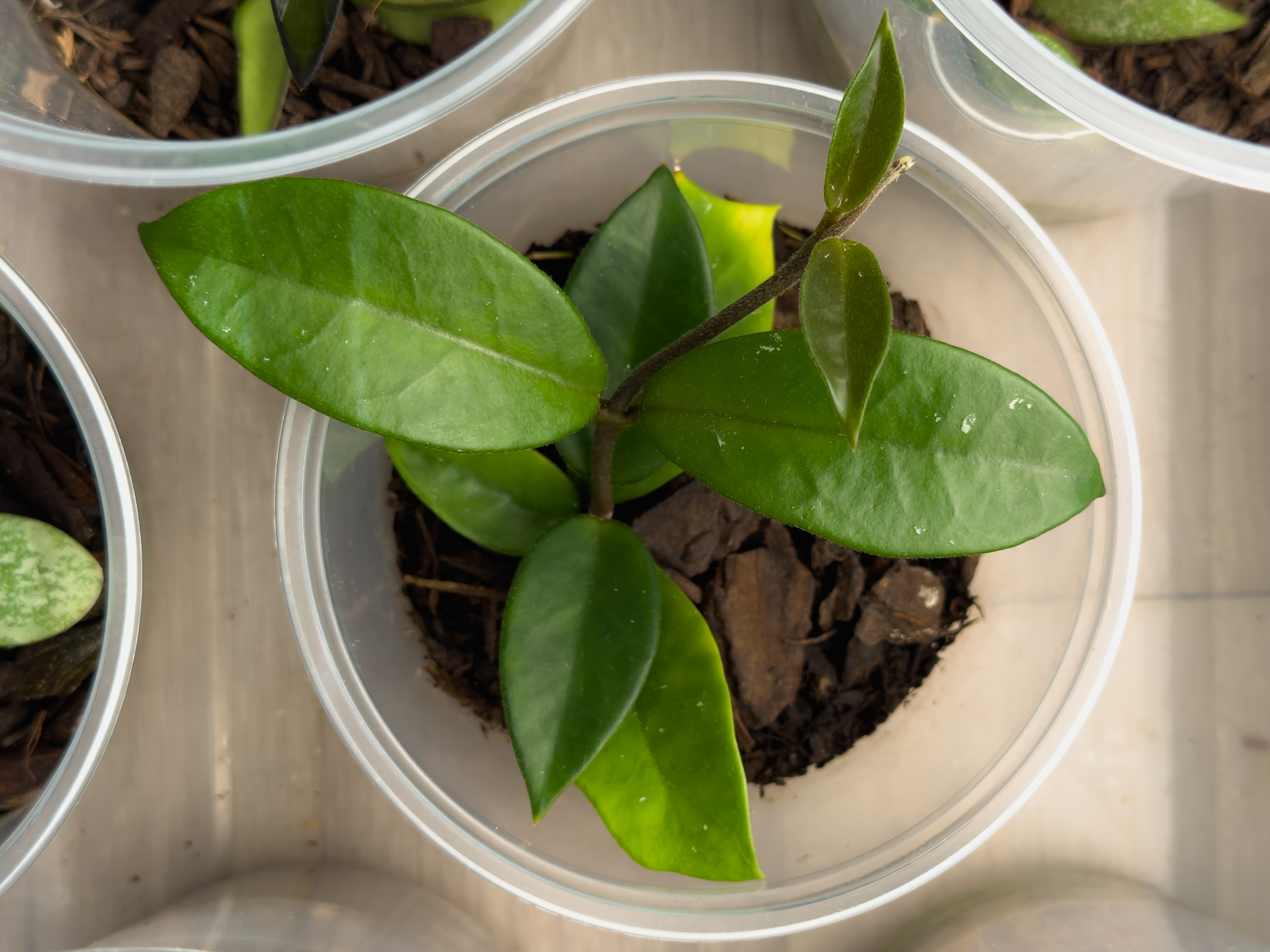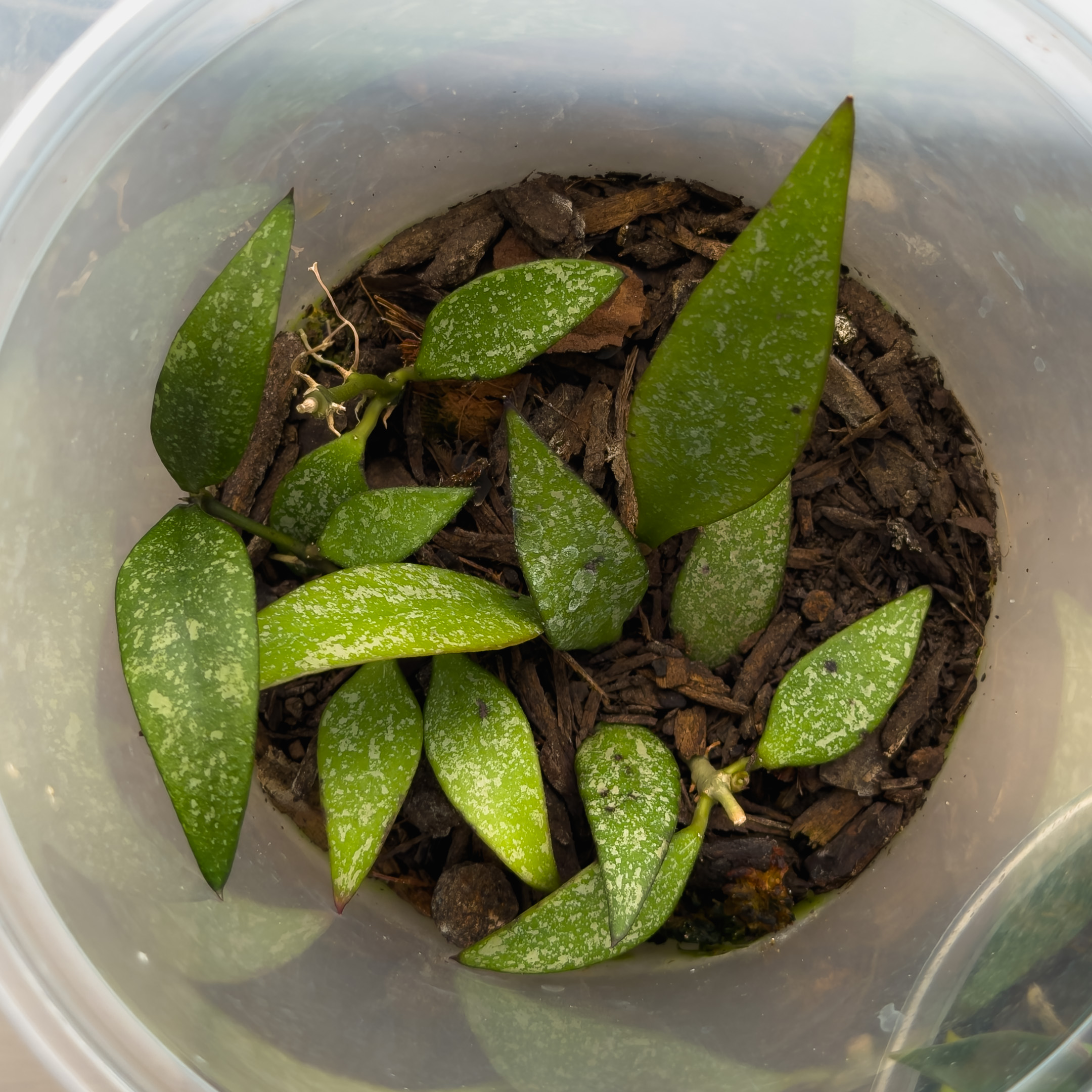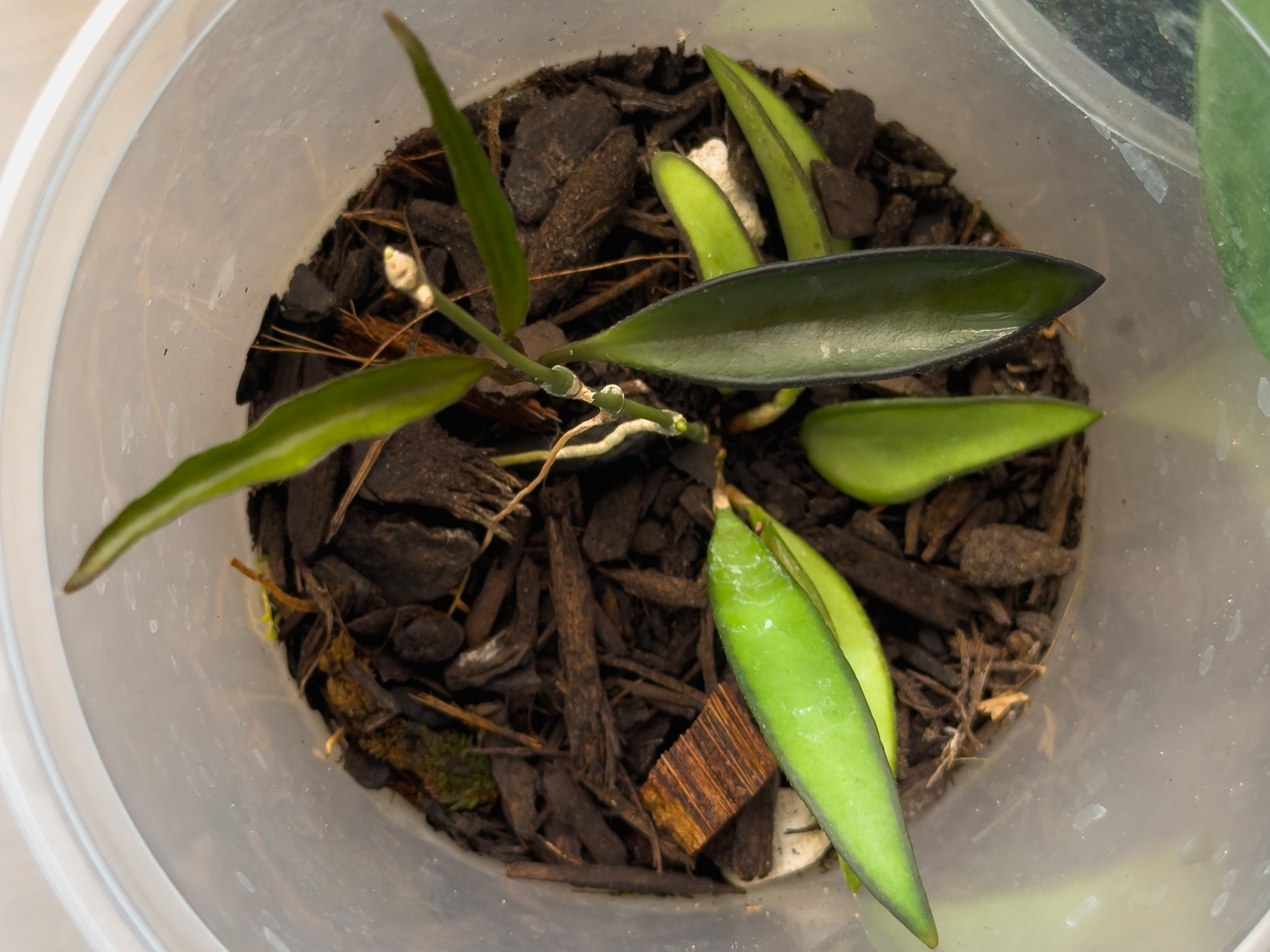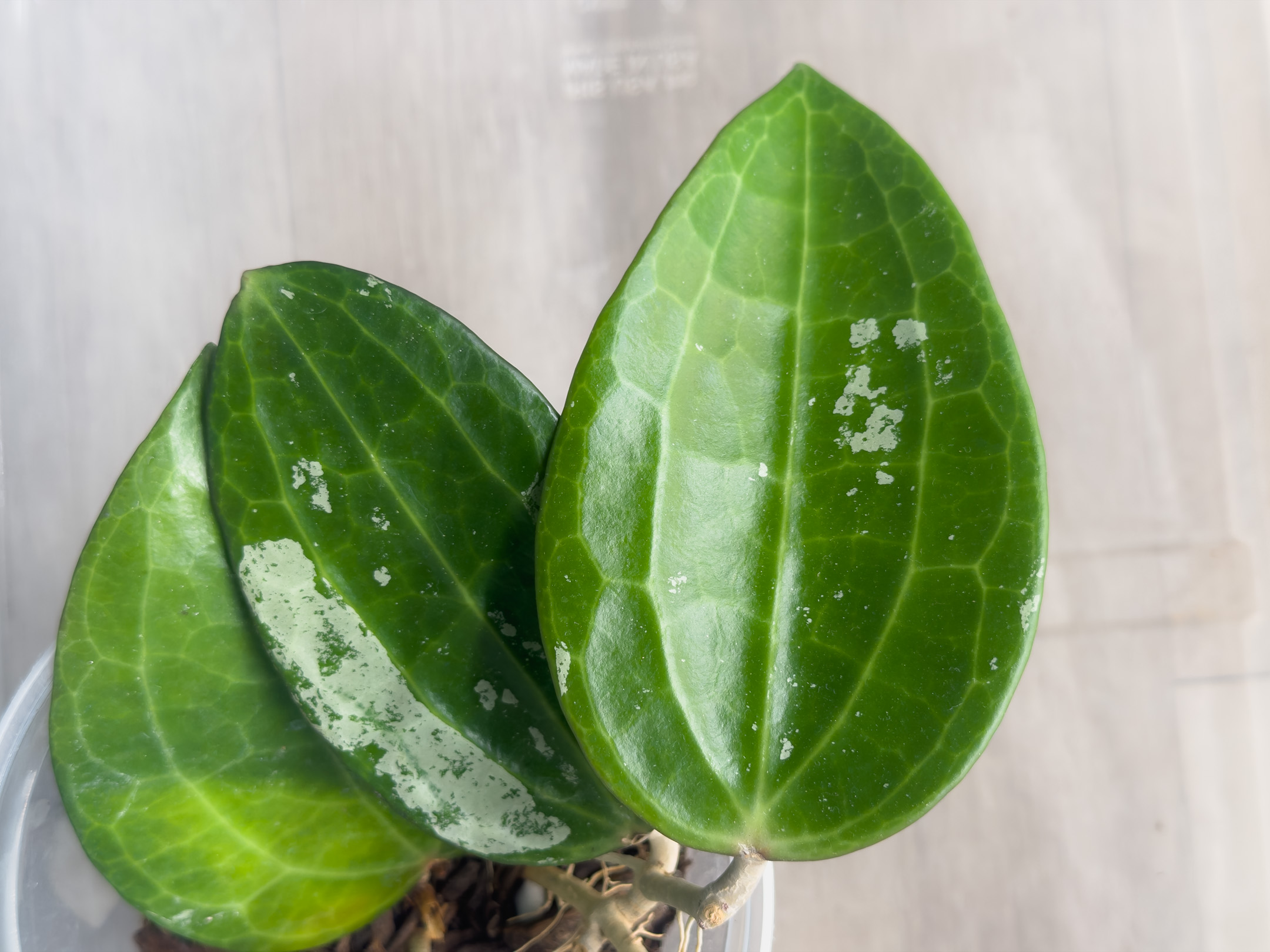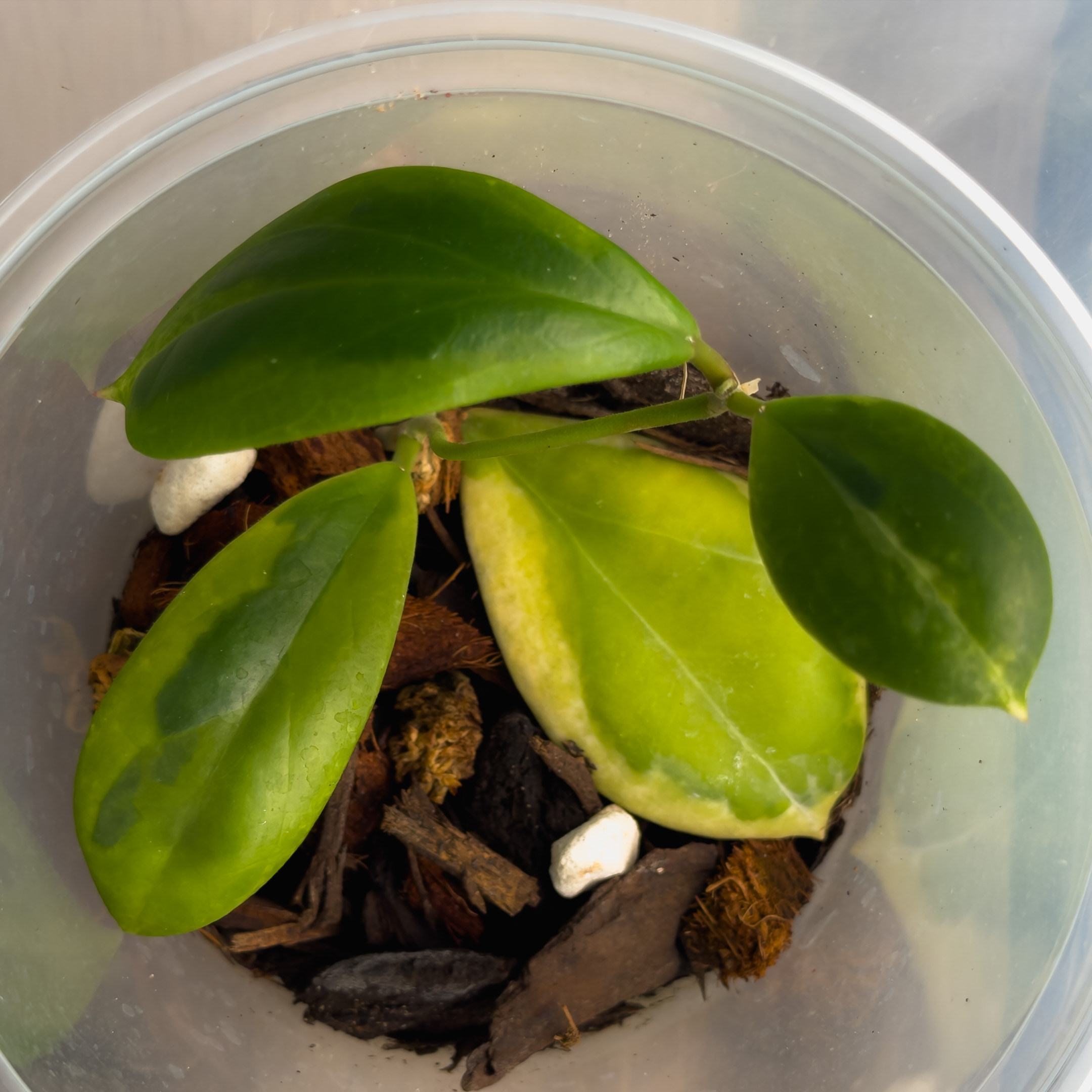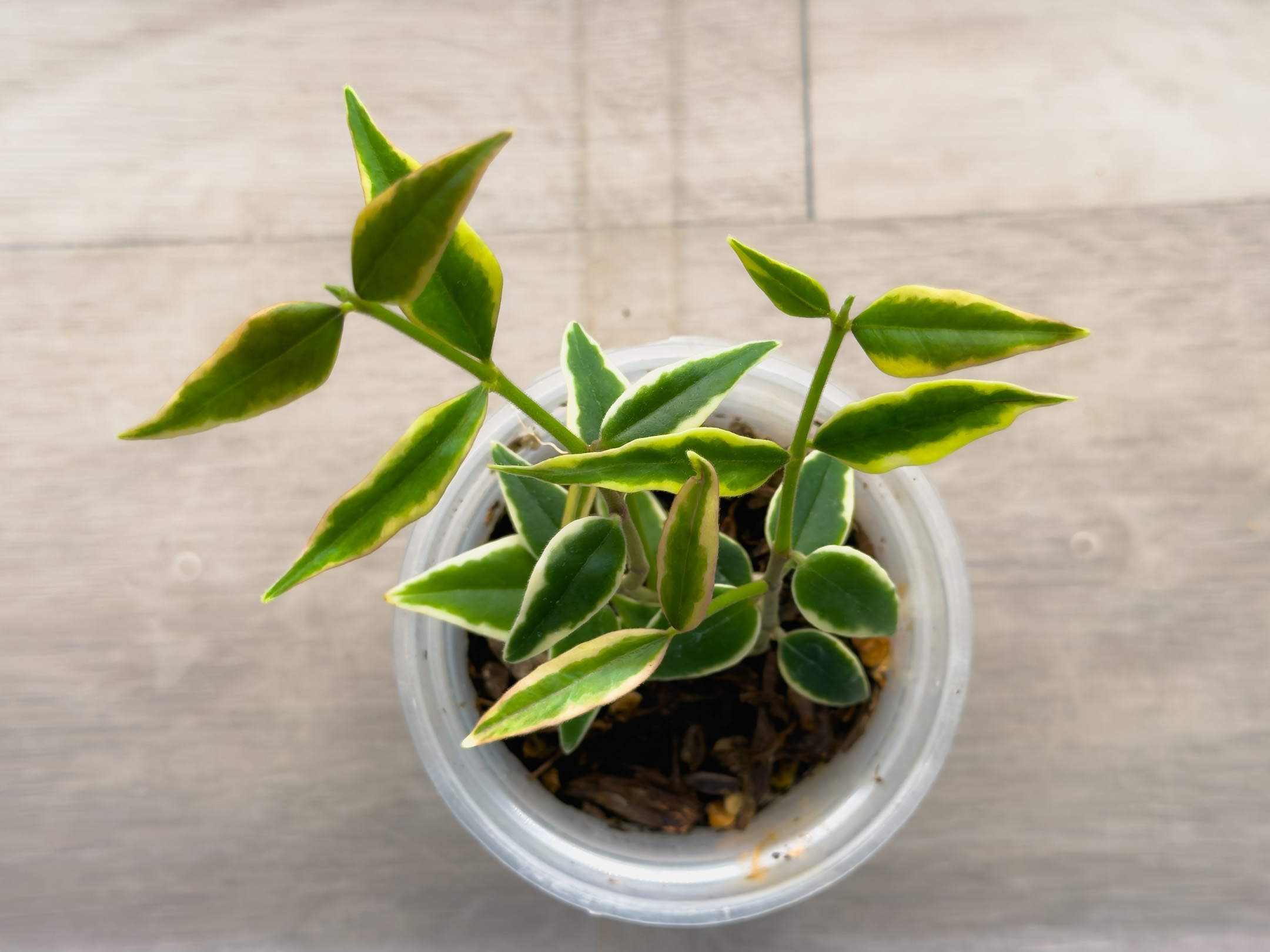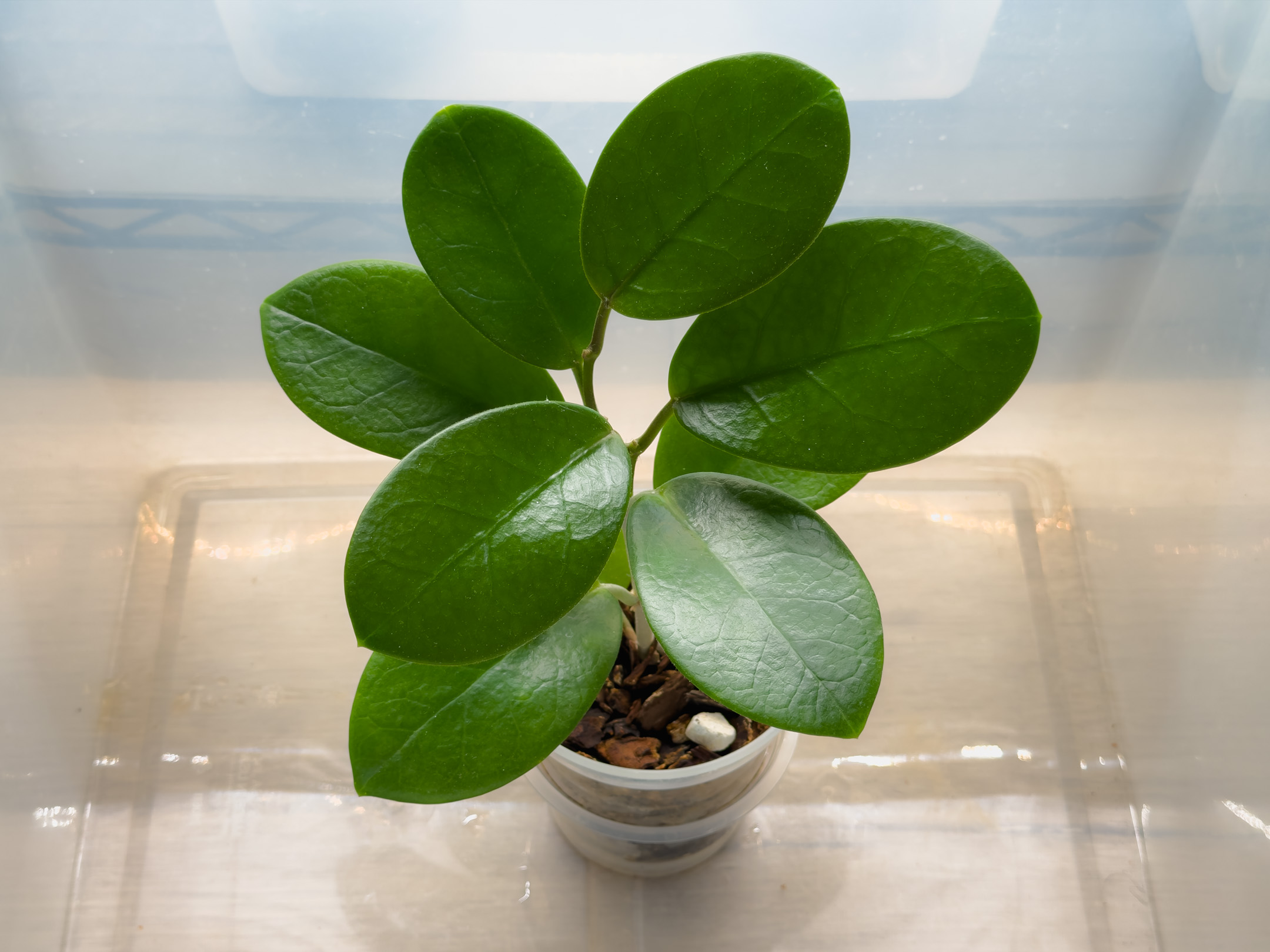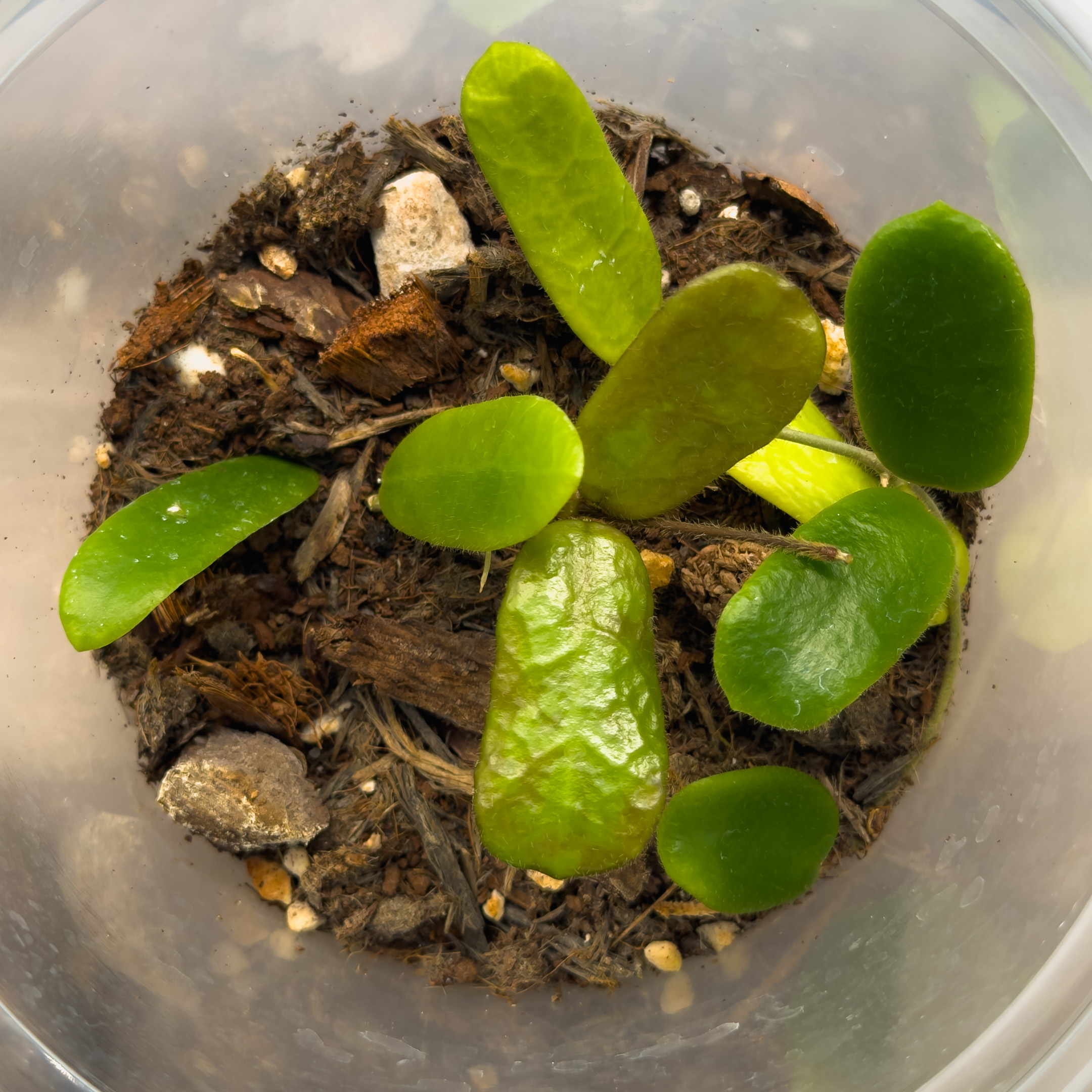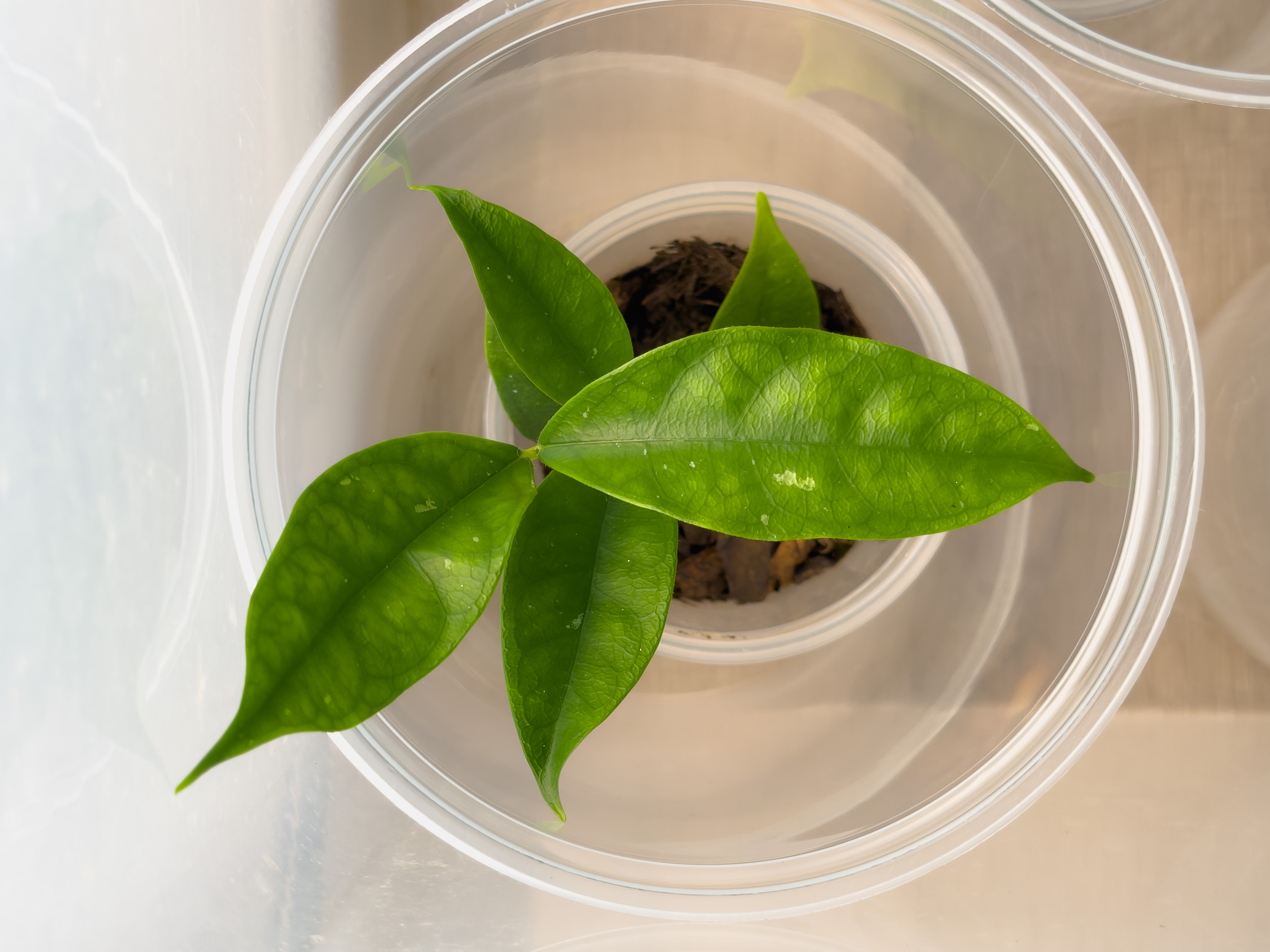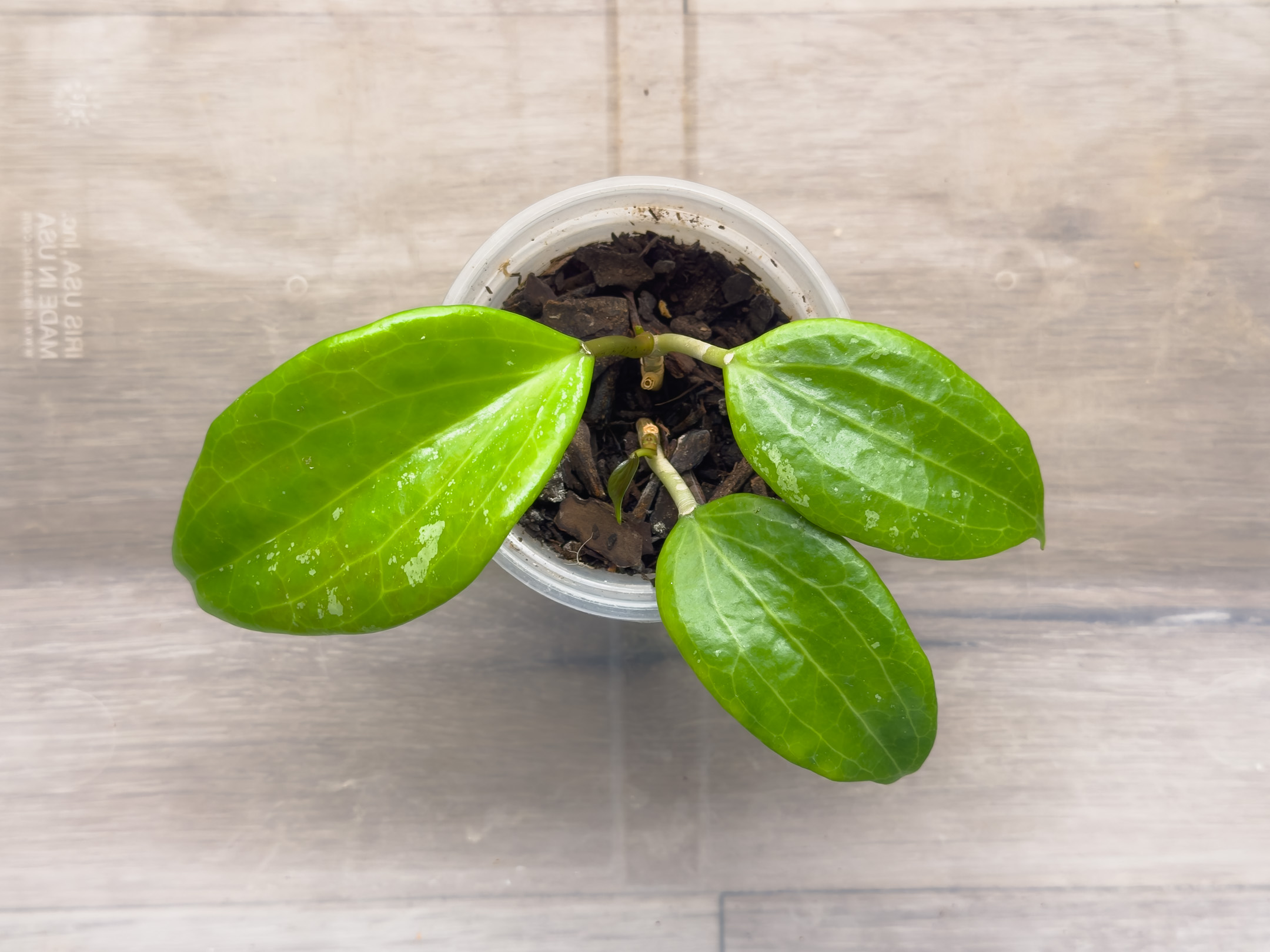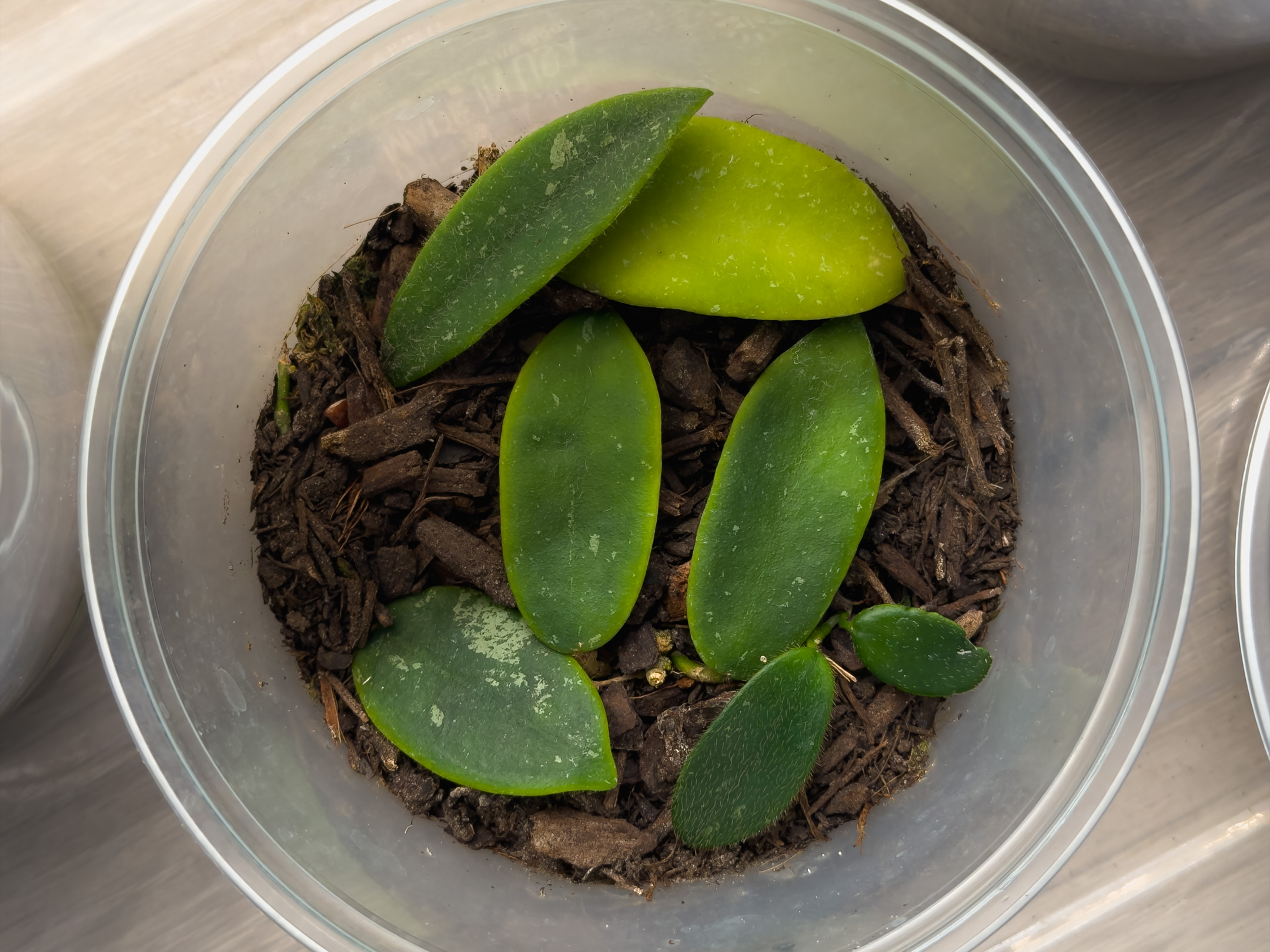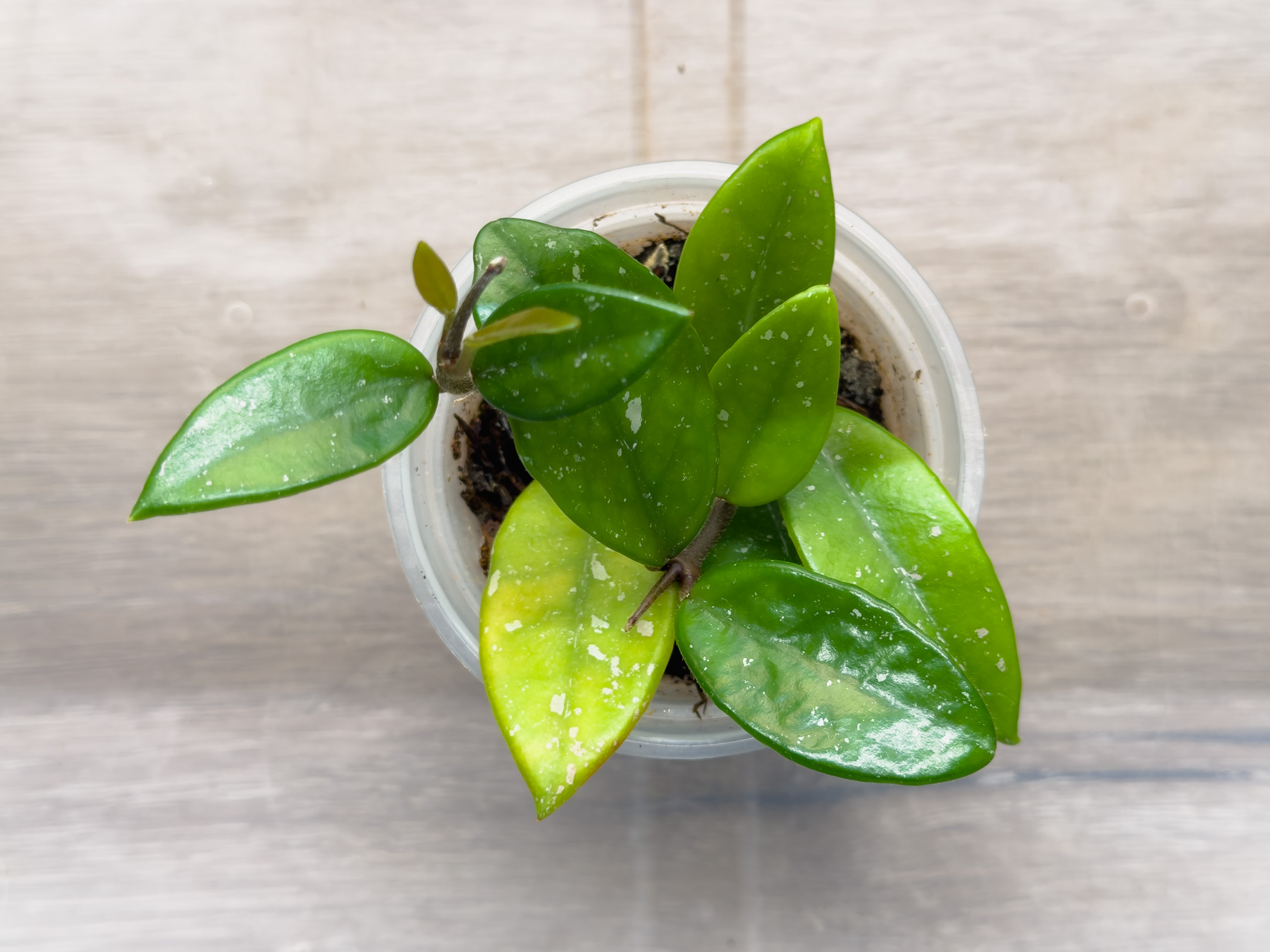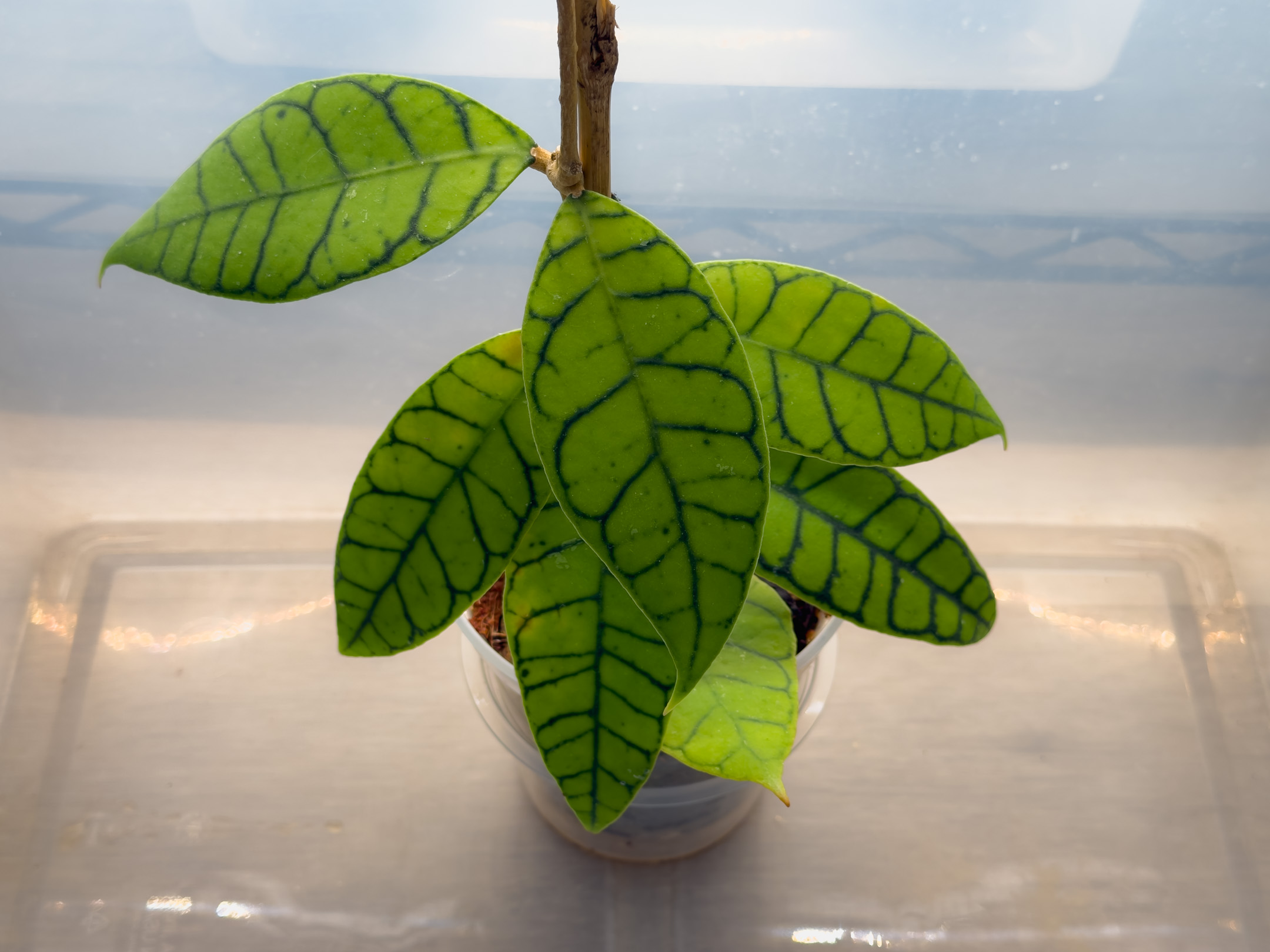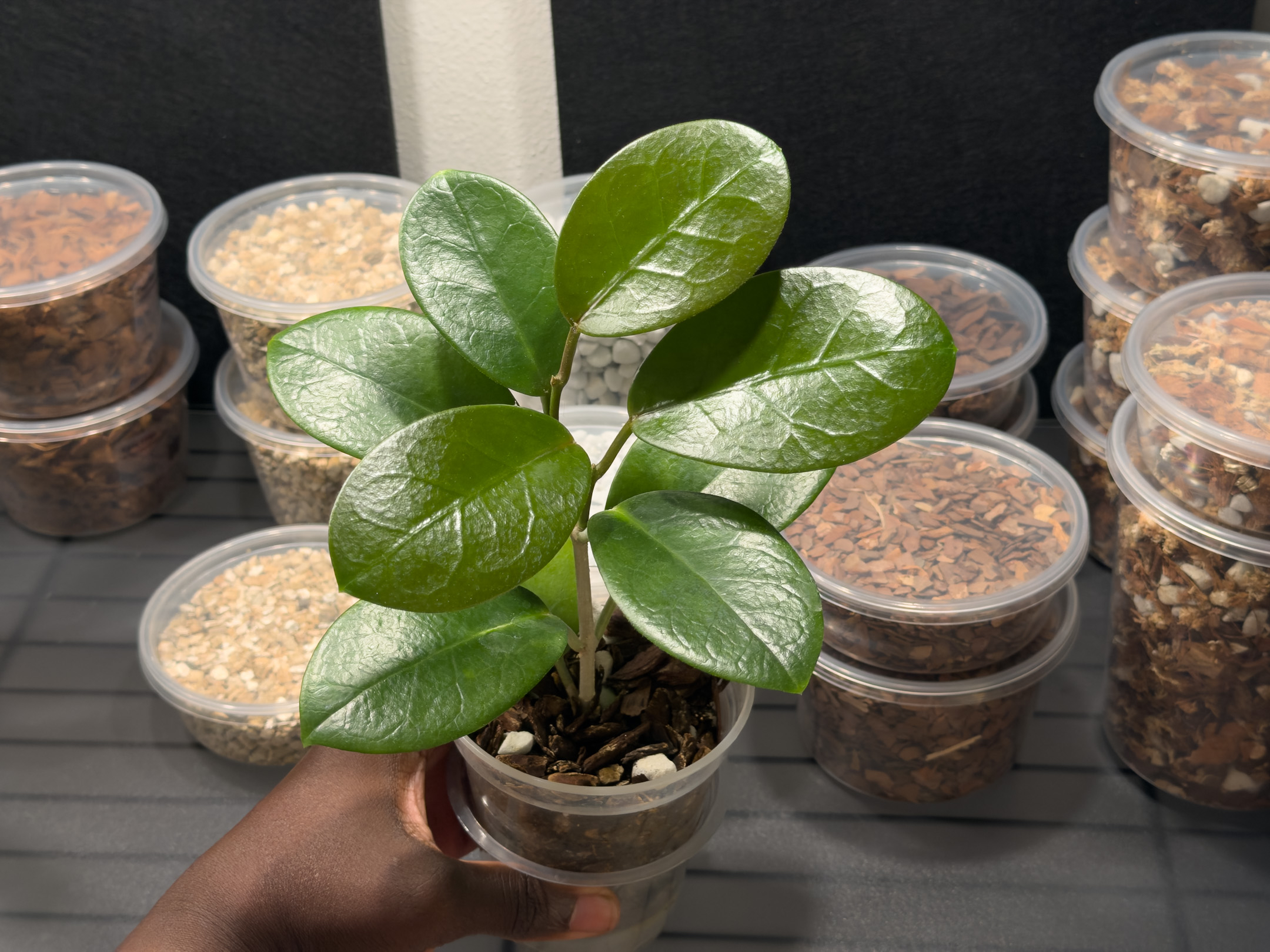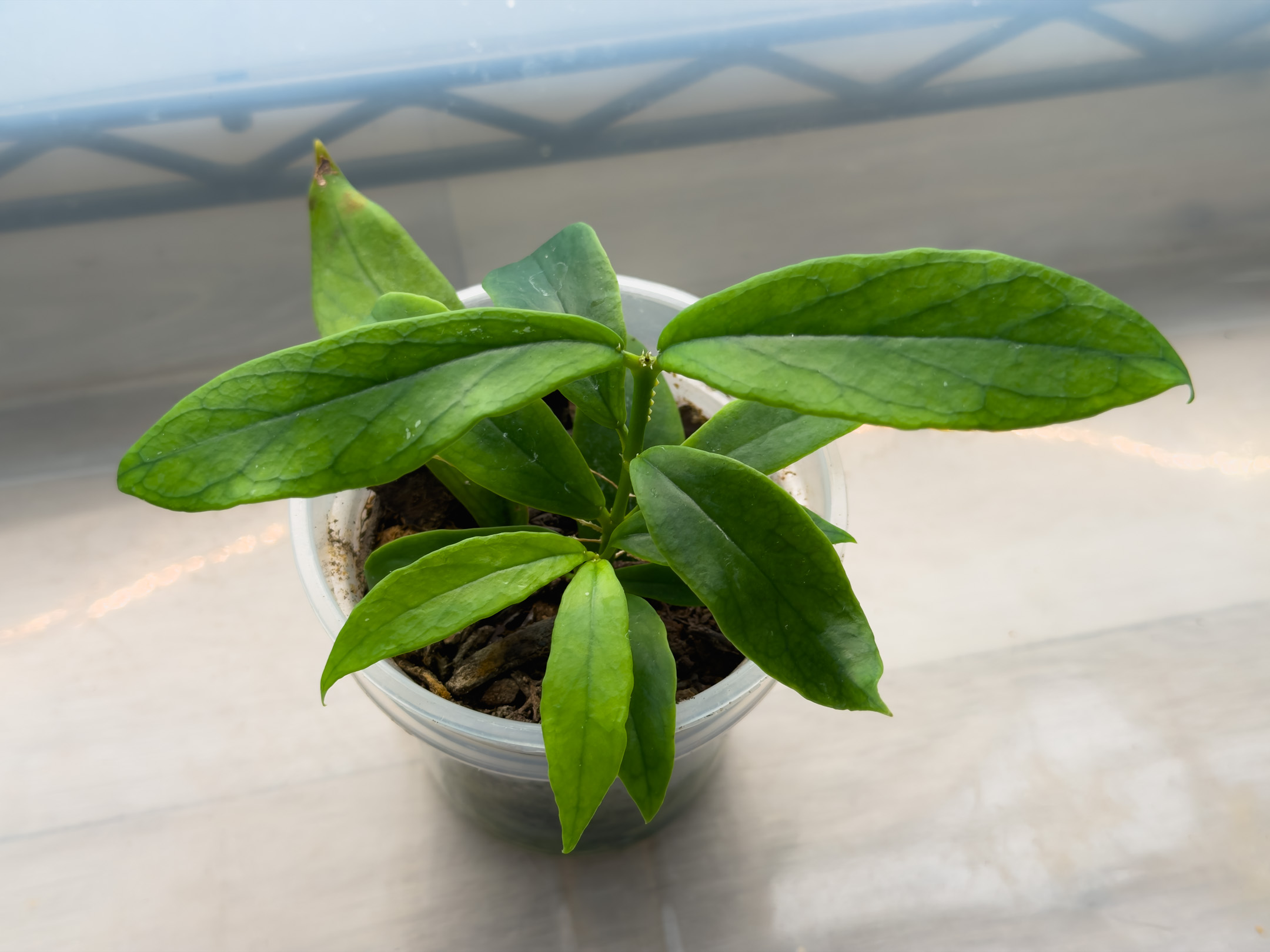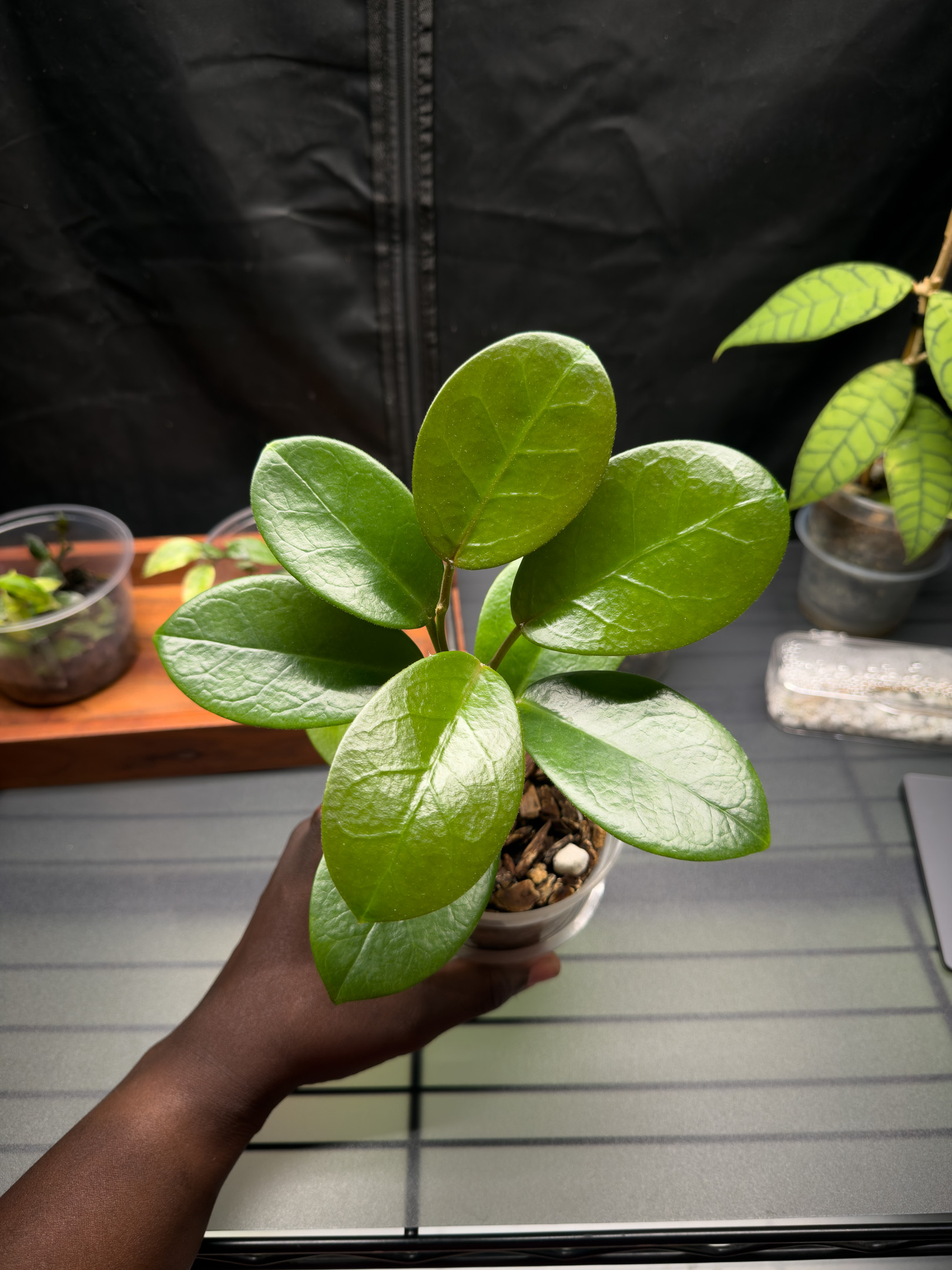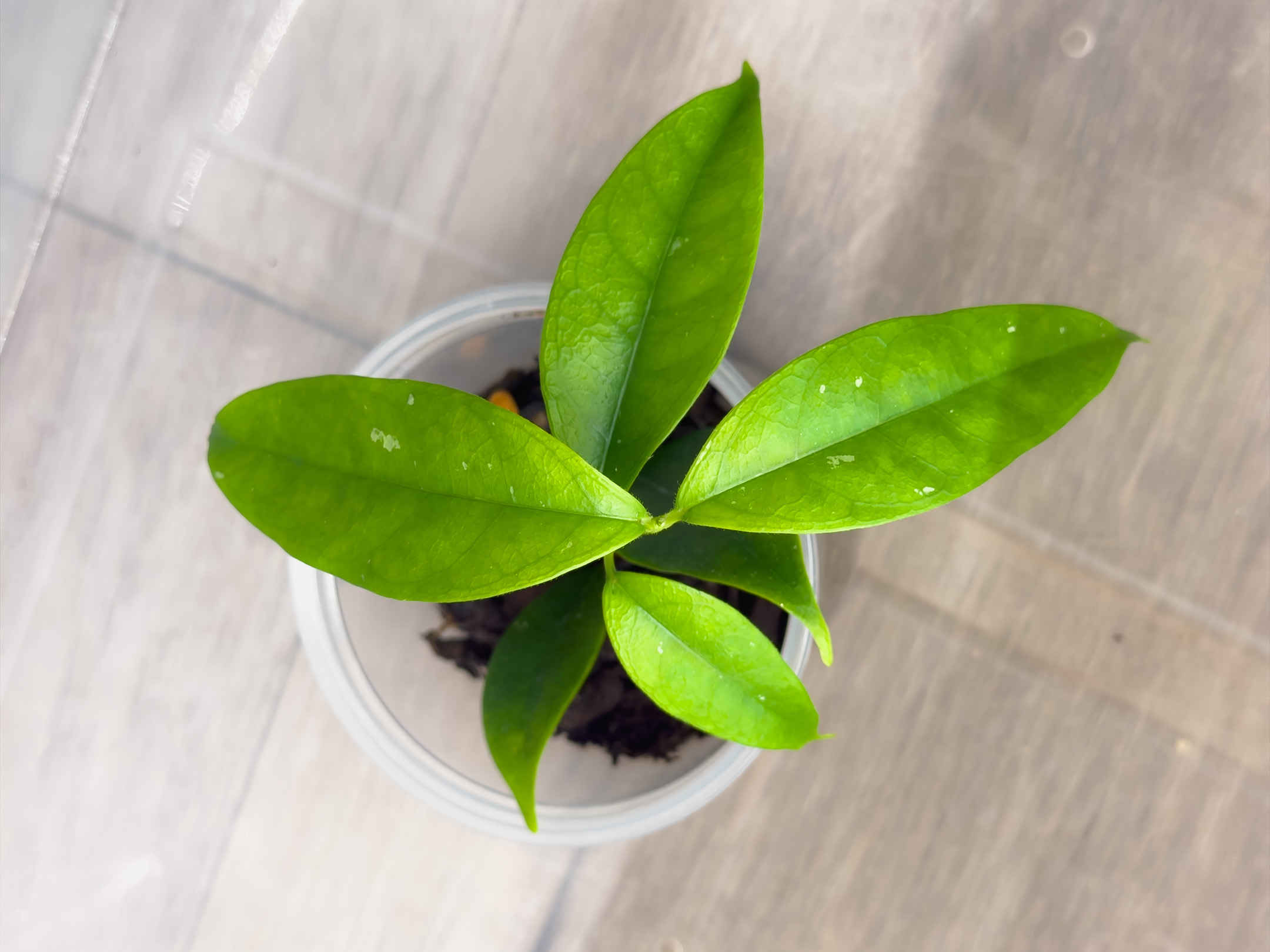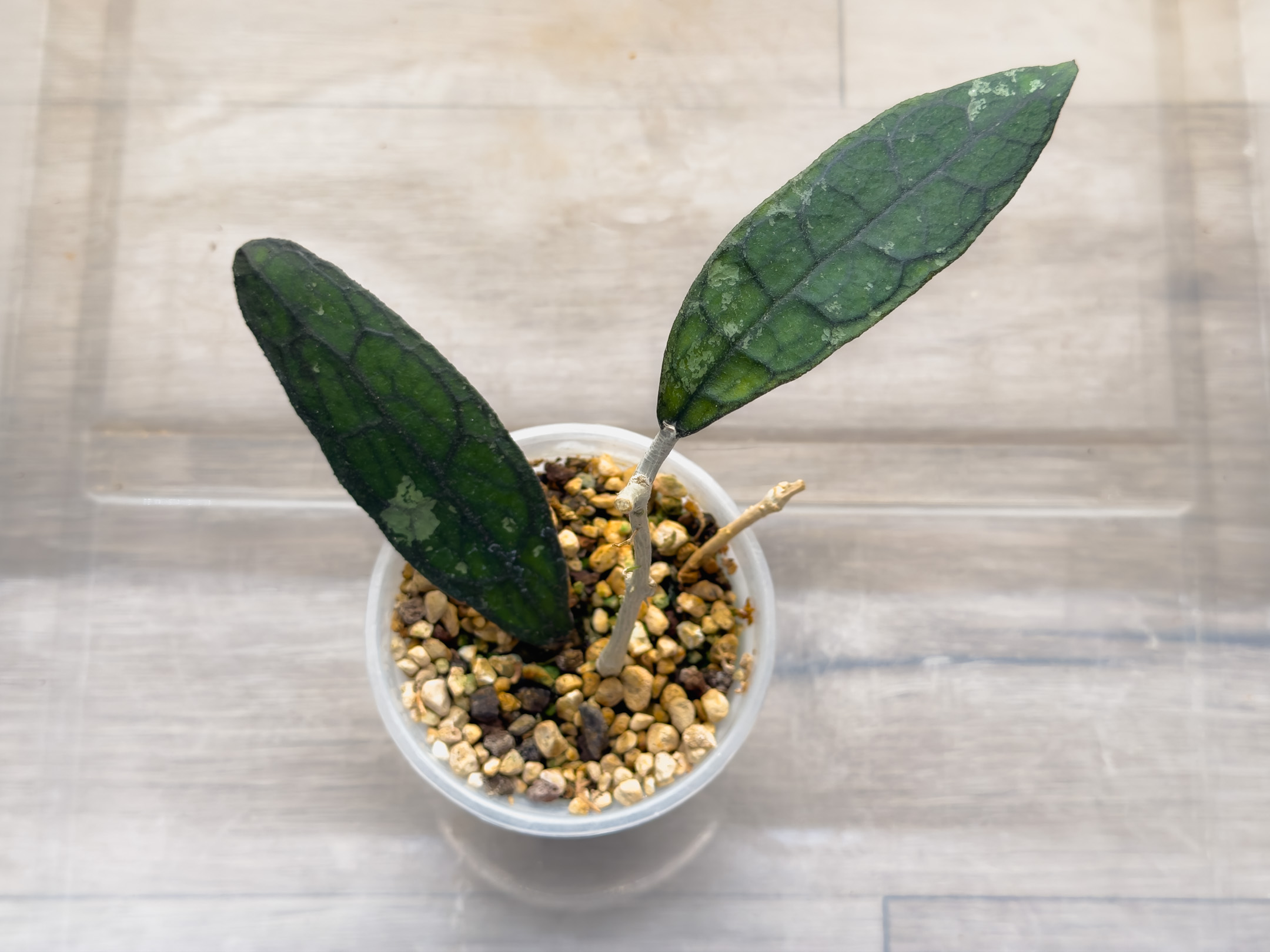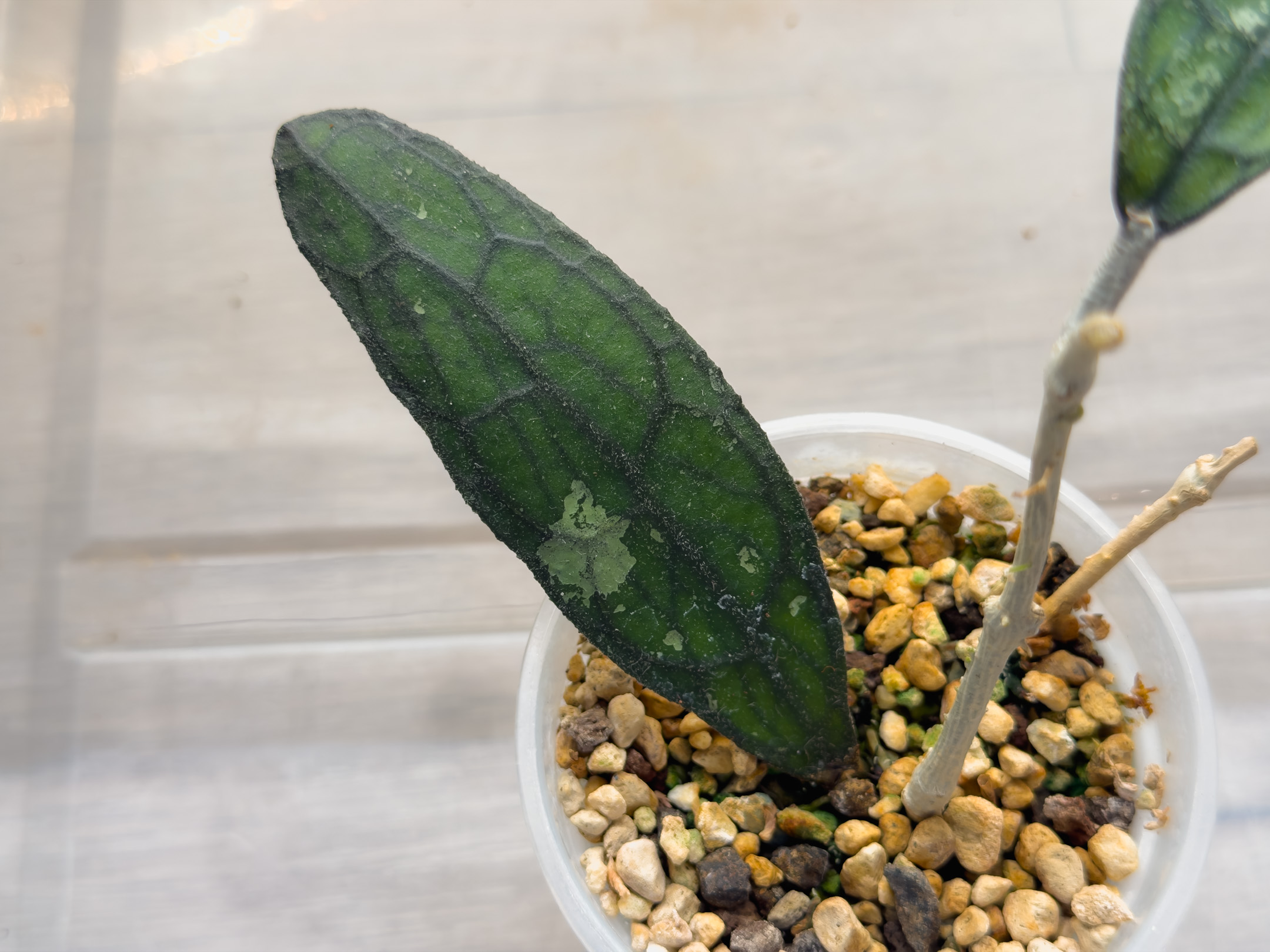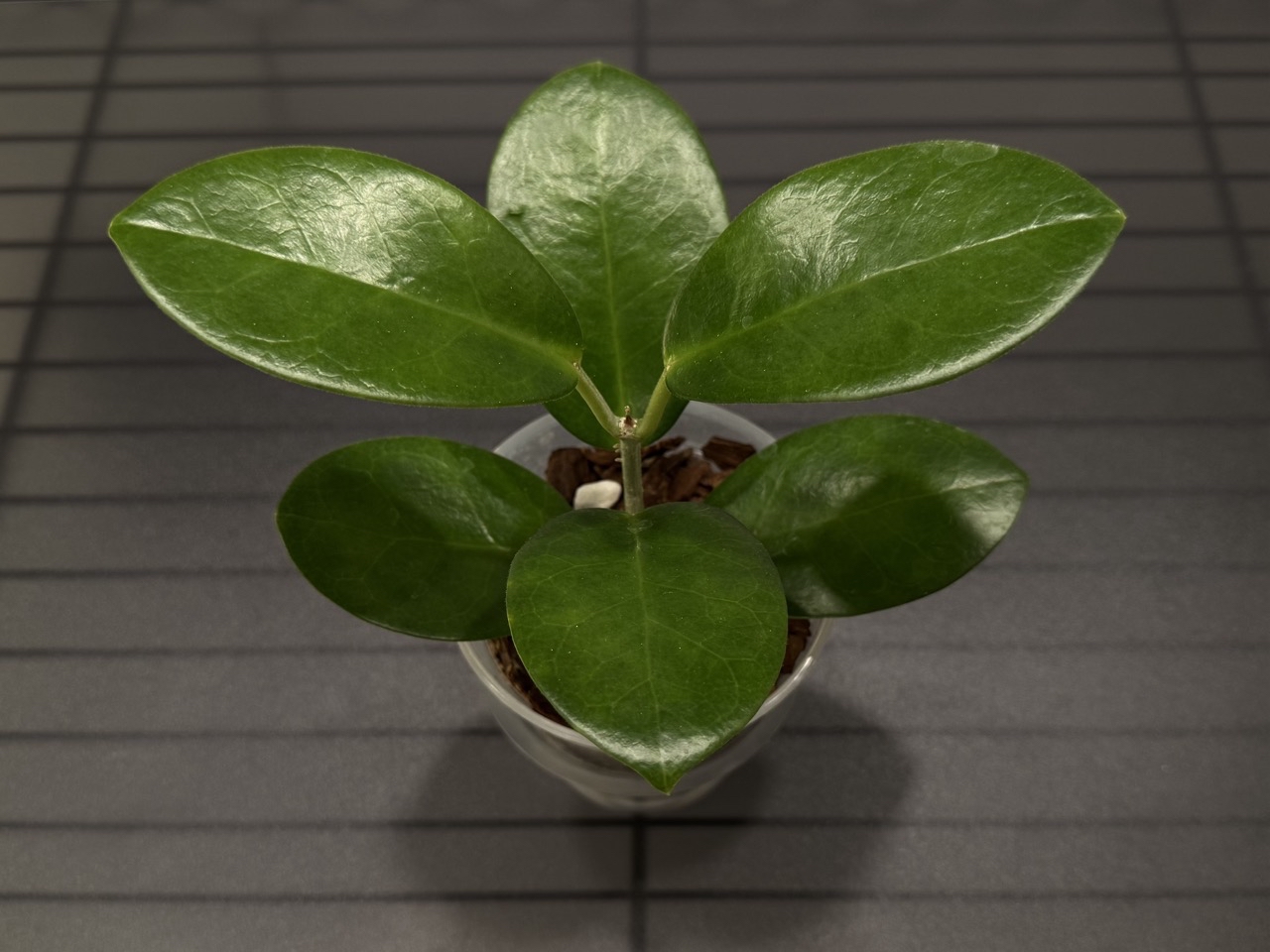





Dracaena trifasciata ‘Black Coral’ emphasizes contrast: long, rigid leaves mature to a deep green while pale grey-green horizontal bands and chevron-like markings break across the surface. The result is darker and more graphic than the standard species form.
New fans emerge from underground rhizomes and slowly build a wider clump. The cultivar is structurally strong and visually consistent, making it useful as an anchor plant where height, negative space, and foliage pattern are part of the display. Root health depends more on aeration and dry-back than on high humidity.

LIGHT
The dark foliage tolerates lower light, but brighter indirect light generally supports tighter growth and clearer cross-banding. Lower light also means slower water use.
WATER / ROOT ZONE
Use a pronounced dry cycle and adjust frequency downward if the plant is kept in dim conditions. Keep the rhizome and crown out of persistent moisture.
CONTAINER
Do not up-pot based on leaf height alone; increase root volume only when rhizomes and roots have actually filled the system.
Dracaena plants thrive in moderate humidity and slightly moist soil. However, it’s important to let the soil dry out completely before watering to avoid overwatering. This plant can go several weeks without water.
In terms of lighting, Dracaena plants prefer bright, indirect light but can also tolerate low lighting conditions.
When it comes to potting, repot the plant in pots that are no larger than 1 inch in diameter from the root system.
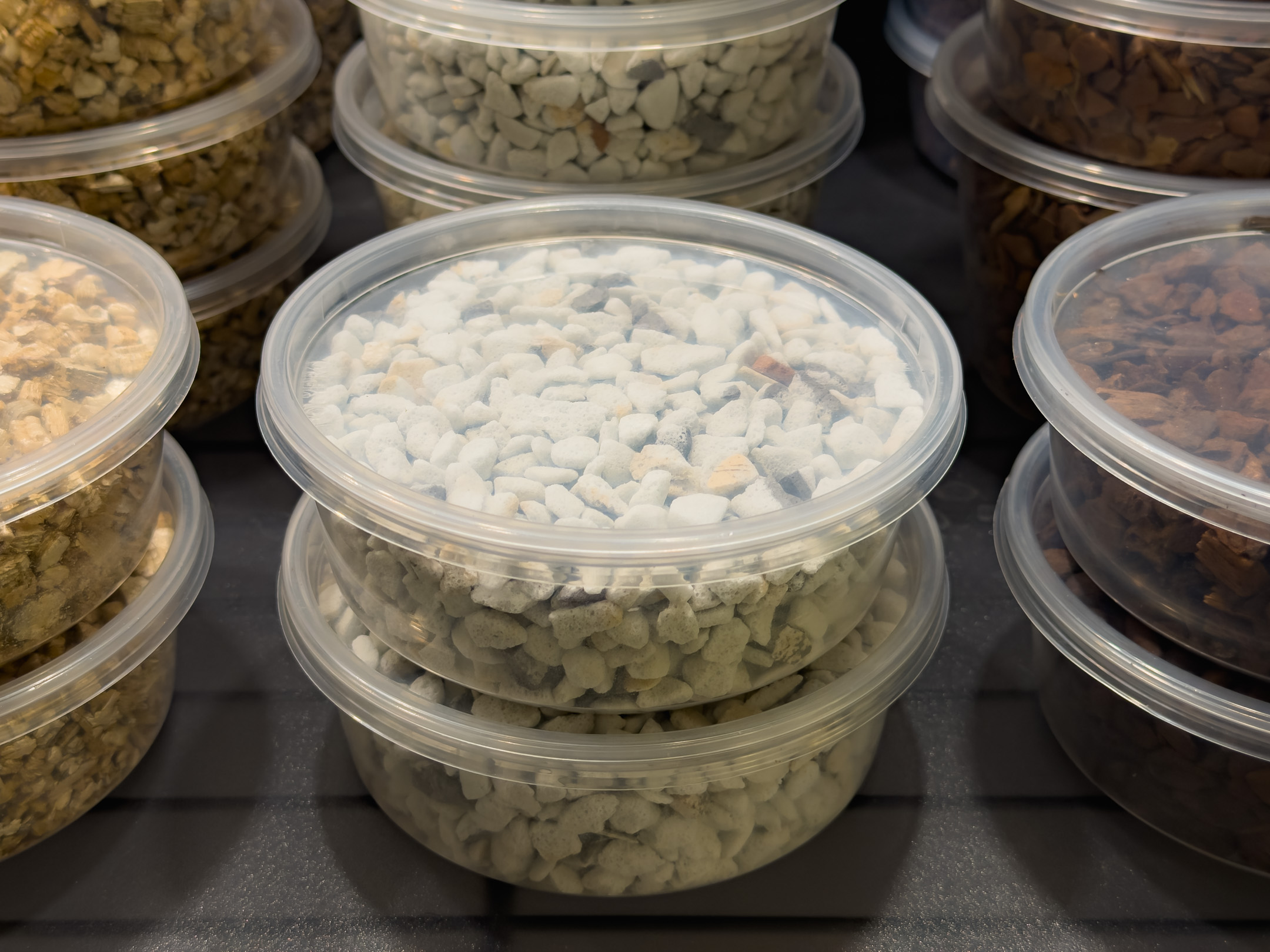
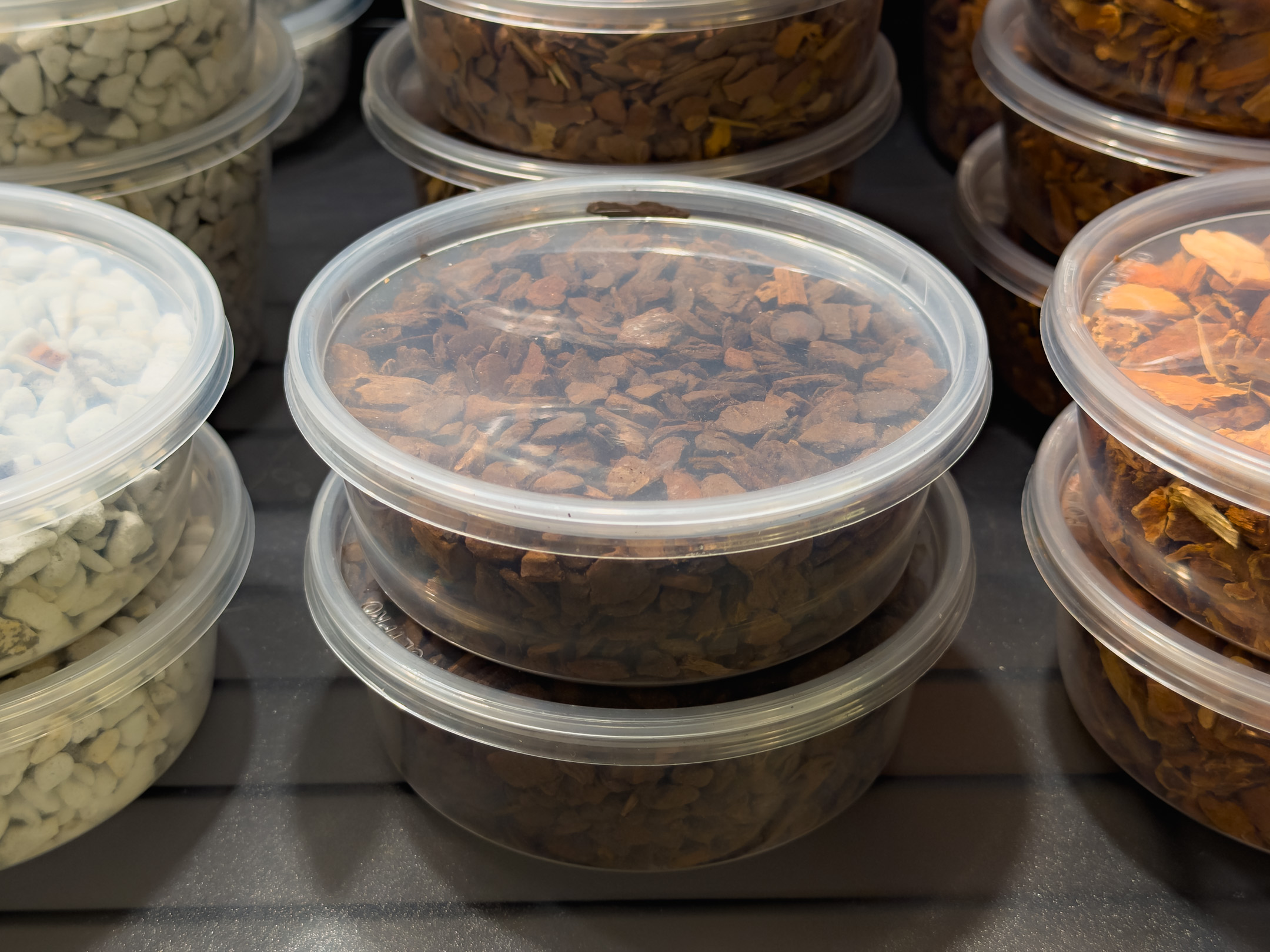
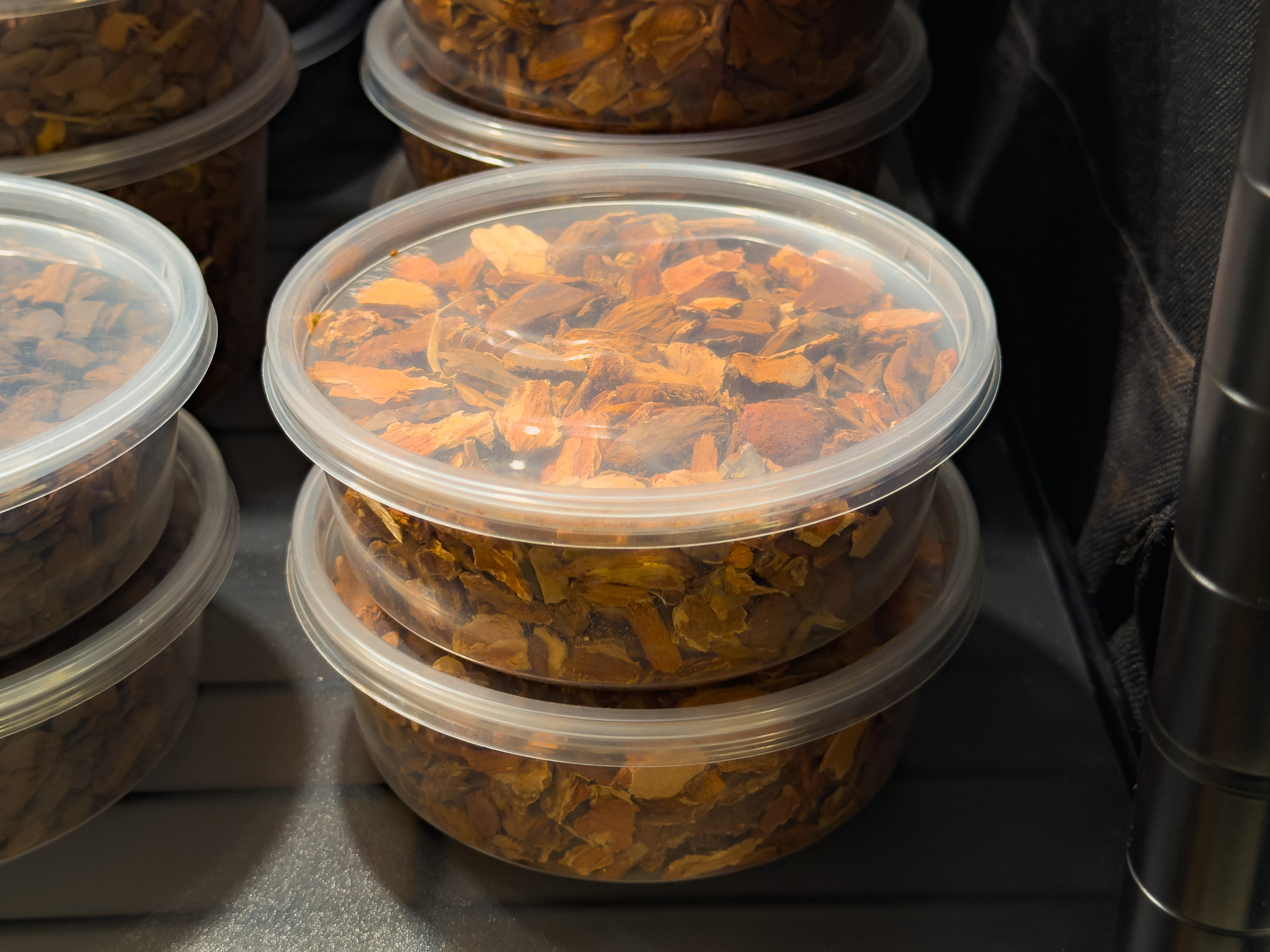
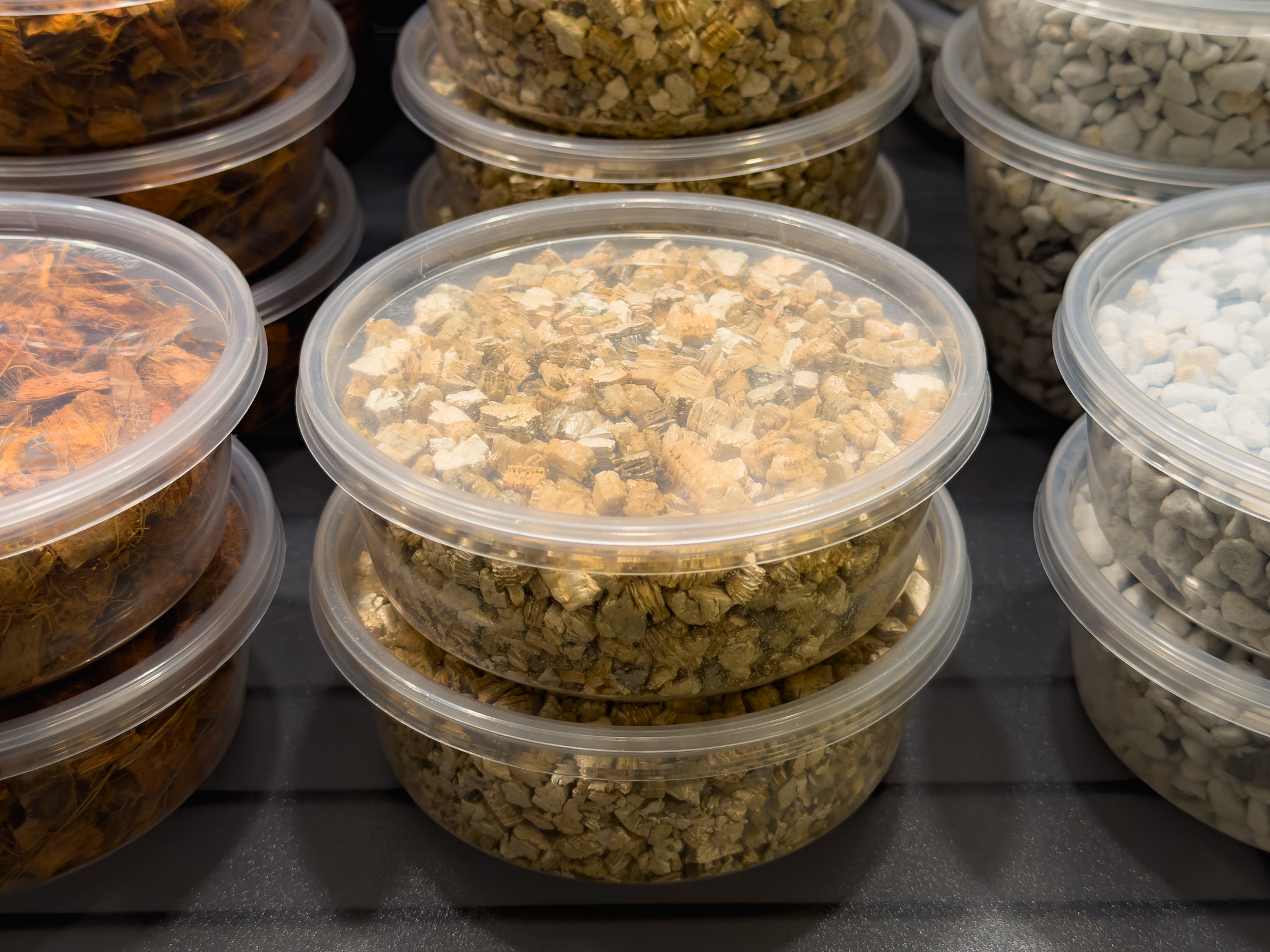
For the soil, use a chunky soil mix specifically designed for orchids or epiphytes, such as any branded potting soil mix for these types of plants.
Dracaena plants prefer moderate humidity and slightly moist soil.
Let the soil dry out completely before watery.
This plant can go several weeks without water.
Thrives in bright, Indirect light but can definitely grow in low lighting.
Repot in pots no larger than 1 inch the diameter of the plant's root system.
Use a chunky soil mix such as any orchid or epiphyte branded potting soil mix.
Fast Growth Tip: Provide it lots of bright light and nutrition! This will also increase its watering needs.